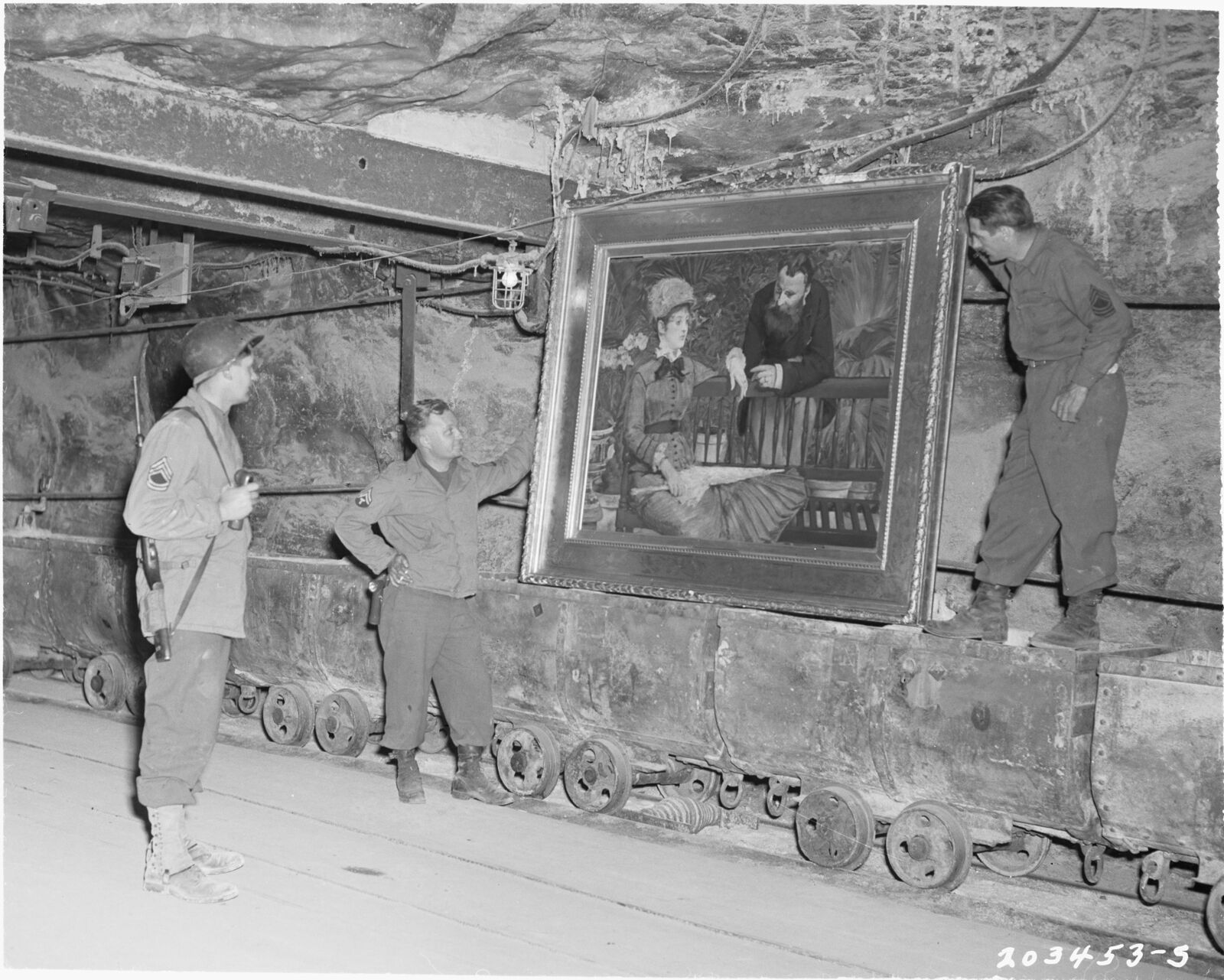
A nation’s pictures rise from the dark
Hundreds of Berlin’s museum paintings lie loose in a German salt mine, and each must be wrapped and carried by hand before the Army can move it.
Mayor La Guardia gives Dick Tracy to the radio as the delivery strike empties the stands.
The war is won, but the stockings come back a few pairs at a time, and the women who did without will stand in the cold a few hours more.
The war has cut off the Philippines and held down the island cargoes, and molasses, honey or syrup can stand in for a cup of sugar.
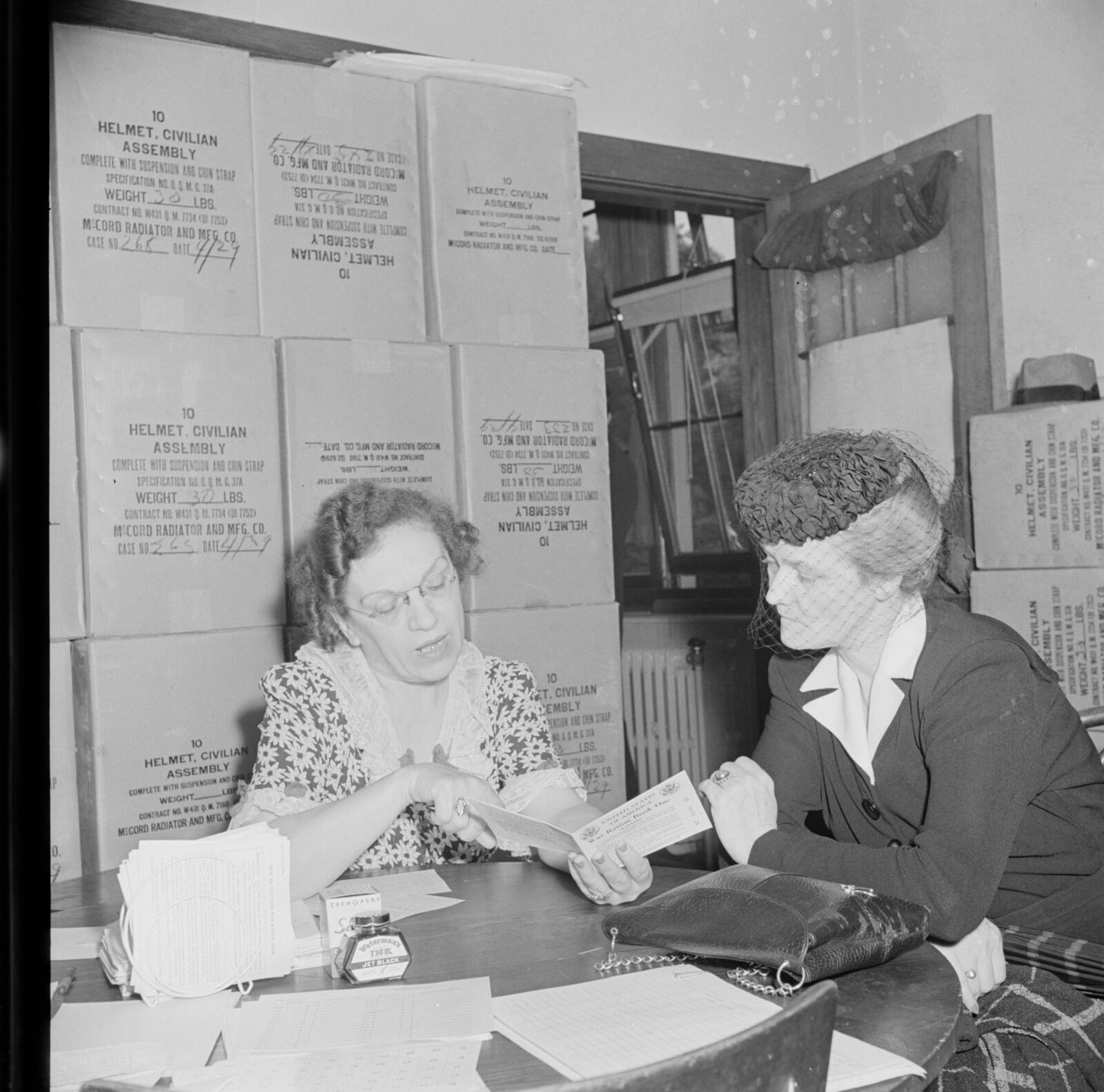
Applicants for sugar rationing cards at the Adams School, 1942
Eggs at 58 cents a dozen were the dearest line on the grocer’s list, and a week’s milk, eggs, butter and steak took about a twelfth of the pay.
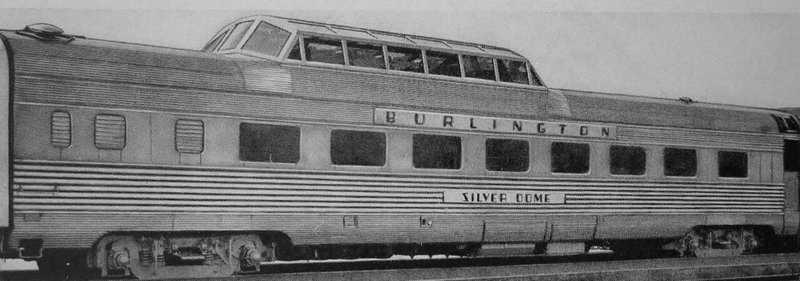
The Silver Dome, a railroad coach with a glass-roofed upper deck, the first of its kind, began as an idea on a freight train in Colorado.
The director’s picture of the Navy’s torpedo boats, “They Were Expendable,” had its world premiere in Washington.
The English composer Benjamin Britten’s new opera of the Suffolk coast reopens a London theater closed by war.
Retreating Nazi SS troops are said to have set the fire, and Kollwitz, the German artist who spoke for the victims of war, dies near Dresden at 77.
Warsaw falls in January, Japan gives up in August and General Patton dies in December, and every month between has its firsts.
Robert Mitchum plays the worn-out captain, and the great scene is Pyle’s column on the death of Captain Henry Waskow, a company commander from Texas.
The director Leo McCarey’s holiday picture opens at the Music Hall, with a parish school short of money and the children’s own Nativity play.
Bob Hope is master of ceremonies, and for the first time the whole ceremony goes out to the nation by radio.
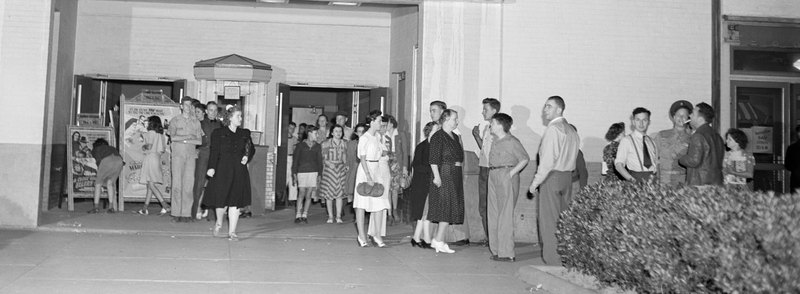
A Saturday-night crowd leaves the cooperative movie house, 1942
The director Billy Wilder’s picture follows a New York writer through one long weekend of drink.
Miss Crawford plays a waitress who builds a chain of restaurants for a daughter who despises her.
Alfred Hitchcock tells of a doctor in love with a stranger who has lost his memory, and the Surrealist painter Salvador Dali designed its dream.
The composer Richard Rodgers and the lyricist Oscar Hammerstein 2d write their first score for the screen.
Frank Sinatra sings as the other sailor on leave in Hollywood, and the two promise a would-be singer an audition with the pianist José Iturbi.
The Italian director Roberto Rossellini filmed the occupation largely in the streets of Rome.
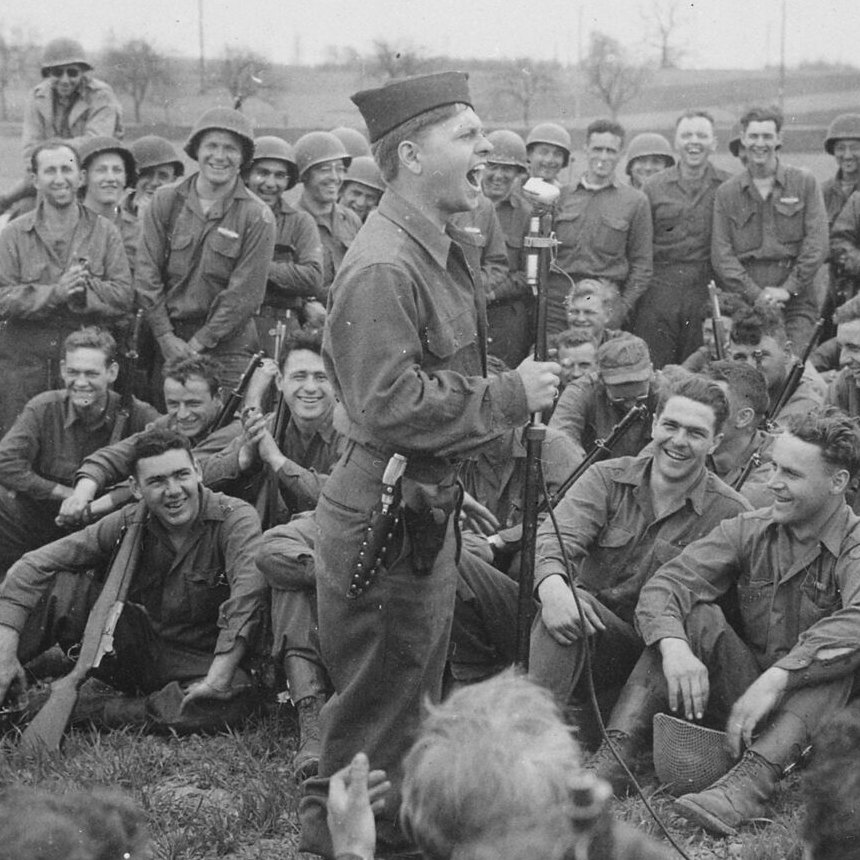
Mickey Rooney plays the ex-jockey who trains Elizabeth Taylor’s horse in “National Velvet,” then entertains troops in Germany as an Army private.
Out in London since Aug. 17, a short fable about farm animals takes aim at Soviet Russia.
Harper & Brothers publishes Mr. E. B. White’s book, with drawings by the artist Garth Williams.
The loafers of Monterey’s sardine canneries carry Mr. Steinbeck’s new novel, and it is very funny.
Out in London this year, the comic novelist’s story of a great English house and the family in it is his most serious book.
Bill Mauldin’s cartoons and notes led the best-seller list for half the year.
The book-of-the-month club made Richard Wright’s own story, “Black Boy,” a selection.
Nancy Mitford, C. S. Lewis and Agatha Christie have new novels out, and Swedish children meet Pippi Långstrump, the strongest girl in the world.
New York has eight openings and London three, and the Spanish poet Federico García Lorca’s “The House of Bernarda Alba” opens in Buenos Aires.
Frank Fay plays the gentle Elwood P. Dowd, and Josephine Hull the sister who would have him put away.
Programs stop for the death of President Roosevelt.
The crooner Perry Como held the top the longest with one record, and Les Brown’s band, with Doris Day singing, held it sixteen weeks with two.
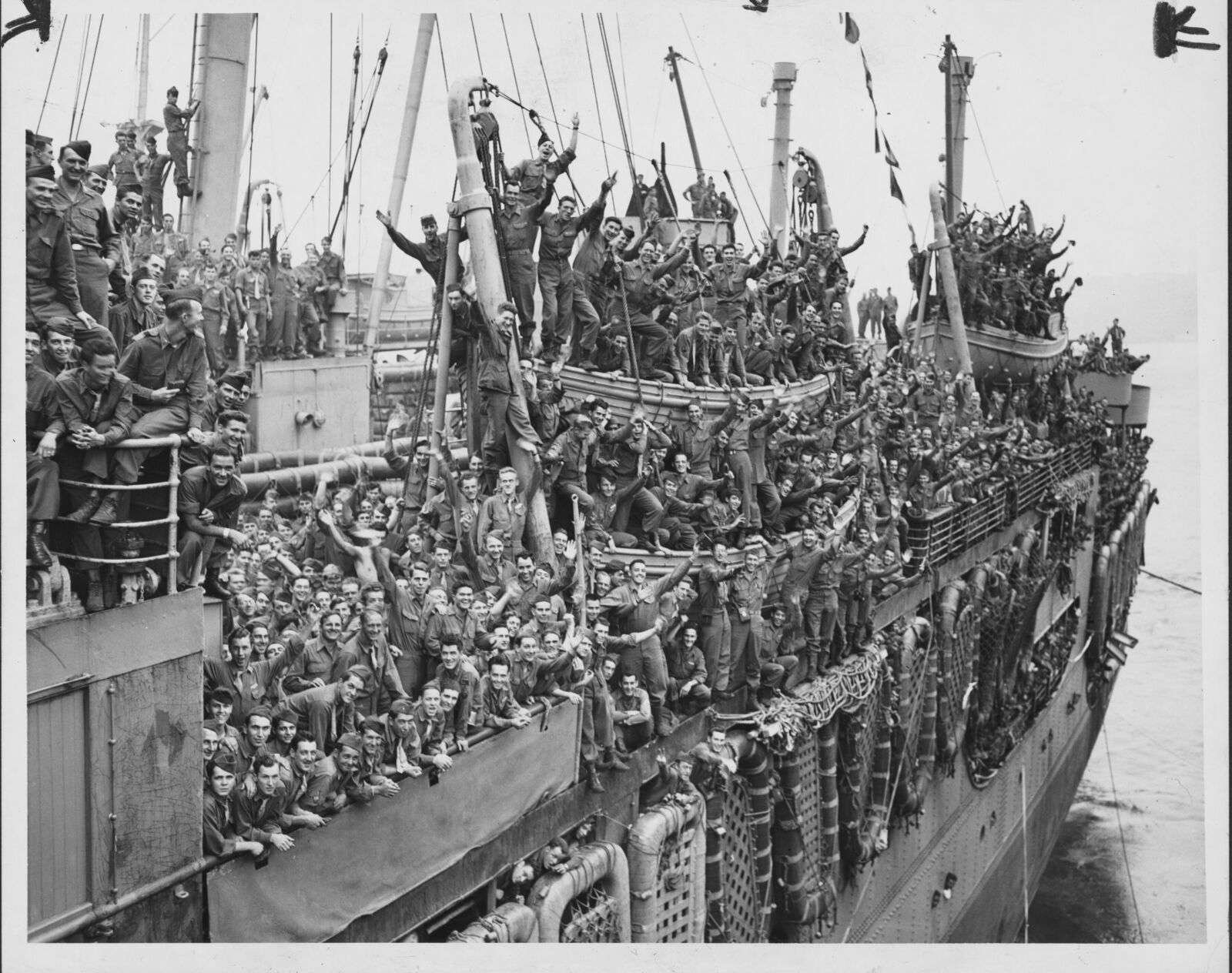
Liberty ships, carriers and battleships get bunks for the voyage home, and the cruiser Portland sails from Le Havre with more than 1,200 Army men.
Aaron Copland’s “Appalachian Spring” wins the music prize, and Karl Shapiro’s “V-Letter” the prize for poetry.
The veteran may go to school or borrow toward a house or a business.
Last year 18,500,000 gardeners raised 40 per cent of the country’s fresh vegetables, and this spring a seed house called for 20,000,000.
The President’s proclamation says liberty “knows no race, creed, or class in our country or in the world.”
War Time ended on the last Sunday in September after three years and seven months. The New Year opens on a Tuesday.
The July 9 shadow crosses the Northwest and Scandinavia.
These nine questions range over the year’s pictures, plays, books and new things, from John Steinbeck’s Monterey to the first ball point pens.
Each of these nine statements about the year’s pictures, plays and holidays is true or false, and the wrong ones sound as likely as the right.
The clues describe five people in the year’s news, a painter, a broadcaster and a cartoonist among them, and you supply the names.
A year’s pay, two theater openings, the months of gas rationing and Christmas Day make up the four sums, and every figure comes from this paper.
Six ladders to climb, from war to win and from home to work. Change one letter at a time and make a real word at every rung.
One substitution key unlocks both lines.
The G.I. Bill filled the colleges, and the Allied trial of the Nazi leaders at Nuremberg reached its verdicts.
The Soviet composers Prokofieff and Shostakovich have new symphonies played, Berlin hears “Fidelio,” and the jazz saxophonist Charlie Parker records.
Every figure and letter in this number can be looked up at its source, and this page tells where.