One last question for the whole room to talk over.
The parts take 42 minutes, with 3 for moving between them. Running long? Skip what is marked optional. Short of time? The shorter session runs in 20 minutes.
Before the room arrives
The big screen, one reading, picture or question at a time. Tap it to see it full size.The large-type page, one for each table. See it full size
Screen. Open this page on the computer that runs the TV or projector and press “Show it on the big screen.” Next, the arrow keys or a presentation clicker move it on.
Answers. Each waits for “Show answer,” here and on the big screen, with its follow-up question beside it. The printed plan adds an answer sheet with all of them.
Printouts. “Print the plan” prints these notes, your answer sheet and the large-type page.
15 min Three stories to read aloud
Read each opening aloud, then ask the question and let the room talk. Some in the room lost someone in this war, so let anyone pass. About five minutes a story. If time runs short, read two and keep the third for next week.
News, Sept. 2. Its opening is below; the whole story is a 3 min read.
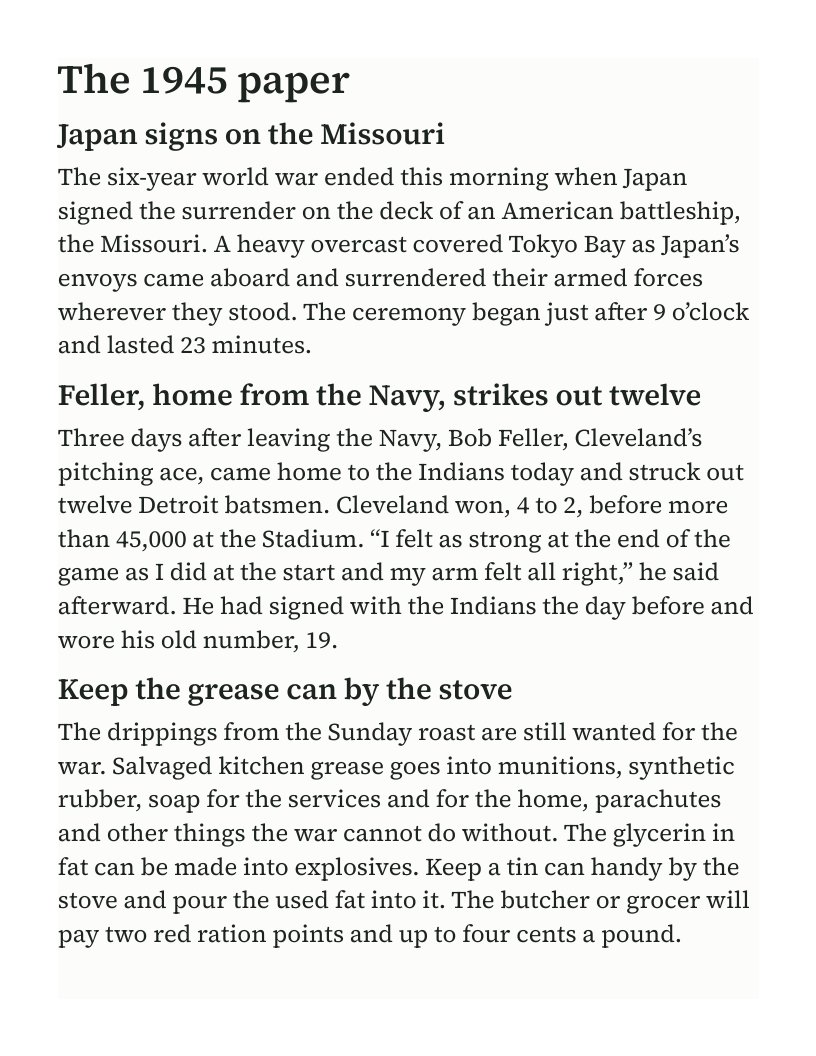
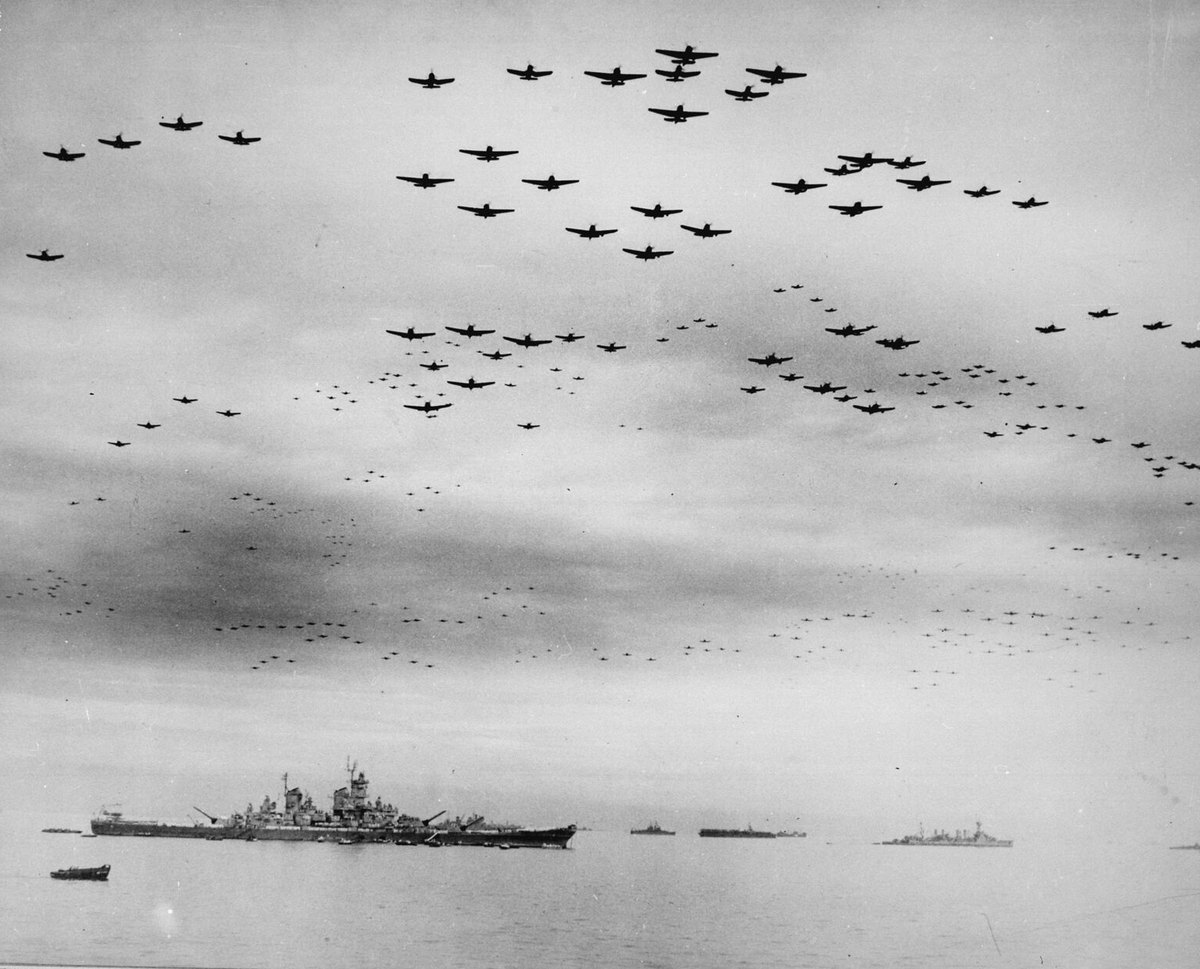
The six-year world war ended this morning when Japan signed the surrender on the deck of an American battleship, the Missouri. A heavy overcast covered Tokyo Bay as Japan’s envoys came aboard and surrendered their armed forces wherever they stood. The ceremony began just after 9 o’clock and lasted 23 minutes. Japan’s Foreign Minister, Mamoru Shigemitsu, walked with a cane.
Show the room: Navy fighters fly over the surrender ceremonies in Tokyo Bay on Sept. 2, with the battleship Missouri below. U.S. Navy · National Archives
Ask: Where were you, or your family, when you heard the war was over? Who told you, and what did you do?
Or ask what they see: Look at the planes over the ship. What would the men on deck have heard as they flew over, and what would you point out to a friend?
Sports & Leisure, Aug. 24. Its opening is below; the whole story is a 2 min read.
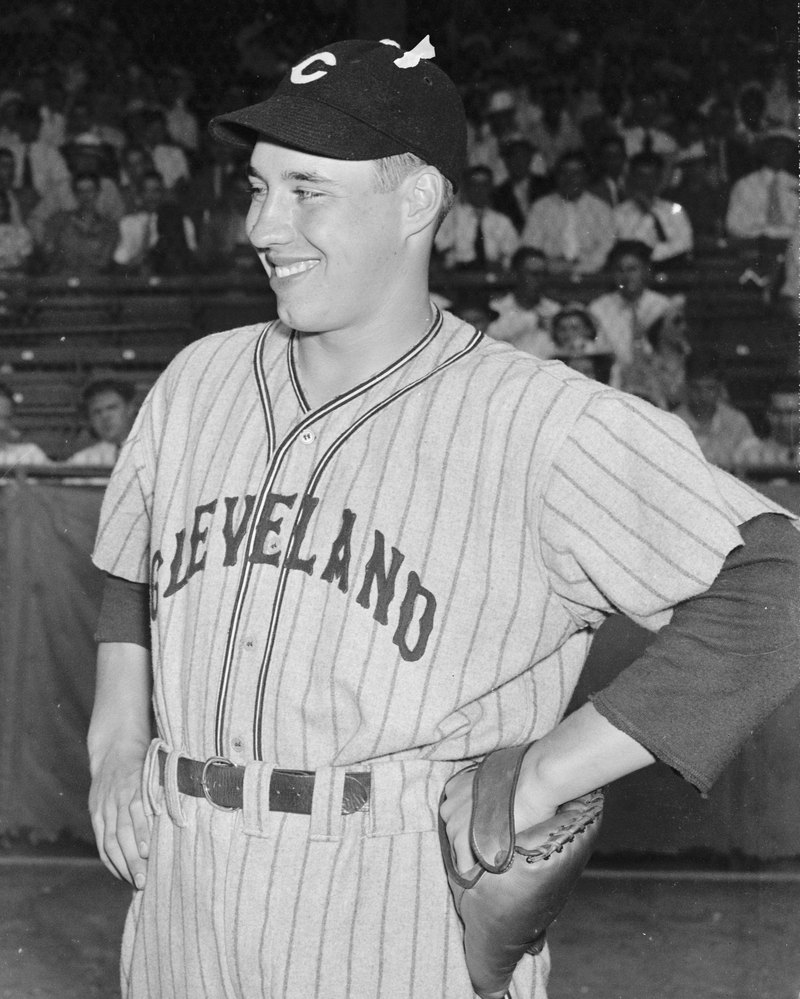
Three days after leaving the Navy, Bob Feller, Cleveland’s pitching ace, came home to the Indians today and struck out twelve Detroit batsmen. Cleveland won, 4 to 2, before more than 45,000 at the Stadium. “I felt as strong at the end of the game as I did at the start and my arm felt all right,” he said afterward. He had signed with the Indians the day before and wore his old number, 19.
Show the room: Bob Feller at 18, in Cleveland’s uniform, at Washington in 1937, four years before he went into the Navy. Harris & Ewing · Library of Congress
Ask: Who was the ballplayer everyone in your house talked about? Did anyone ever take you to see a game?
Or ask what they see: Look at his uniform and his cap. What is different from what a ballplayer wears today?
Life & Arts, March 2. Its opening is below; the whole story is a 2 min read.
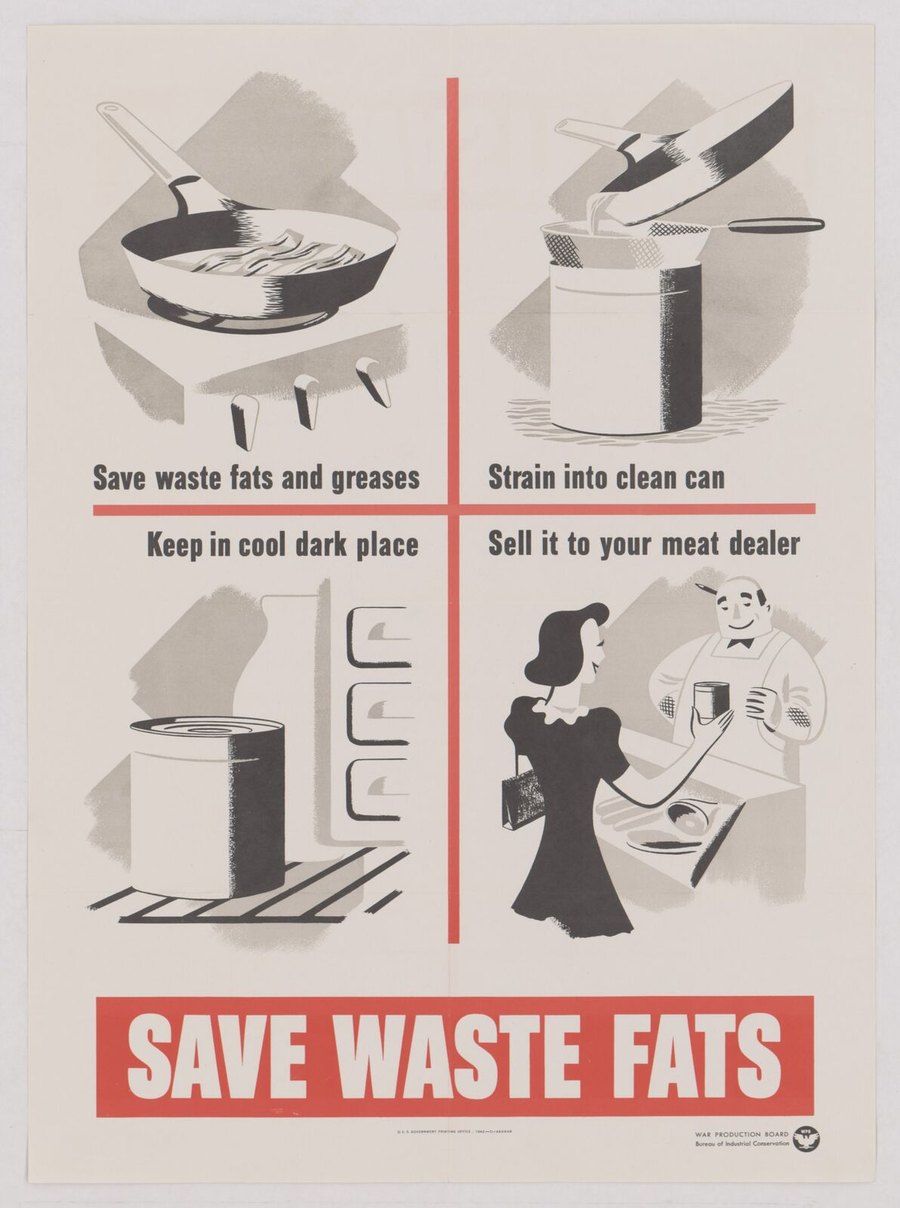
The drippings from the Sunday roast are still wanted for the war. Salvaged kitchen grease goes into munitions, synthetic rubber, soap for the services and for the home, parachutes and other things the war cannot do without. The glycerin in fat can be made into explosives. Keep a tin can handy by the stove and pour the used fat into it. The butcher or grocer will pay two red ration points and up to four cents a pound.
Show the room: “Save Waste Fats,” a War Production Board poster of 1942: strain the drippings into a clean can and sell it to the meat dealer. War Production Board · National Archives
Ask: Who kept the grease can by the stove in your house? What else did your family save, mend or make do with?
Or ask what they see: Read the poster together. What does it ask a family to do, and would it have made you save the fat?
8 min Two songs
Play each record from here, then ask. If the talk is running, stop the record after the first chorus.
Mention that Perry Como’s record held the top of The Billboard’s list ten weeks running, then let it play through and ask when the last note fades.
Ask: Is this one for dancing or for sitting and listening? Which song would you choose for a slow dance?
Or ask what they hear: Listen to his voice. How would you describe it to someone who has never heard Perry Como?
6 min What things cost in 1945
Read the question and the choices, let the room call it, then show the answer. Every price is the paper’s own.
In the big cities the milkman still left the milk on the doorstep. What did a quart cost, delivered?
About 8 cents
About 15 cents
About 25 cents
Show answerHide answer
About 15 cents
Fifteen and six-tenths cents, the year’s average in the large cities, when a pound of round steak came to about 41 cents.
Ebony, a new picture magazine for Black America, went on sale in Chicago on Nov. 1. What did the first number cost?
A dime
A quarter
Fifty cents
Show answerHide answer
A quarter
John H. Johnson, its 27-year-old publisher, laid it out like Life. The first printing was 25,000 copies.
The Slinky, the steel spring that walks down stairs, went on sale at Gimbels in Philadelphia in November. What did one cost?
Fifty cents
A dollar
Two dollars
Show answerHide answer
A dollar
All 400 were gone in ninety minutes. Richard James, a shipyard engineer, saw the toy in a spring that fell off a shelf.
In December RCA said it would begin making television sets for the home by early next summer. What did it say a home set would cost?
$50 to $75
$200 to $300
$600 to $800
Show answerHide answer
$200 to $300
RCA said from under $200 up to $300. Bigger consoles were to follow at about $500, with a picture 16 inches by 22.
Then tell the room: In 1945 the average worker’s pay came to about $44 a week.
8 min Five questions on the year
Read the question and the choices. When the room has called it, show the answer and ask the follow-up. If time runs short, ask the first three.
Fibber McGee and Molly ran second in the Hooper ratings of Nov. 30. Who paid for their Tuesday half hour?
Johnson’s Wax
Lucky Strike
Chase & Sanborn coffee
Show answerHide answer
Johnson’s Wax
Lucky Strike paid for Jack Benny, and Chase & Sanborn coffee for Edgar Bergen. Bob Hope’s Pepsodent show led the ratings, the one he carried to Army camps and Navy bases all through the war.
Then ask: Which program did your family gather round the radio for, and who sat closest to the set?
Bess Myerson of the Bronx was crowned Miss America in September, and the prize carried a scholarship. How much was it?
$500
$5,000
$50,000
Show answerHide answer
$5,000
She played Grieg and Gershwin for the judges, and she had paid her way through Hunter College giving piano lessons at fifty cents an hour.
Then ask: She said she would like a grand piano. Who played an instrument in your house, and what did they play?
On Nov. 23, two of these came off the ration list. Which one still needed a stamp?
Meat
Butter
Sugar
Show answerHide answer
Sugar
It stayed on the ration list into the new year.
Then ask: With sugar short, cakes and pies waited. Who baked in your house, and what did they make when they could?
Optional: skip if time runs short
Which of these came last in 1945?
President Roosevelt dies at Warm Springs
Germany surrenders
Flight 19, a Navy training flight, vanishes off Florida
Show answerHide answer
Flight 19, a Navy training flight, vanishes off Florida
Flight 19 was five Navy Avenger torpedo bombers on a training flight from Fort Lauderdale, lost on Dec. 5 with 14 men. The flying boat sent to look was lost too. Roosevelt died on April 12, and Germany surrendered in May.
Then ask: The fourteen men of Flight 19 were still in training. Who in your family wore a uniform, and which one?
Or, for a room that would rather not talk of loss: Who in your family loved airplanes, and did anyone ever take you up for a ride?
Optional: skip if time runs short
The Rockford Peaches won the pennant of the All-American Girls Professional Baseball League. How many paid to see the league play in 1945?
About 45,000
About 450,000
About 4,500,000
Show answerHide answer
About 450,000
Up from about 259,000 the summer before. The Peaches finished four and a half games ahead of Fort Wayne and won the play-off too, and Carolyn Morris won 28 games for them.
Then ask: Where did your town gather on a summer night: a ballpark, a bandstand, a dance hall? Tell us about a night there.
5 min One question to close
What place from your younger years would you tell us about? Who was there, and what made it yours?
For the calendar and the families
A line for the monthly calendar:
Back to 1945: the stories, songs and prices of the year the war ended, read aloud from the paper, with a quiz and time to talk.
A note to the families, with the link to the free paper:
This week we went back to 1945 with The Erstwhile Courier, a newspaper written as if it went to press at the end of 1945: the day the war ended, Bob Feller home from the Navy, “Sentimental Journey” and what a Slinky cost. You can read the same paper free, on a phone or a computer: https://erstwhilecourier.com/sample/edition. Next time you visit, ask which place from their younger years they told the room about.
20 min The shorter session: four pictures and two songs
Four photographs, two records and conversation. Show each picture or play each record, ask its question and let the talk run.
For a quieter room, show one picture at a time and leave it up, play each record twice, and ask the question that can be answered yes or no. Let a yes lead where it likes.
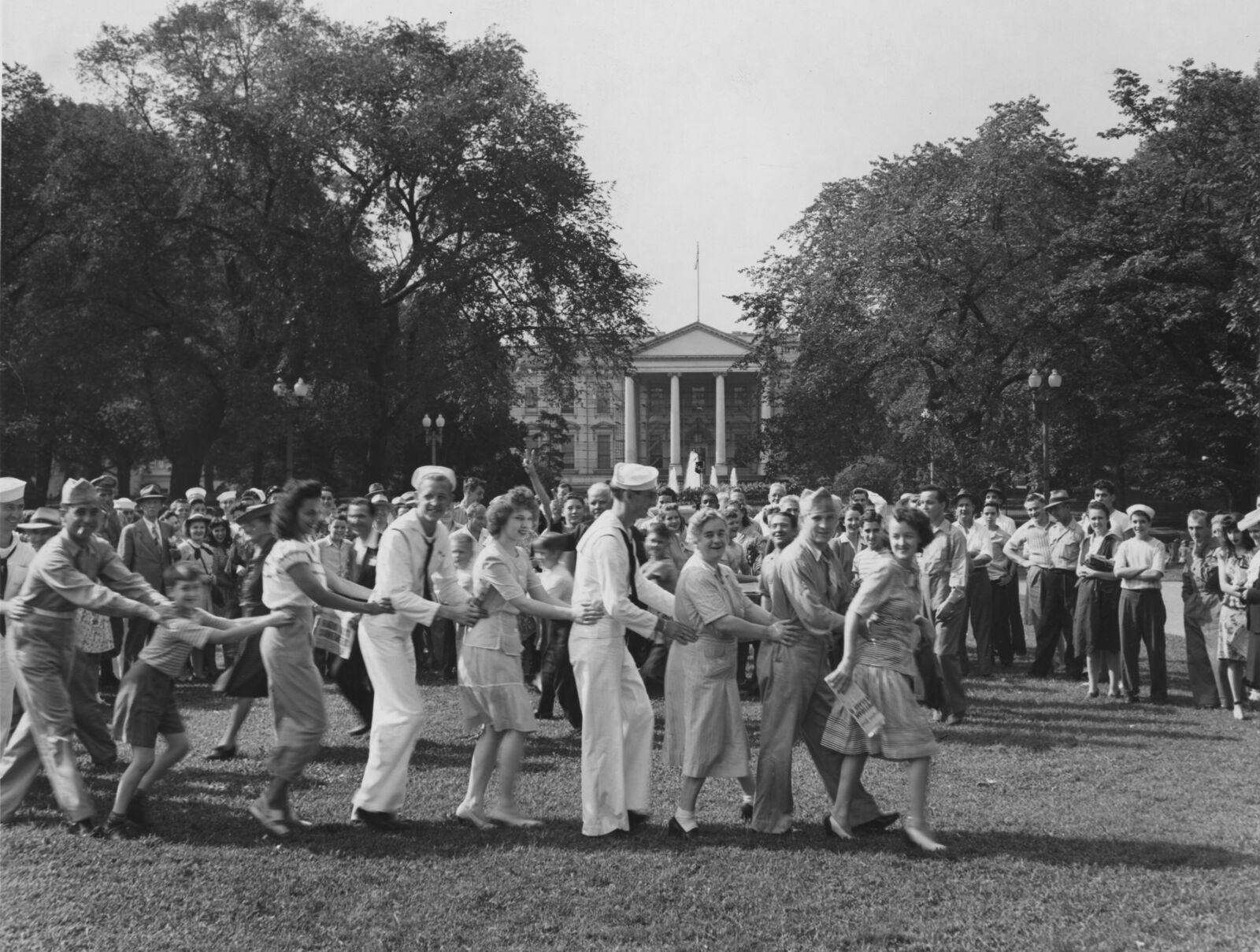
A crowd dances outside the White House as Washington celebrates Japan’s surrender in August 1945. Office of War Information · Library of Congress
Ask: When good news came, where did your town go to celebrate, and who went with you?
Or ask what they see: Look at the crowd. Who seems happiest to you, and what do you think they are shouting?
For a quieter room: Did your town have a parade or a party when the war ended?
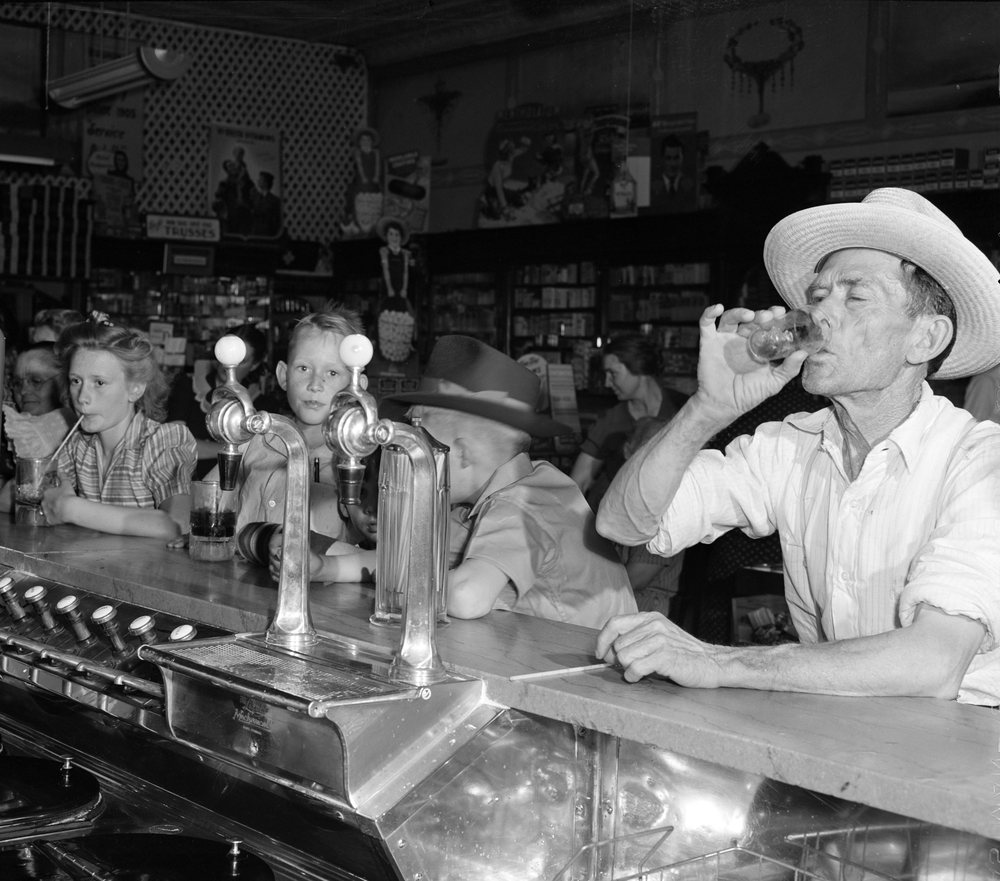
The soda fountain at a drugstore in San Augustine, Texas, on a Saturday afternoon in April 1943. John Vachon, Office of War Information · Library of Congress
Ask: Where did you go for a soda or a sundae, and what did you always order?
Or ask what they see: Look along the counter. What do you think the farmer in the straw hat is having?
For a quieter room: Did you ever sit at a soda fountain like this one?
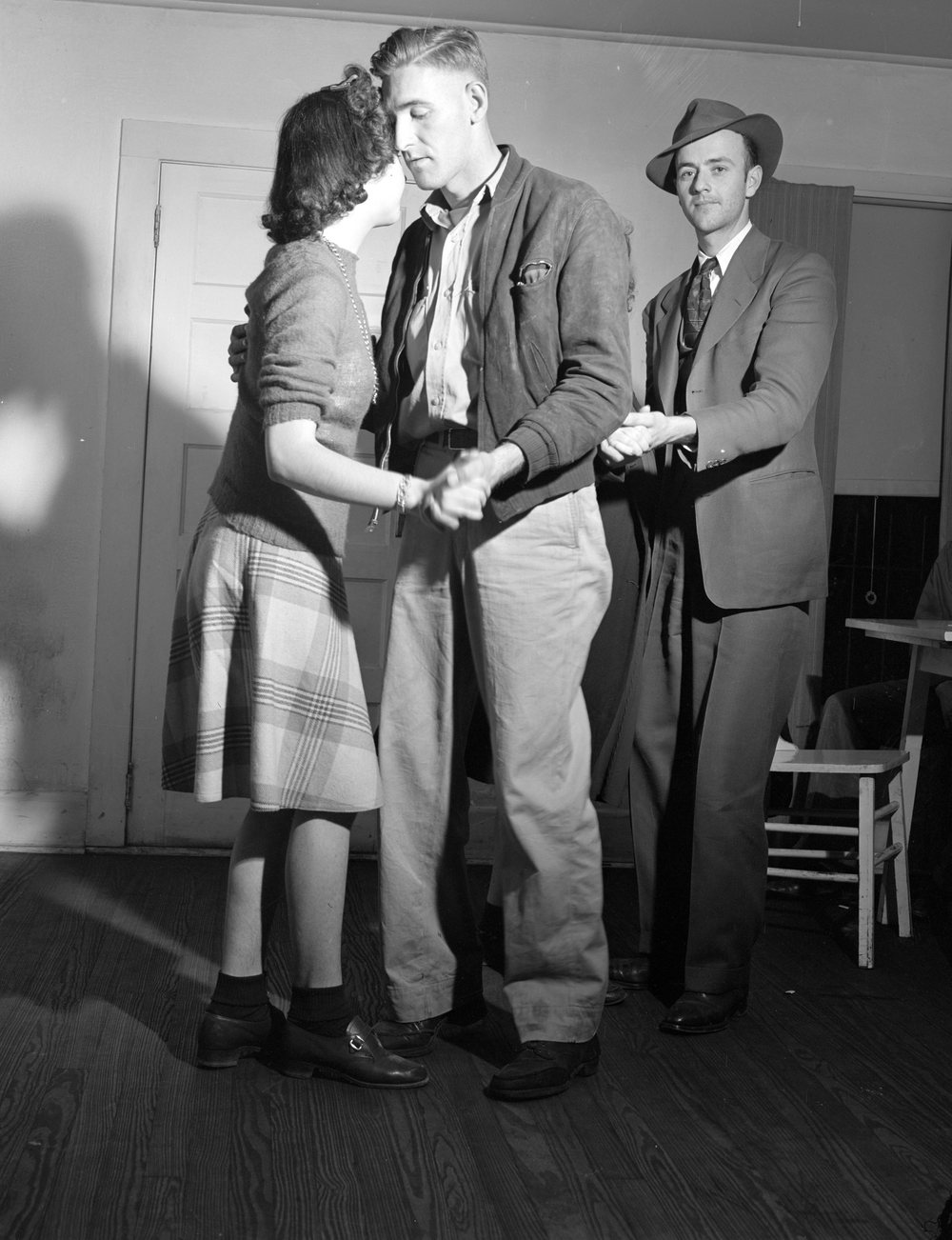
Farm boys and girls dance to the jukebox at Mary’s Place, on U.S. Highway 29 near Charlottesville, Va., in March 1943. John Vachon, Office of War Information · Library of Congress
Ask: Which song would you put a nickel in the jukebox for, and who were you with?
Or ask what they see: Look at the couple and the man in the hat. What do you think he is going to play next?
For a quieter room: Did you like to dance?
“Moonlight Serenade,” Glenn Miller and His Orchestra, 1939
Glenn Miller’s own tune. In November his Army band played it for President Truman, who rose to his feet, eleven months after Miller’s plane was lost over the Channel.
Ask: Where was the dance hall in your town, and what did you wear to go dancing?
Or ask what they hear: Listen to the saxophones. What does the tune make you picture?
For a quieter room: Do you know this tune?
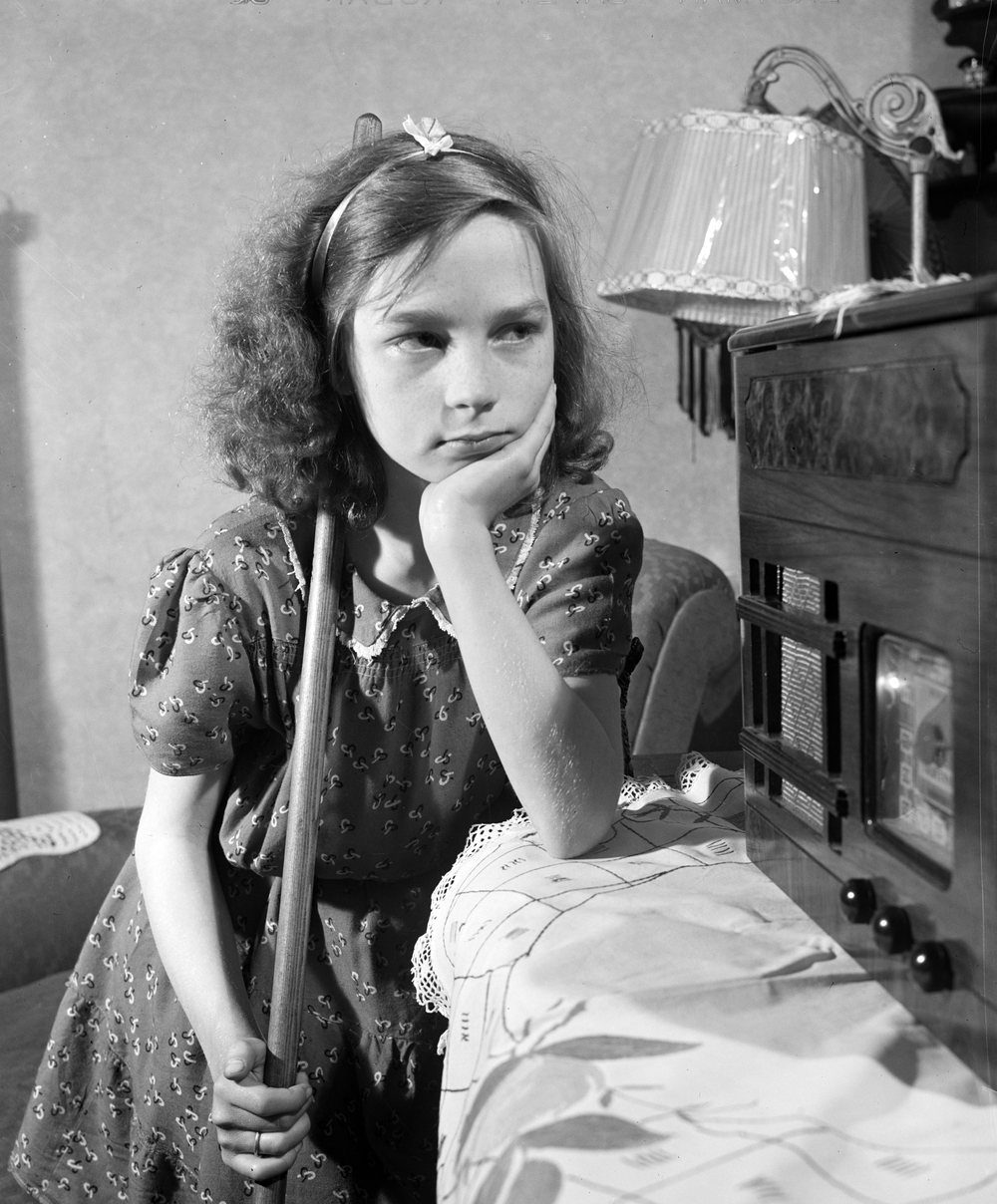
Beverly Ann Grimm, eleven, stops sweeping the front room to listen to the radio, Buffalo, N.Y., May 1943. Marjory Collins, Office of War Information · Library of Congress
Ask: Which radio programs did your family never miss, and where did everybody sit to listen?
Or ask what they see: Look at the girl with the broom. What do you think has made her stop sweeping?
For a quieter room: Did your family have a radio like this one?
“Ol’ Man River,” Paul Whiteman and His Orchestra, sung by Paul Robeson, 1928
From Jerome Kern’s “Show Boat,” sung here by Paul Robeson. Kern died in New York on Nov. 11.
Ask: Which show tune did someone in your house sing around the kitchen, and who sang it?
Or ask what they hear: Listen to that deep voice. How would you describe it to someone who has never heard Paul Robeson?
For a quieter room: Have you heard this song before?
Your answer sheet
A quart of milk, delivered: about 15 cents
Ebony’s first number: a quarter
The Slinky: a dollar
A home television set, promised for 1946: $200 to $300
Johnson’s WaxThen ask: Which program did your family gather round the radio for, and who sat closest to the set?
$5,000Then ask: She said she would like a grand piano. Who played an instrument in your house, and what did they play?
SugarThen ask: With sugar short, cakes and pies waited. Who baked in your house, and what did they make when they could?
Flight 19 (Dec. 5)Then ask: The fourteen men of Flight 19 were still in training. Who in your family wore a uniform, and which one?Or: Who in your family loved airplanes, and did anyone ever take you up for a ride?
About 450,000Then ask: Where did your town gather on a summer night: a ballpark, a bandstand, a dance hall? Tell us about a night there.
The six-year world war ended this morning when Japan signed the surrender on the deck of an American battleship, the Missouri. A heavy overcast covered Tokyo Bay as Japan’s envoys came aboard and surrendered their armed forces wherever they stood. The ceremony began just after 9 o’clock and lasted 23 minutes. Japan’s Foreign Minister, Mamoru Shigemitsu, walked with a cane.
Feller, home from the Navy, strikes out twelve
Three days after leaving the Navy, Bob Feller, Cleveland’s pitching ace, came home to the Indians today and struck out twelve Detroit batsmen. Cleveland won, 4 to 2, before more than 45,000 at the Stadium. “I felt as strong at the end of the game as I did at the start and my arm felt all right,” he said afterward. He had signed with the Indians the day before and wore his old number, 19.
Keep the grease can by the stove
The drippings from the Sunday roast are still wanted for the war. Salvaged kitchen grease goes into munitions, synthetic rubber, soap for the services and for the home, parachutes and other things the war cannot do without. The glycerin in fat can be made into explosives. Keep a tin can handy by the stove and pour the used fat into it. The butcher or grocer will pay two red ration points and up to four cents a pound.
What things cost in 1945
In the big cities the milkman still left the milk on the doorstep. What did a quart cost, delivered? About 8 cents · About 15 cents · About 25 cents
Ebony, a new picture magazine for Black America, went on sale in Chicago on Nov. 1. What did the first number cost? A dime · A quarter · Fifty cents
The Slinky, the steel spring that walks down stairs, went on sale at Gimbels in Philadelphia in November. What did one cost? Fifty cents · A dollar · Two dollars
In December RCA said it would begin making television sets for the home by early next summer. What did it say a home set would cost? $50 to $75 · $200 to $300 · $600 to $800
To talk about
What place from your younger years would you tell us about? Who was there, and what made it yours?