The Erstwhile CourierThe 1945 paper

The funnies of 1945

What 1945 laughed at, shopped for and sang along to.

The comic strip

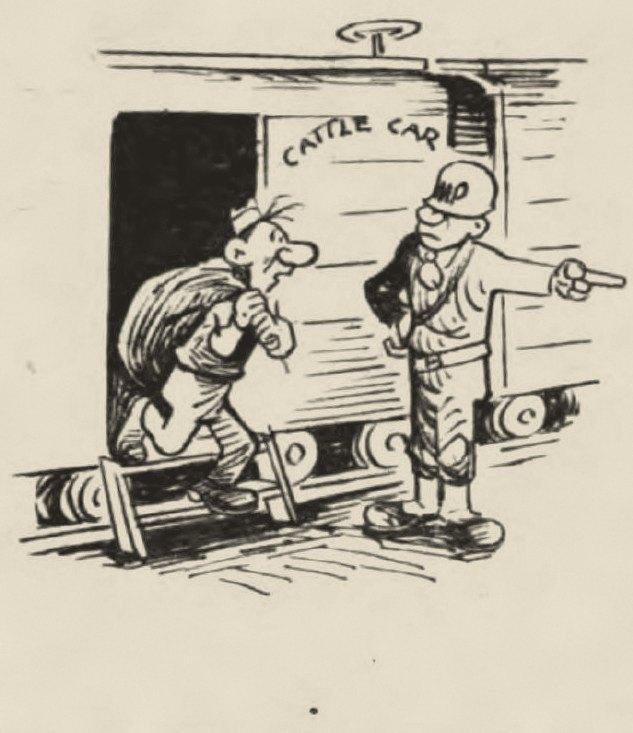
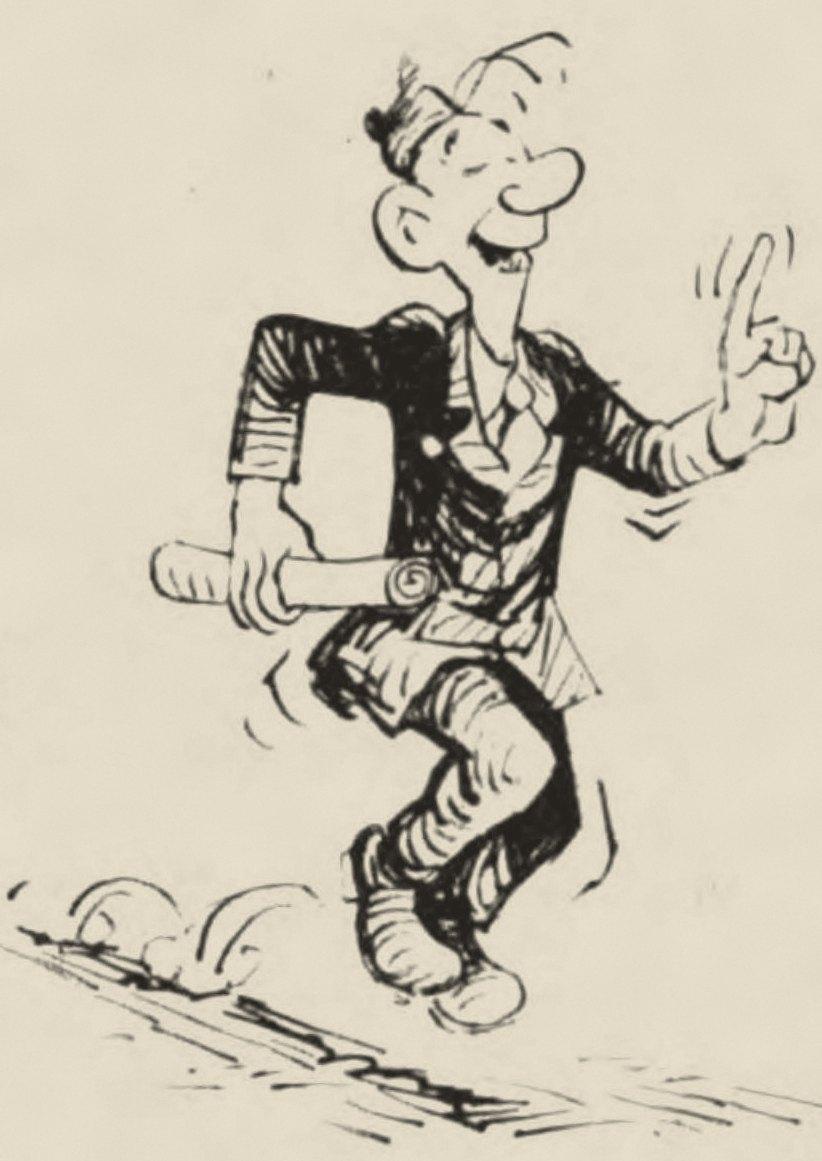
The Sad Sack was the luckless private every GI knew, drawn by Sgt. George Baker for Yank, the Army’s own weekly. He never says a word. Here are four strips from 1945, from the trip home to the hunt for a room. Each strip opens full size.
  1. Home, Sweet HomeJune 29
  2. Simple ArithmeticAug. 10
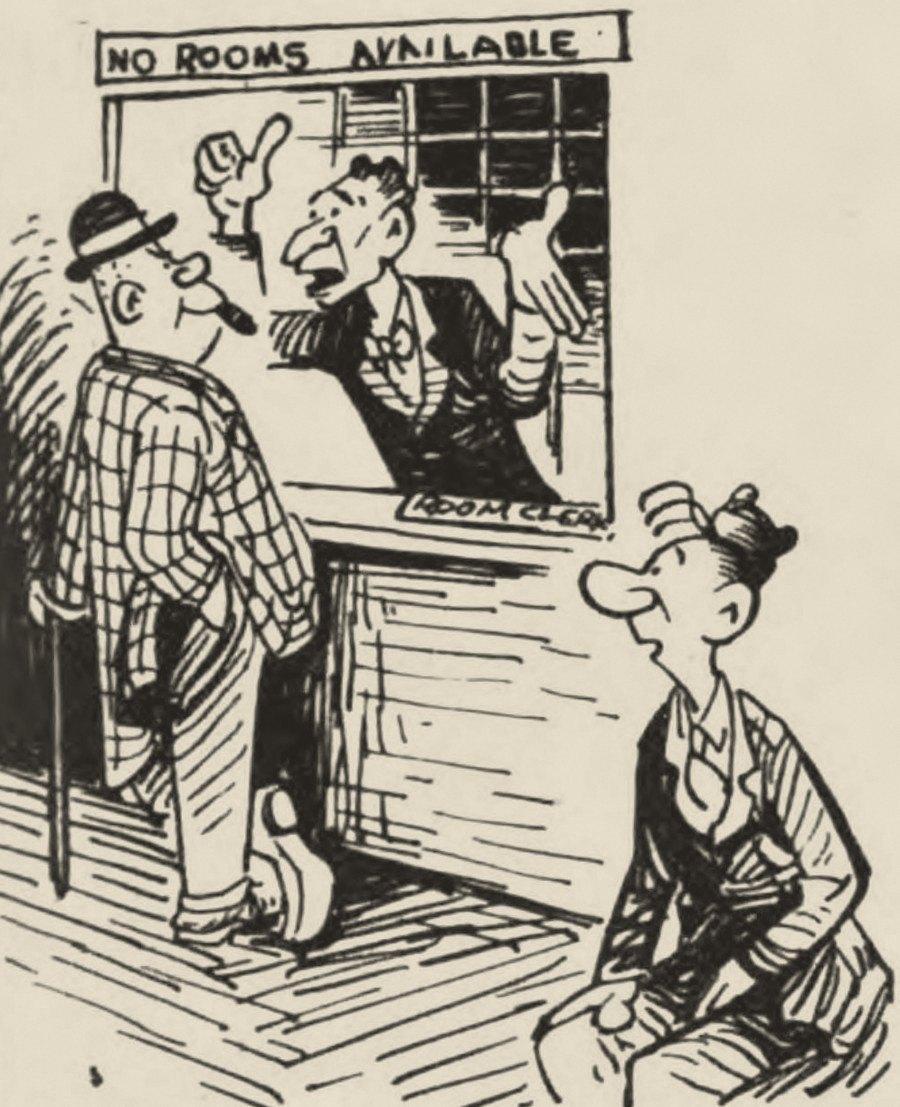
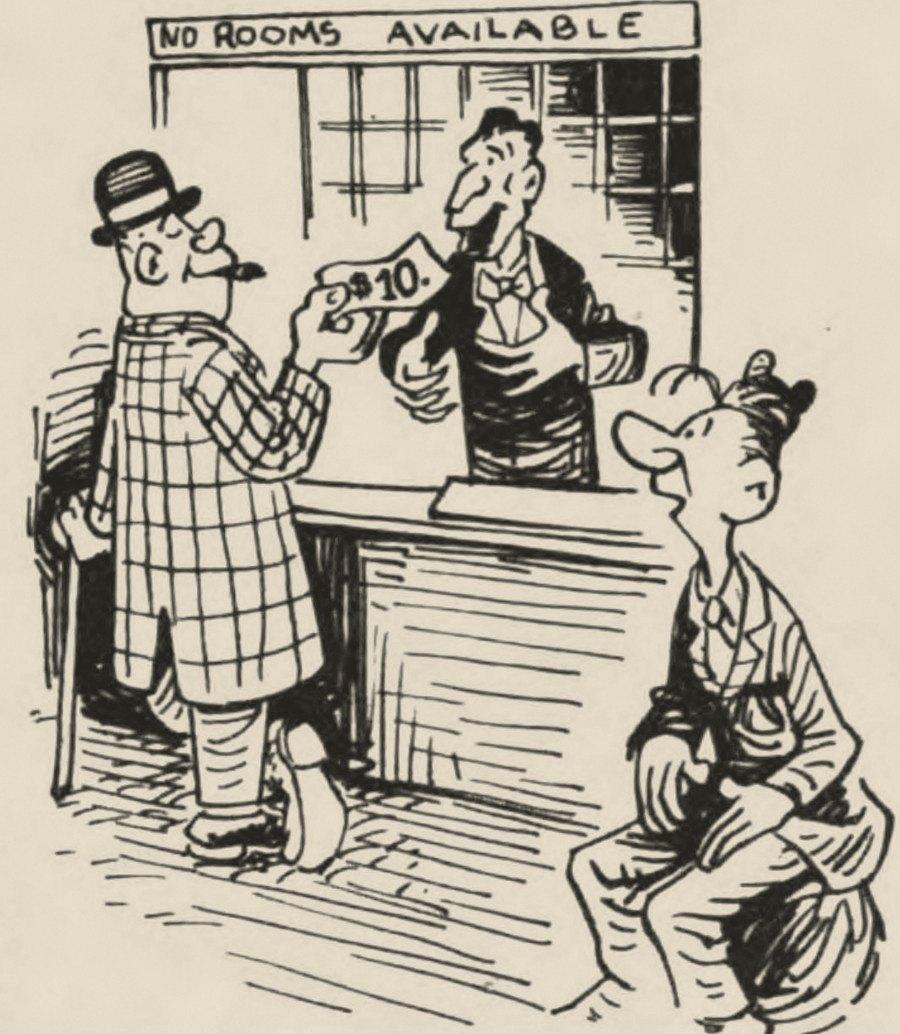
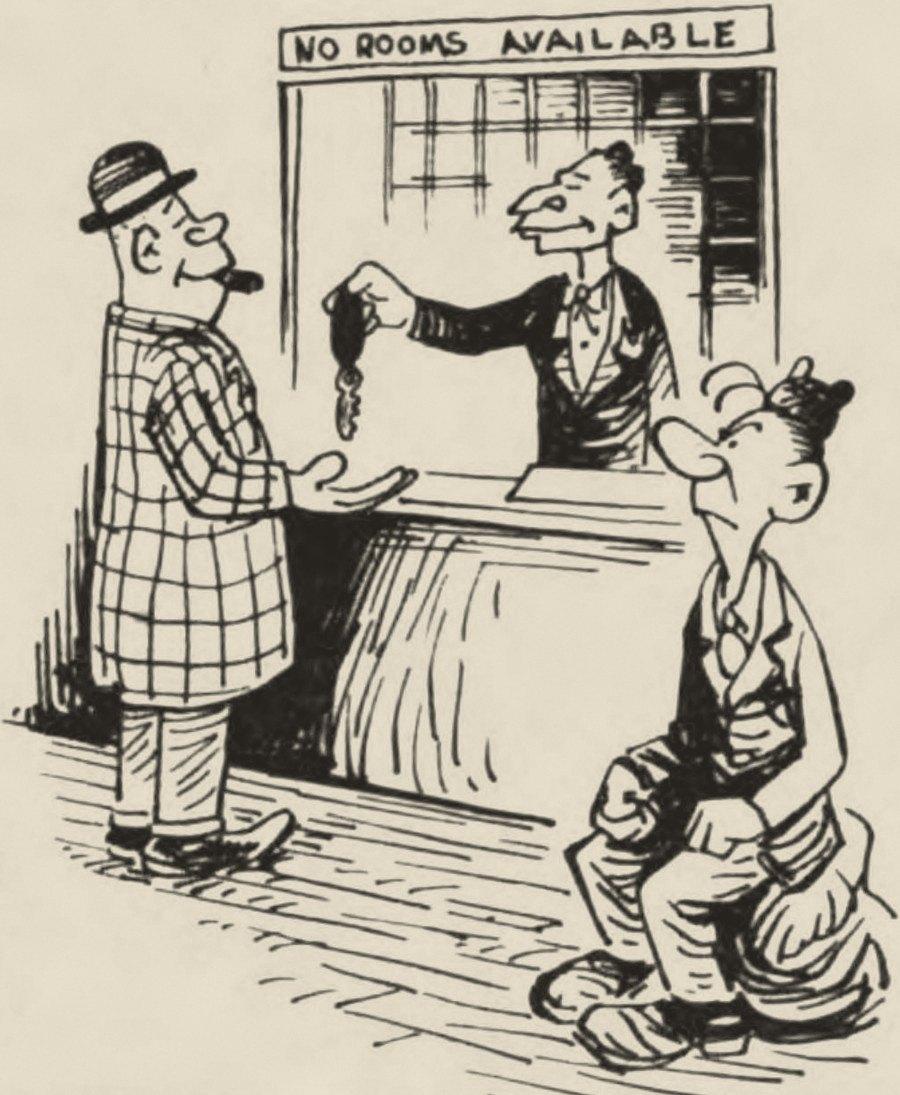
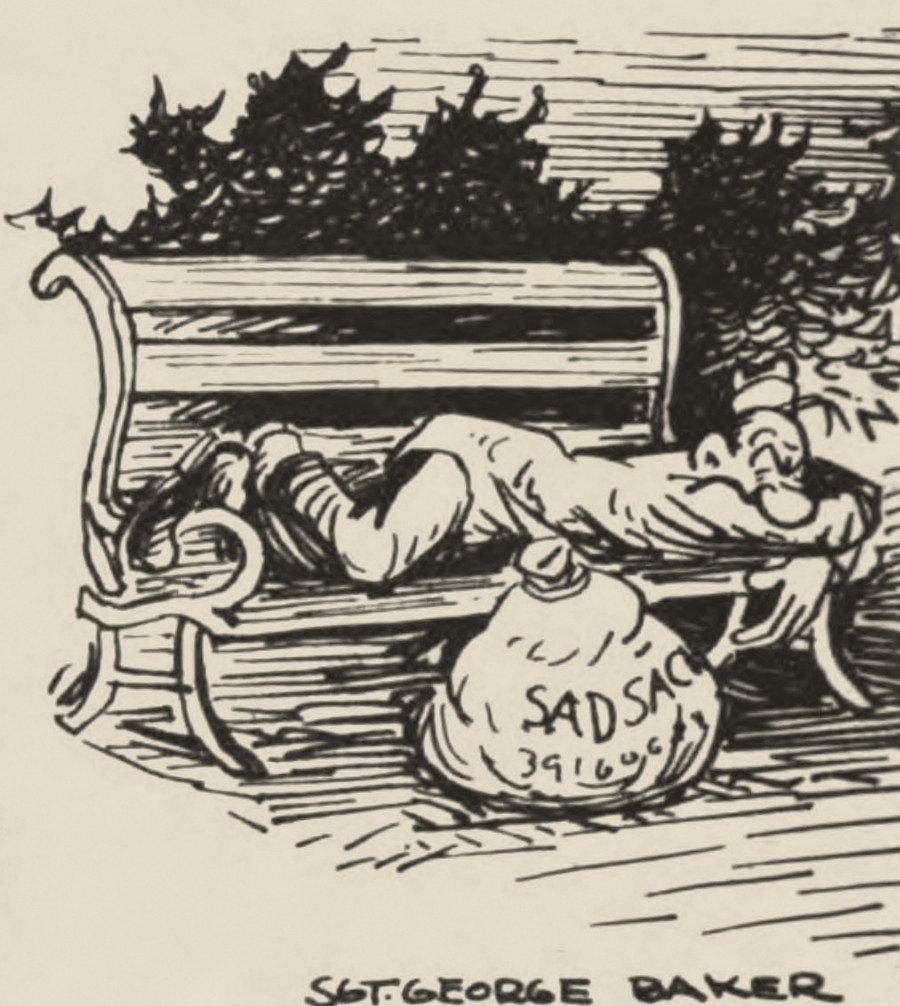
  3. Room RacketDec. 21
  4. Happy DayDec. 28
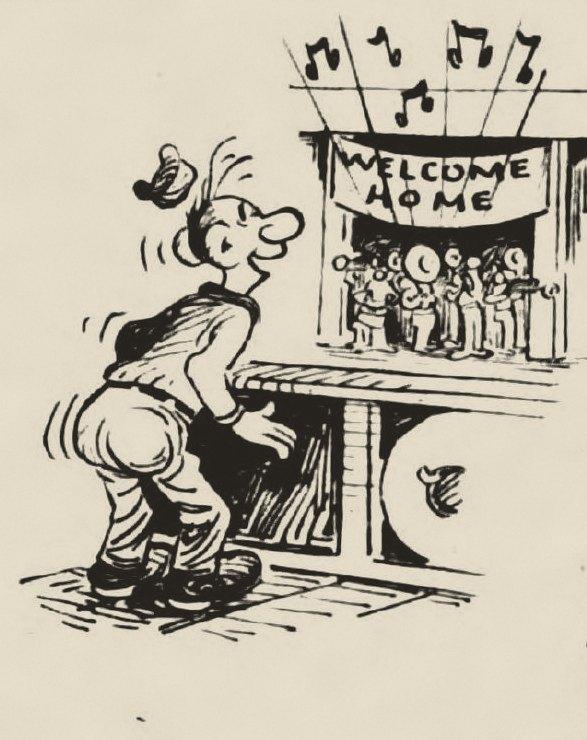
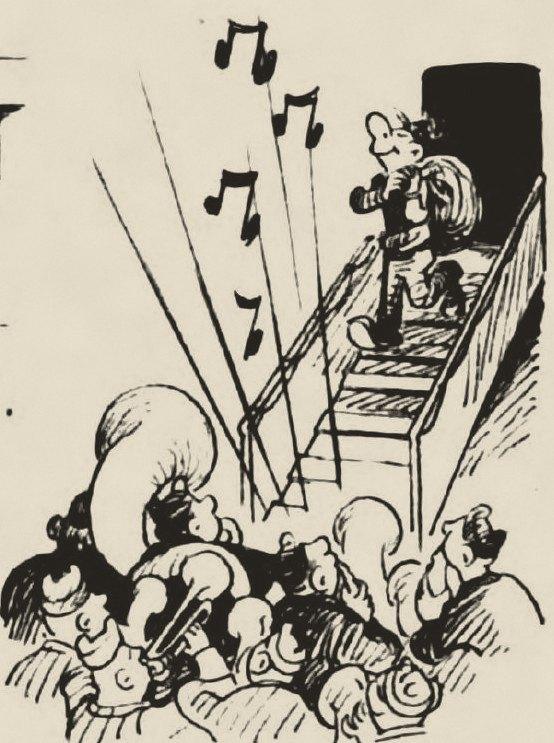
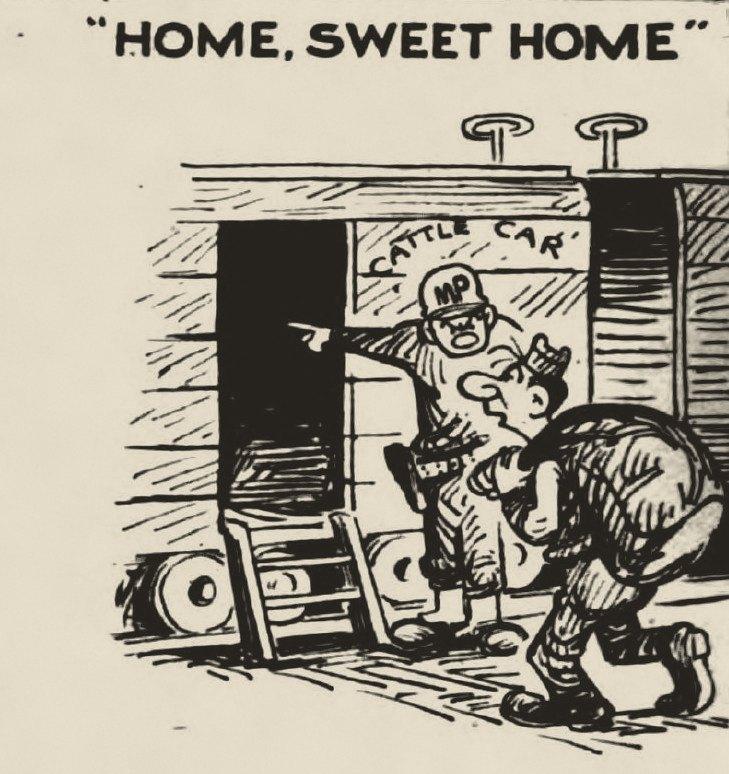
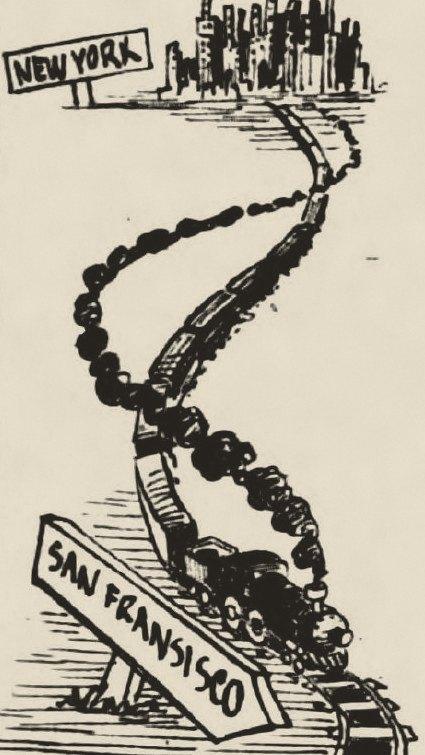
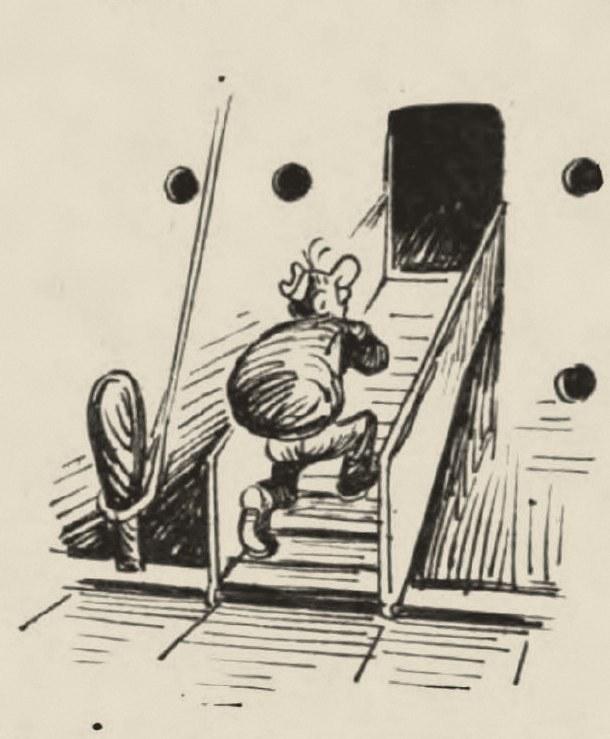
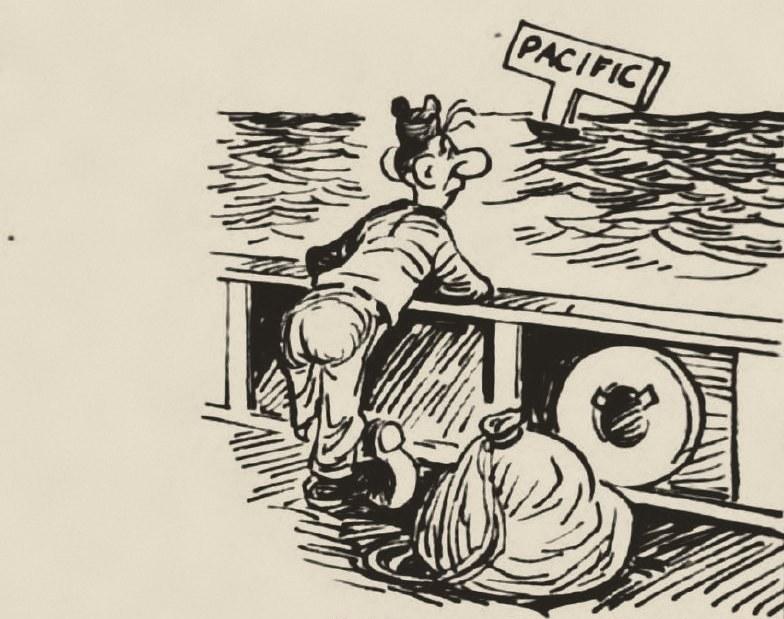
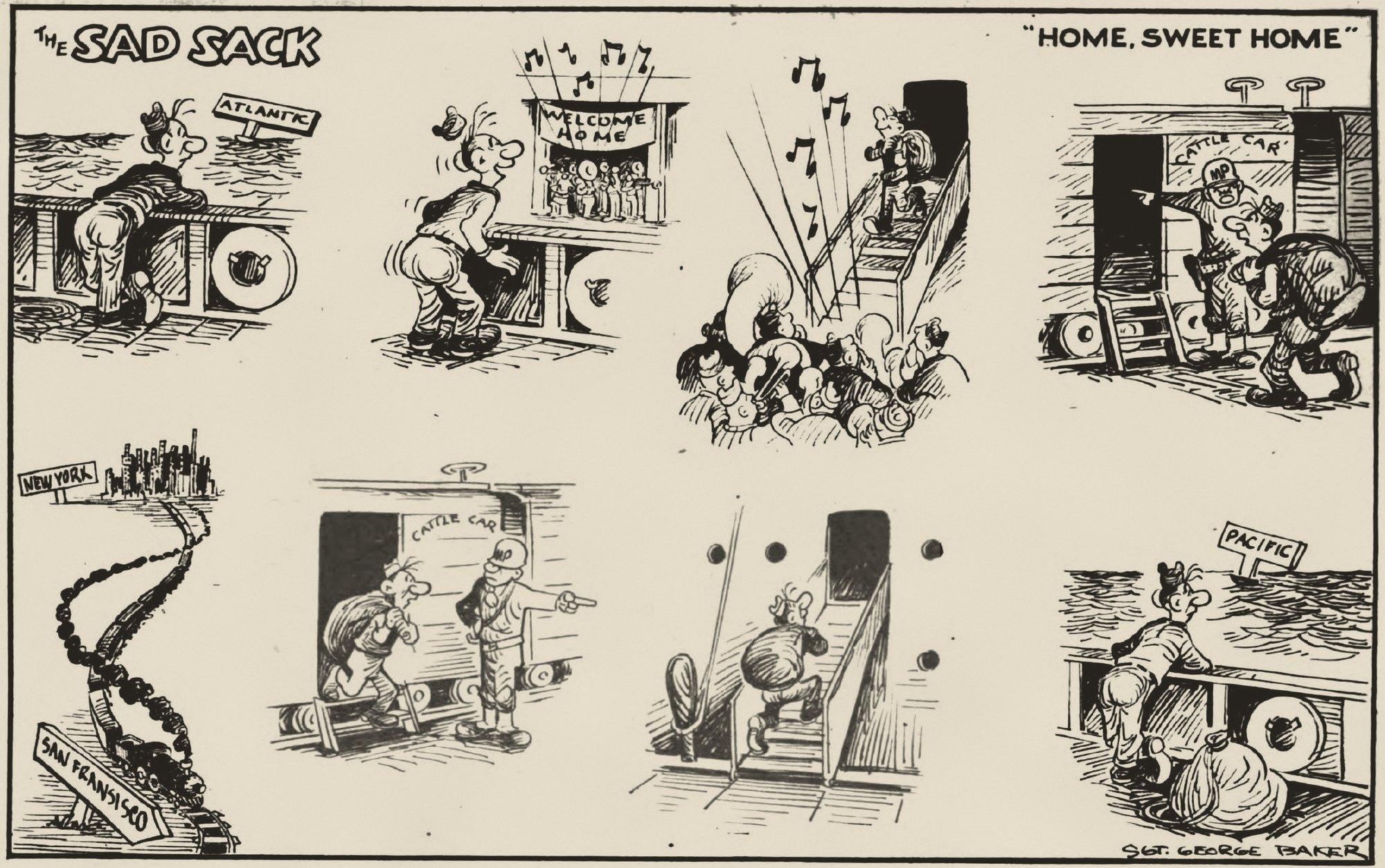
Comic strip in eight panels: the Sad Sack at a ship's rail on the Atlantic, a band under a Welcome Home sign, crowds at the gangway, an MP pointing him to a cattle car, a train from New York to San Francisco, the cattle car again, up a gangway, and at the rail again with a sign reading Pacific.
  1. Comic strip in eight panels: the Sad Sack at a ship's rail on the Atlantic, a band under a Welcome Home sign, crowds at the gangway, an MP pointing him to a cattle car, a train from New York to San Francisco, the cattle car again, up a gangway, and at the rail again with a sign reading Pacific.
Sgt. George Baker in Yank, June 29, 1945
About this stripThe Sad Sack sails home across the Atlantic to a band and a Welcome Home sign, rides a cattle car from New York to San Francisco, and sails out again for the Pacific.
Next strip: “Simple Arithmetic”
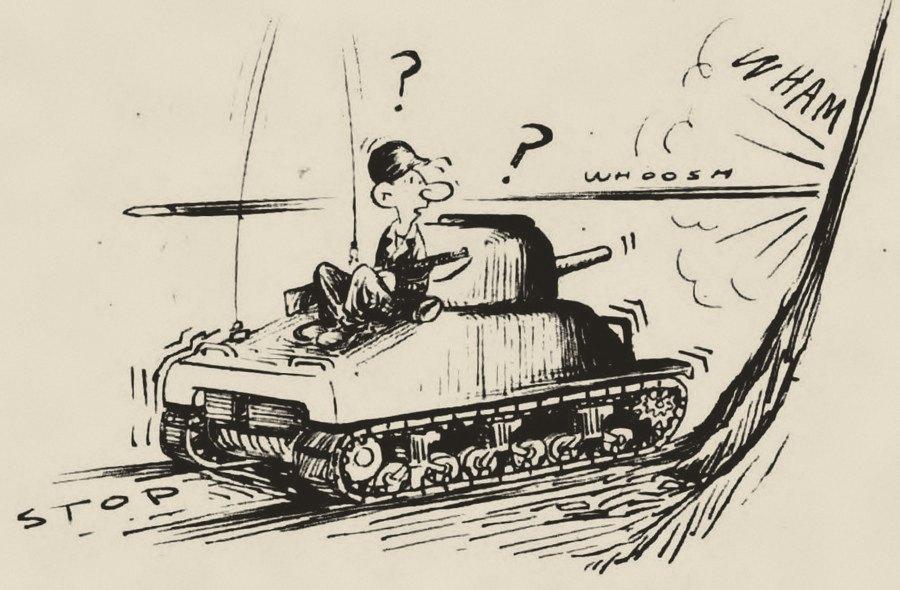
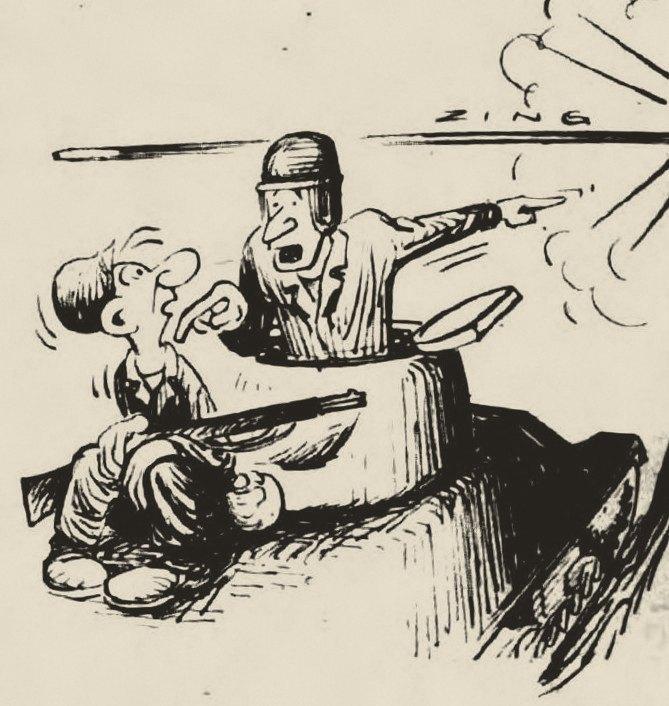
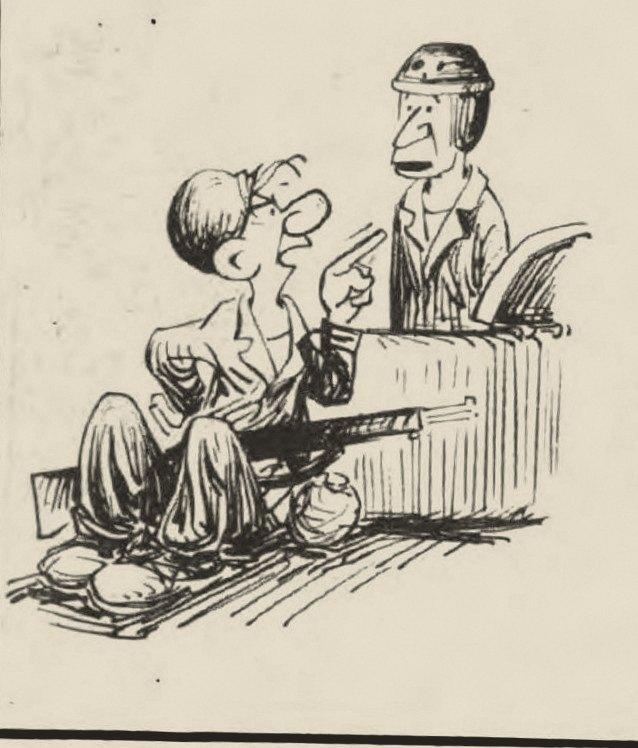
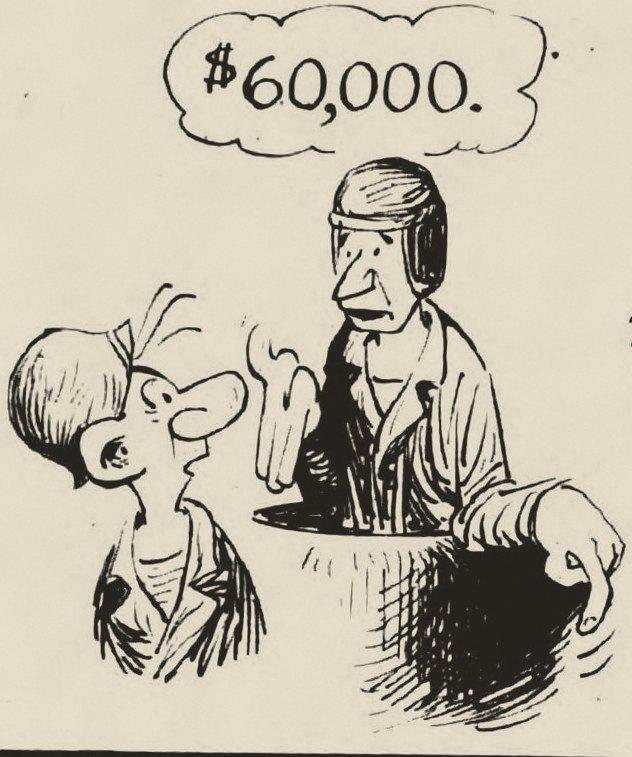
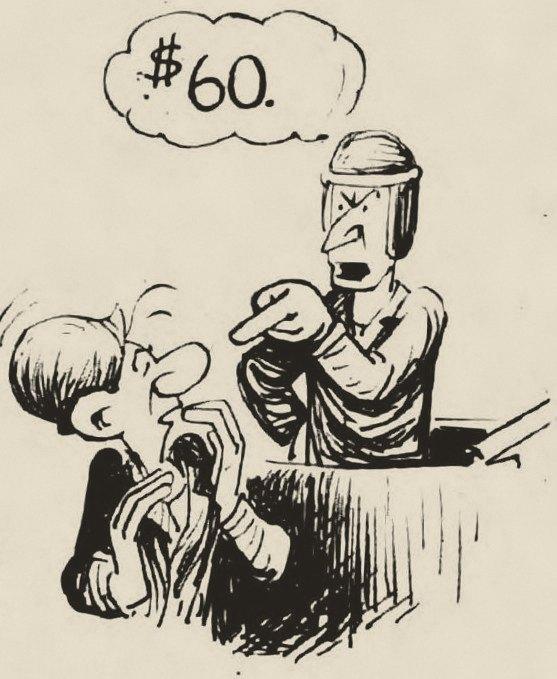
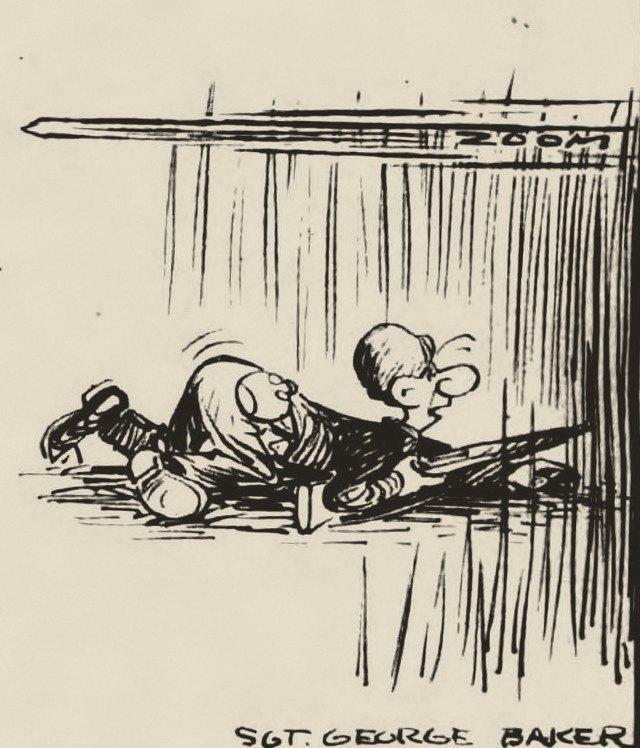
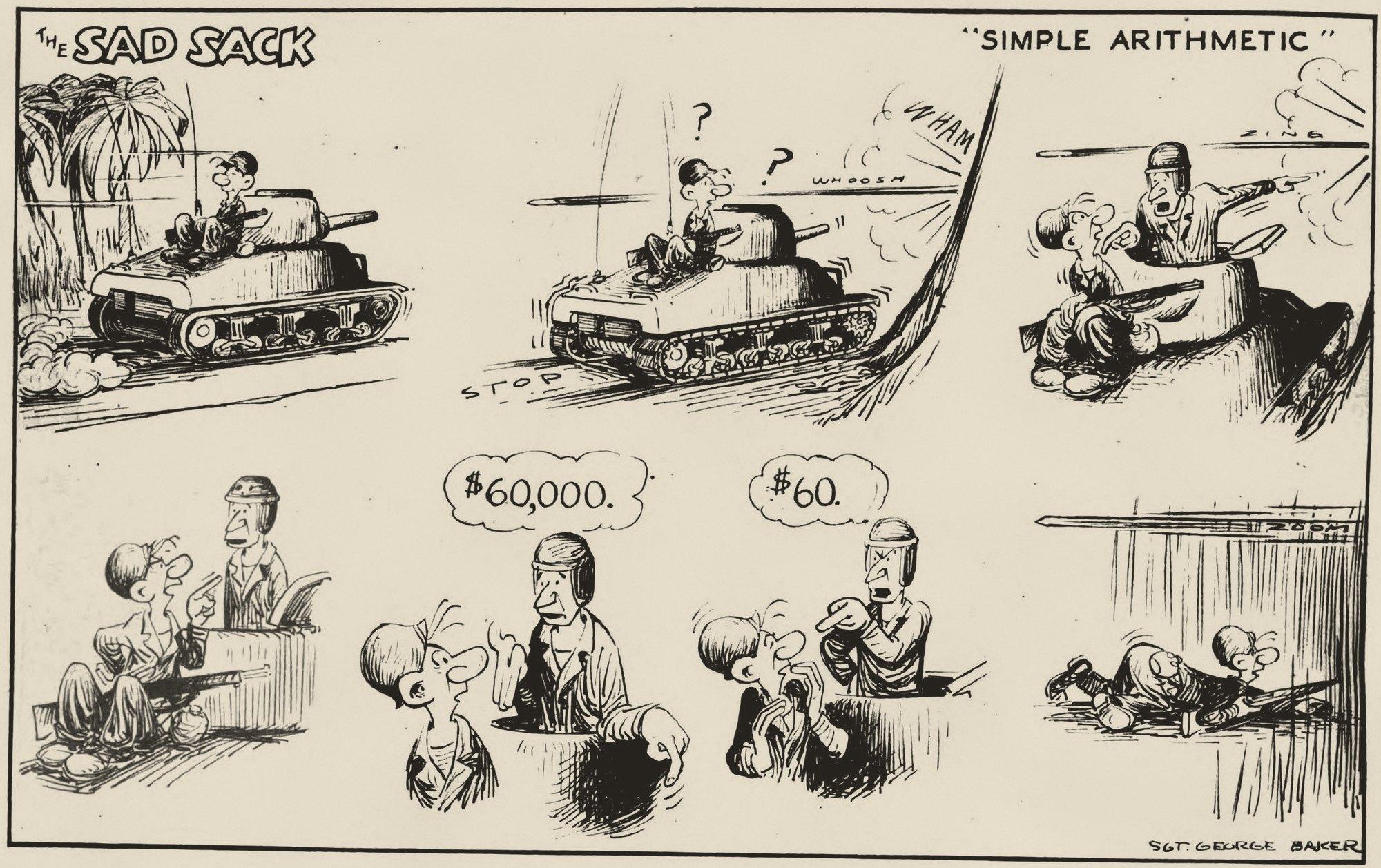
Comic strip in seven panels: the Sad Sack rides on top of a tank, shells whoosh past, the tank commander pops out of the hatch, then thinks "$60,000" about the tank and "$60" about the Sad Sack, who ends up crawling along the ground as a shell zooms overhead.
  1. Comic strip in seven panels: the Sad Sack rides on top of a tank, shells whoosh past, the tank commander pops out of the hatch, then thinks "$60,000" about the tank and "$60" about the Sad Sack, who ends up crawling along the ground as a shell zooms overhead.
Sgt. George Baker in Yank, Aug. 10, 1945
About this stripRiding on top of a tank under fire, the Sad Sack asks to come inside, and the tank commander does the sum: the tank cost $60,000, the Sad Sack $60.
Next strip: “Room Racket”
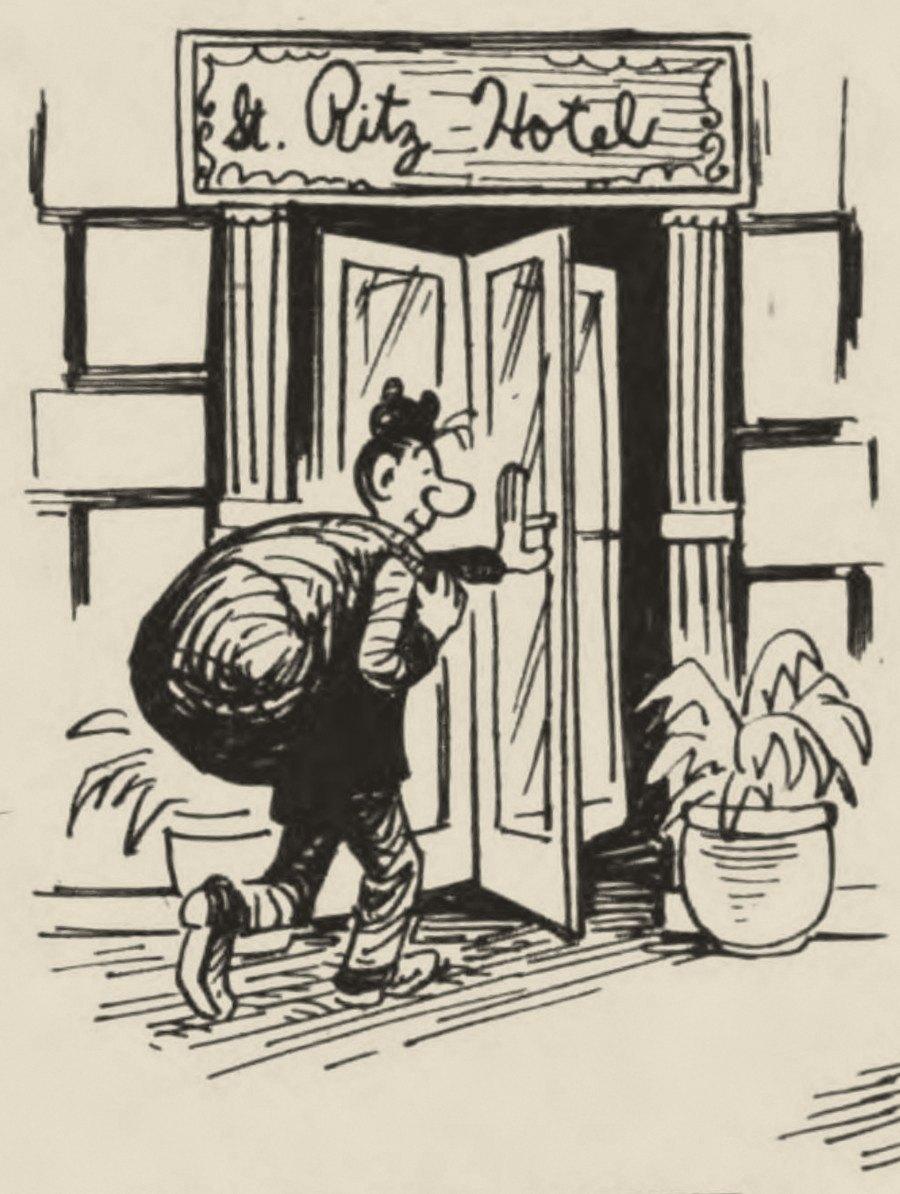
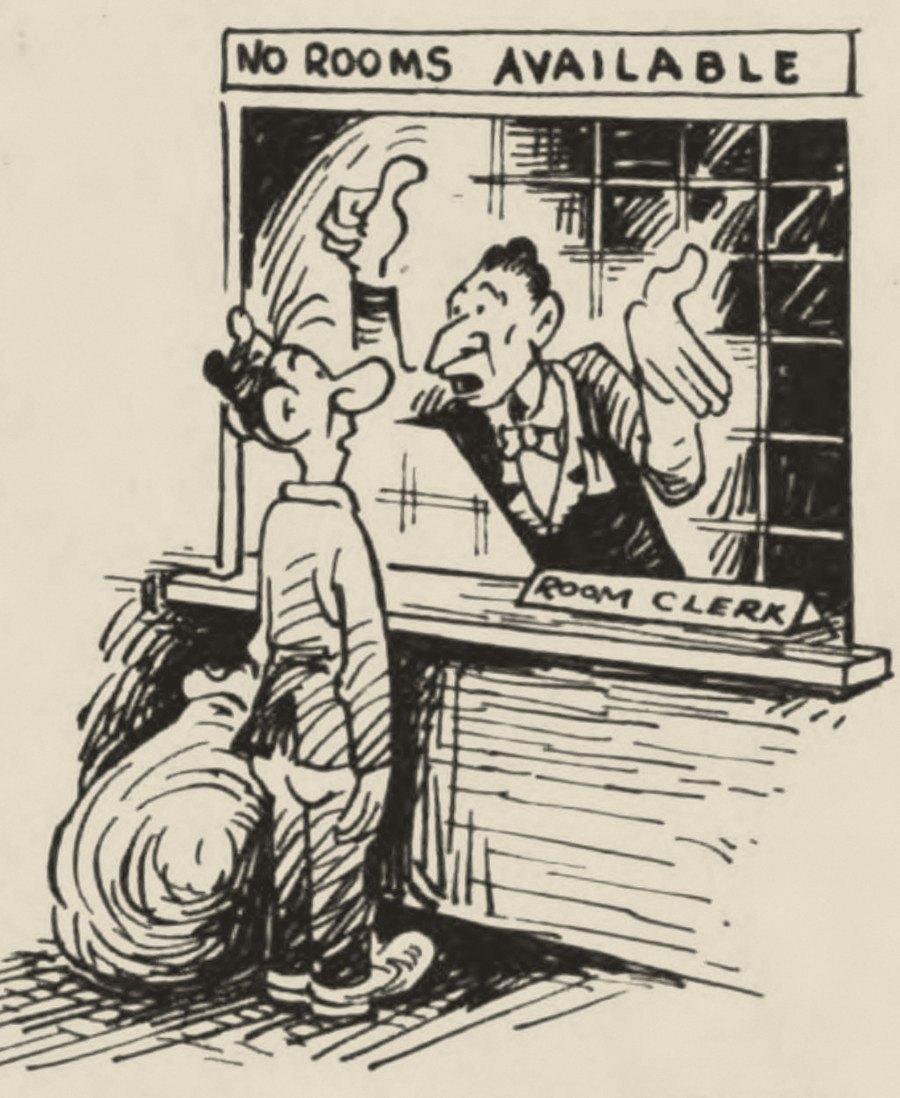
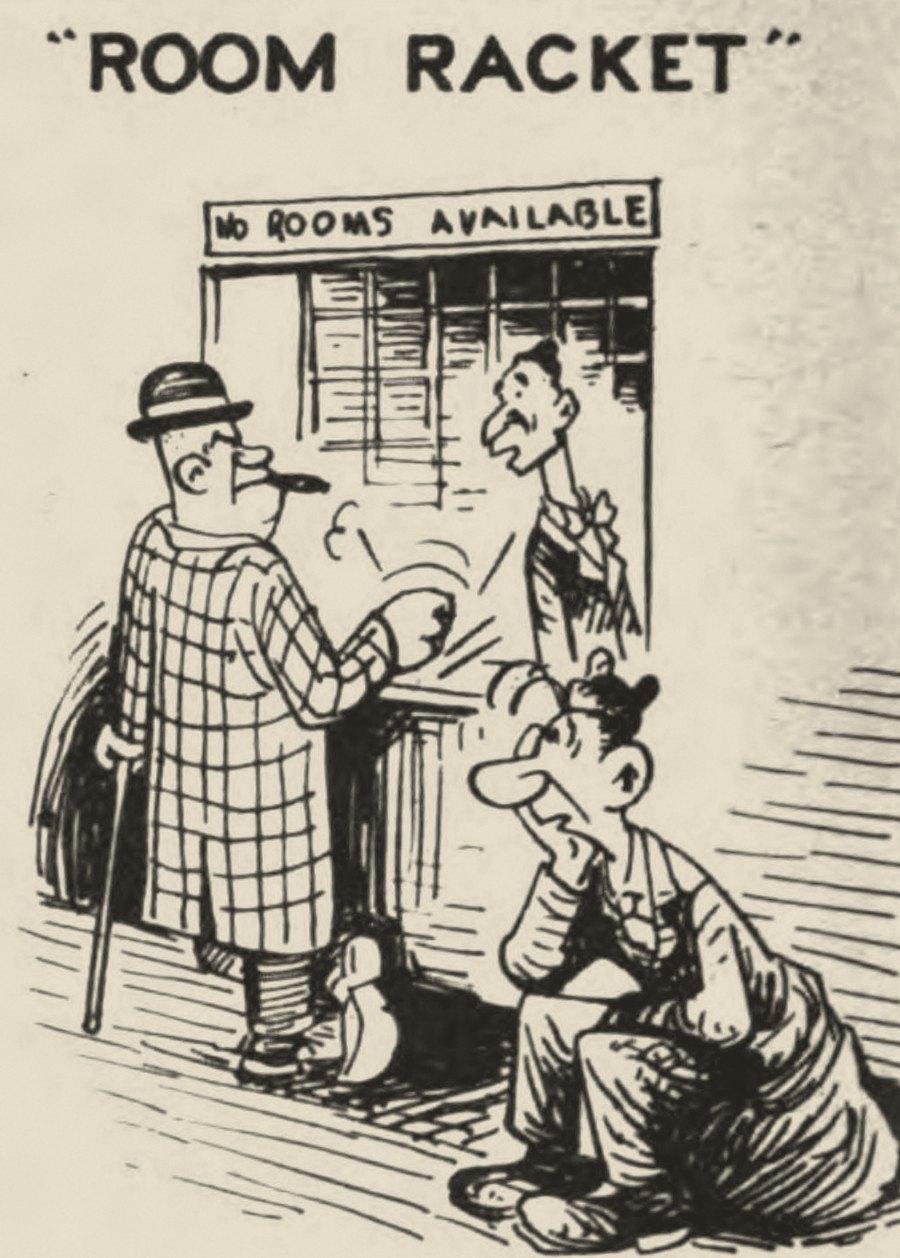
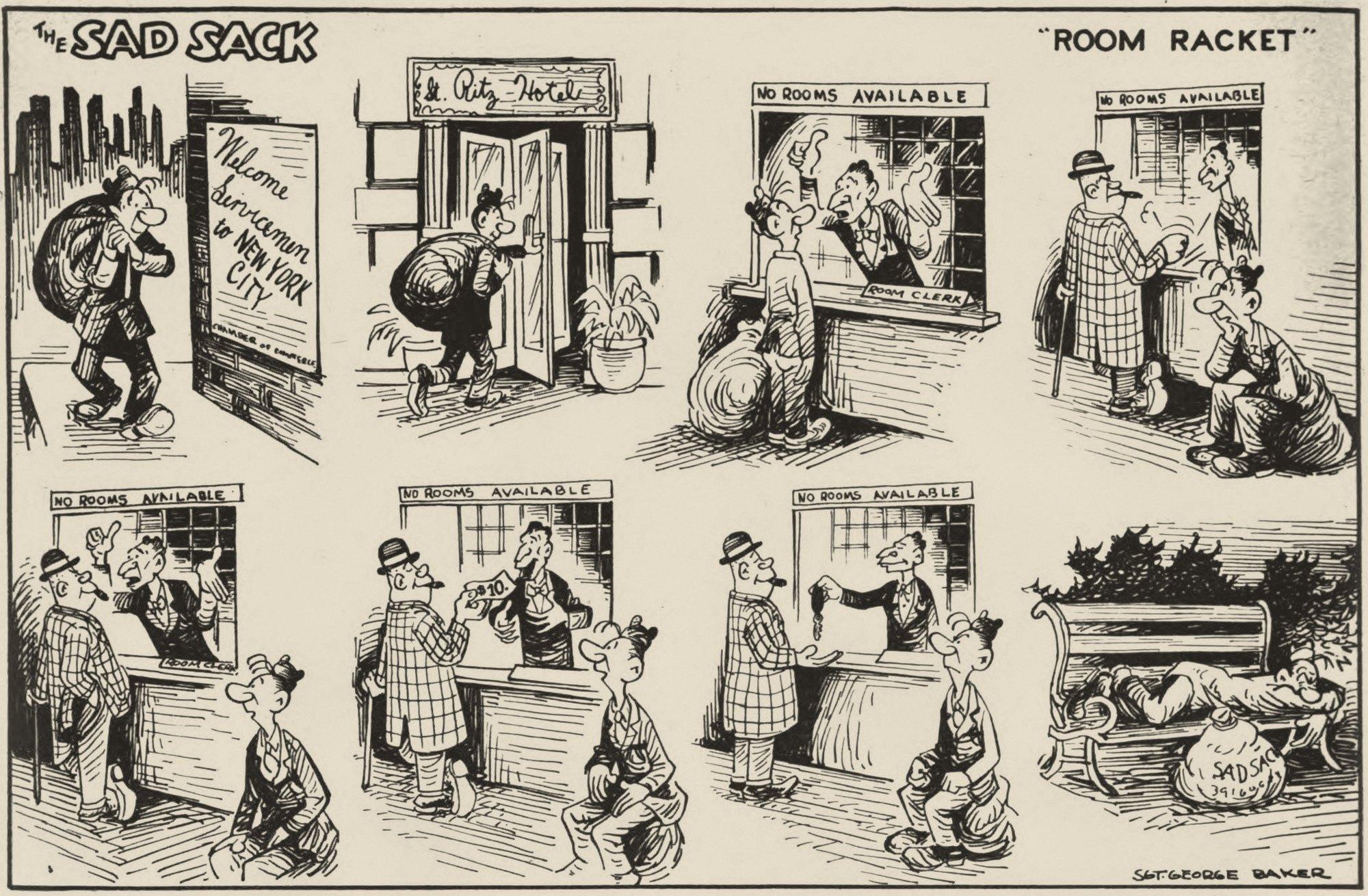
Comic strip in eight panels: the Sad Sack passes a Welcome Servicemen to New York City sign and enters the St. Ritz Hotel, the clerk under a No Rooms Available sign turns him away, a man in a checked coat hands the clerk a $10 bill and gets a key, and the Sad Sack sleeps on a park bench with his barracks bag.
  1. Comic strip in eight panels: the Sad Sack passes a Welcome Servicemen to New York City sign and enters the St. Ritz Hotel, the clerk under a No Rooms Available sign turns him away, a man in a checked coat hands the clerk a $10 bill and gets a key, and the Sad Sack sleeps on a park bench with his barracks bag.
Sgt. George Baker in Yank, Dec. 21, 1945
About this stripBack in New York, the Sad Sack hears "No rooms available" at the hotel desk, while a man with a cigar slips the clerk $10 and gets a key. The Sad Sack sleeps on a park bench.
Next strip: “Happy Day”
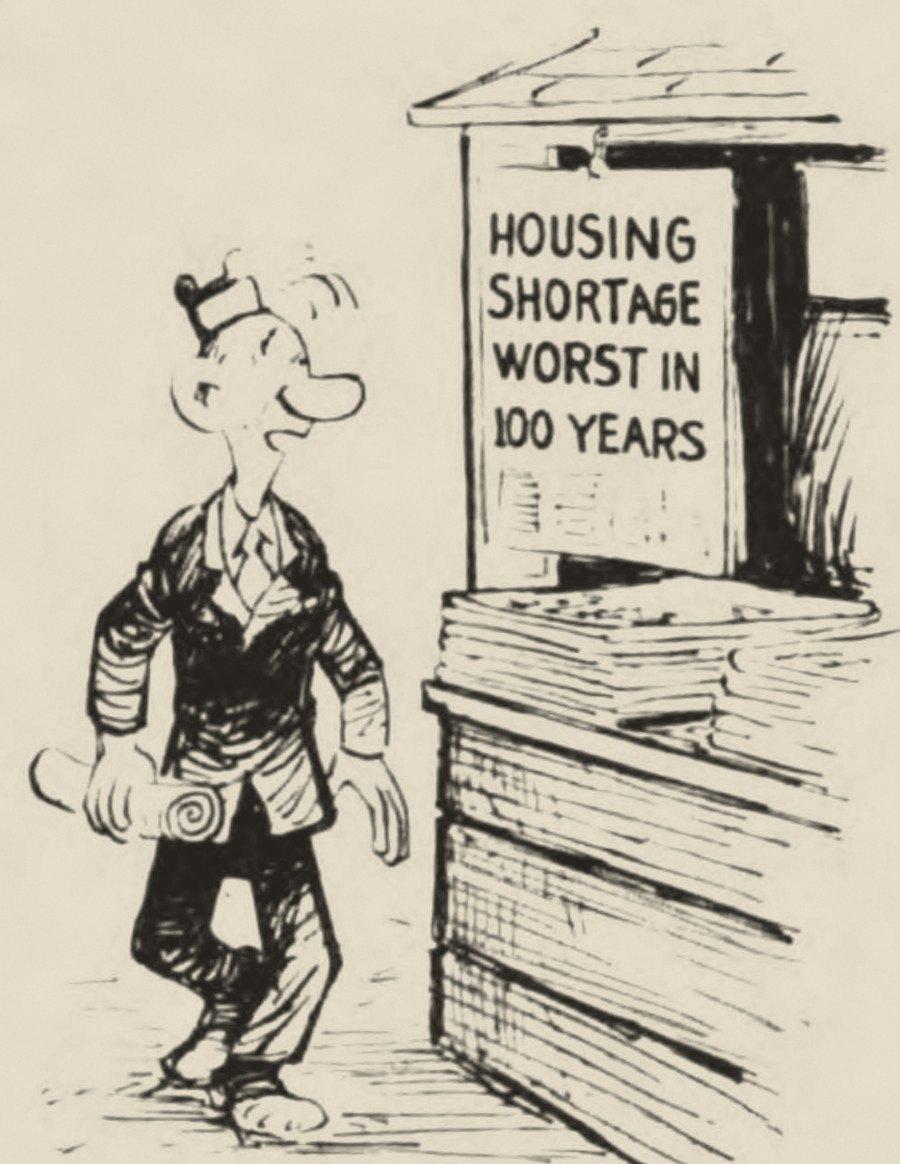
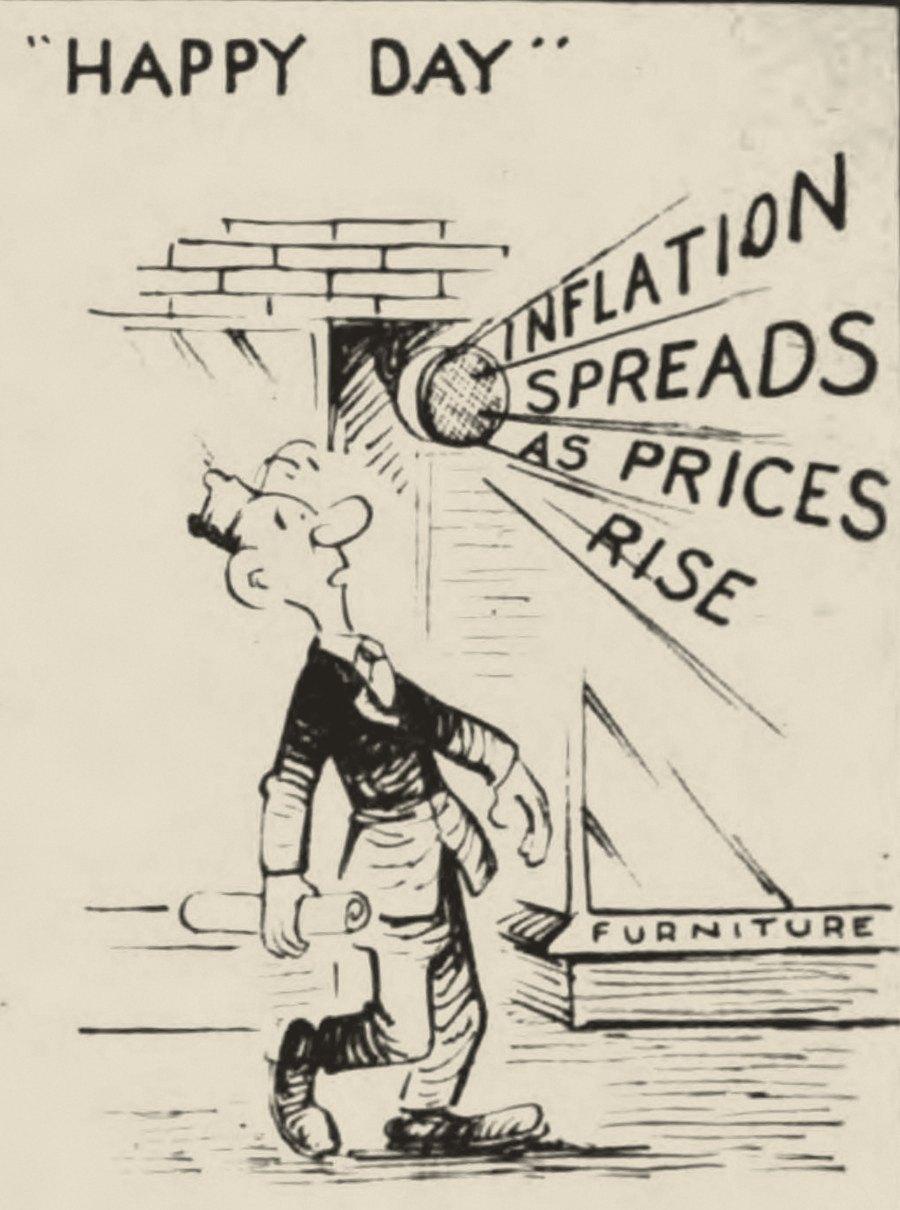
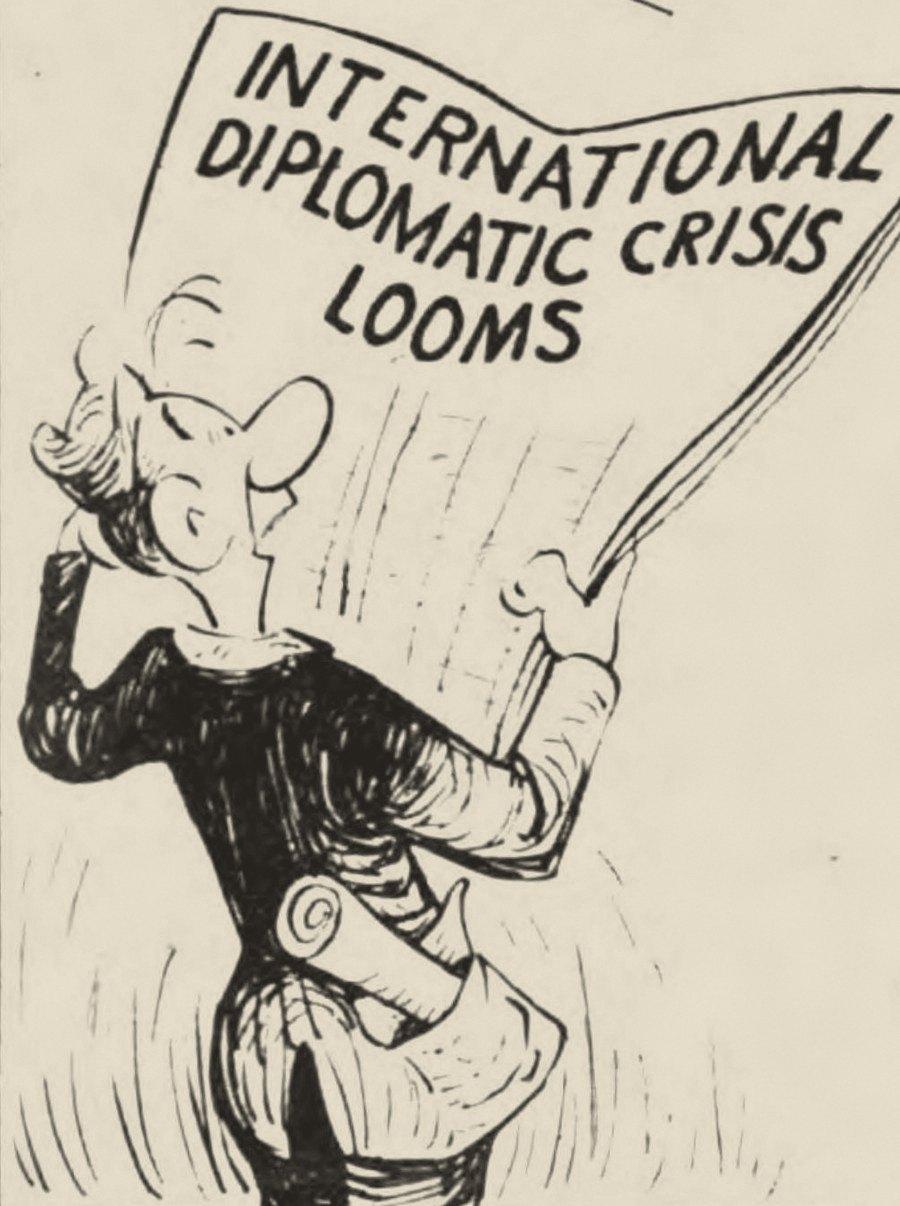
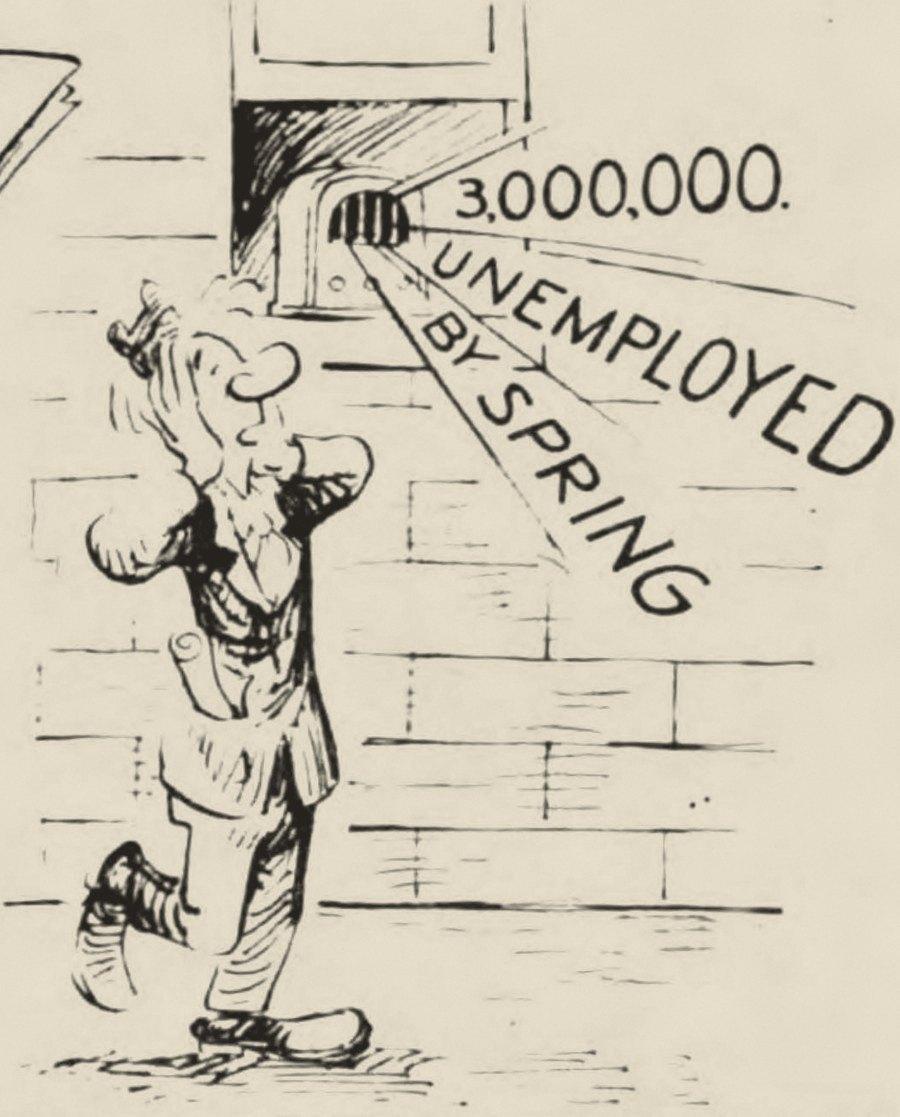
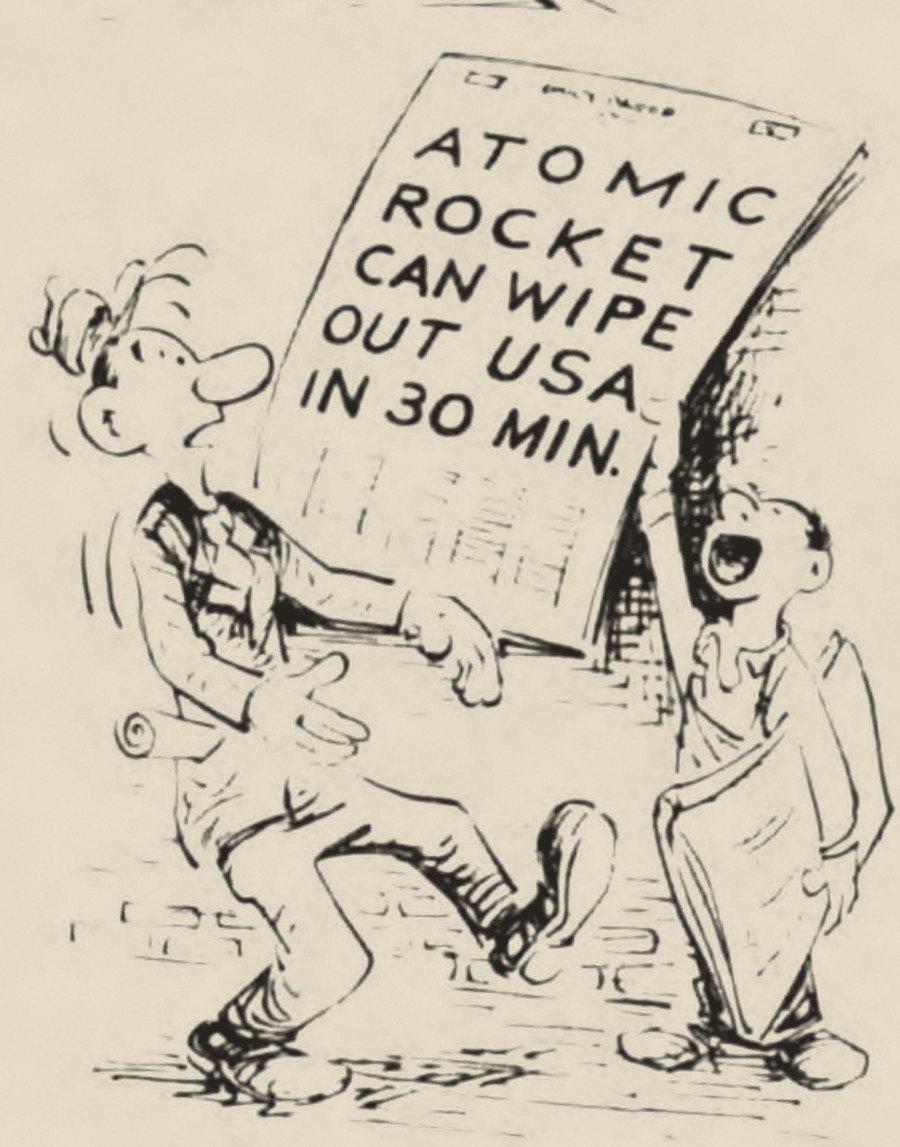
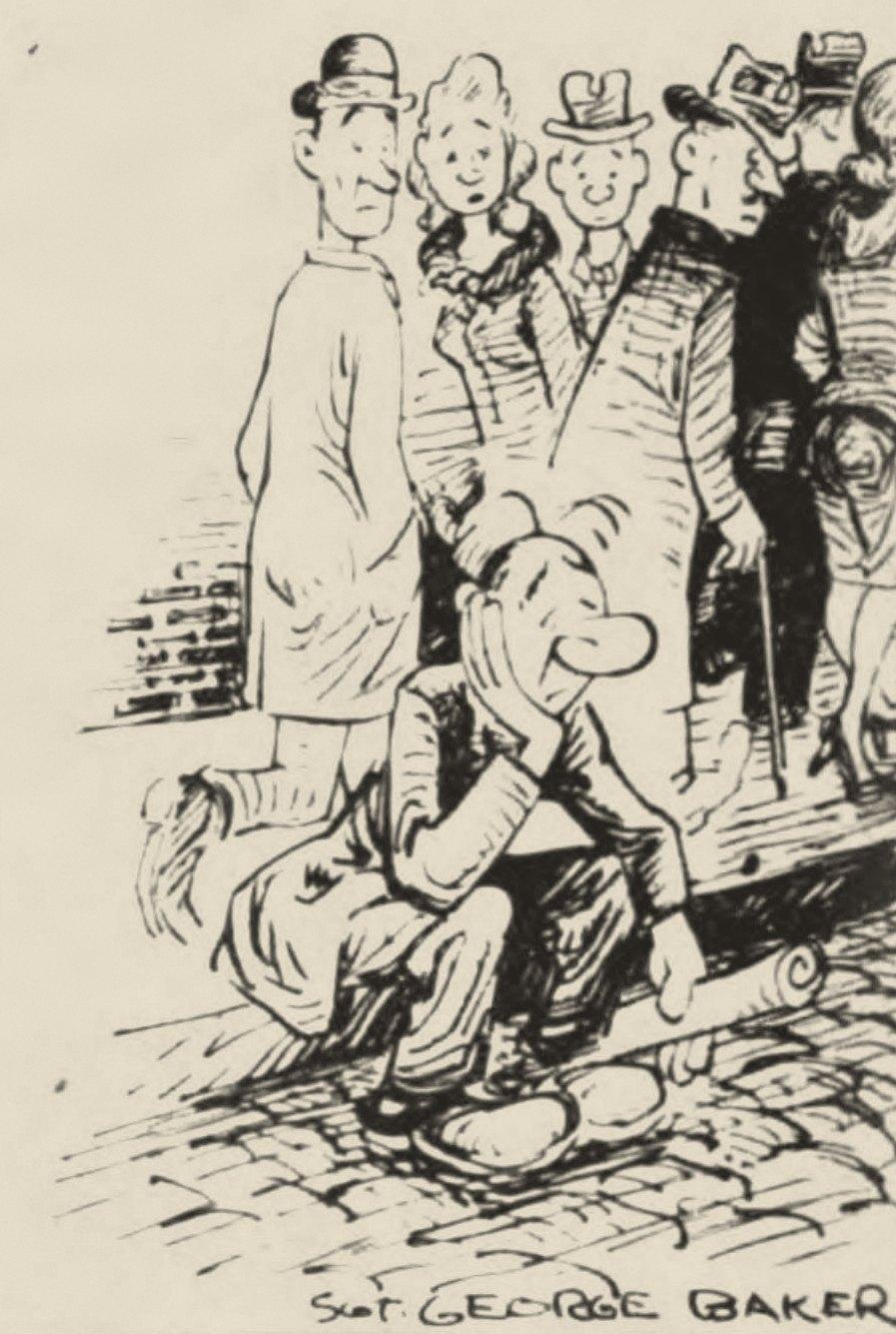
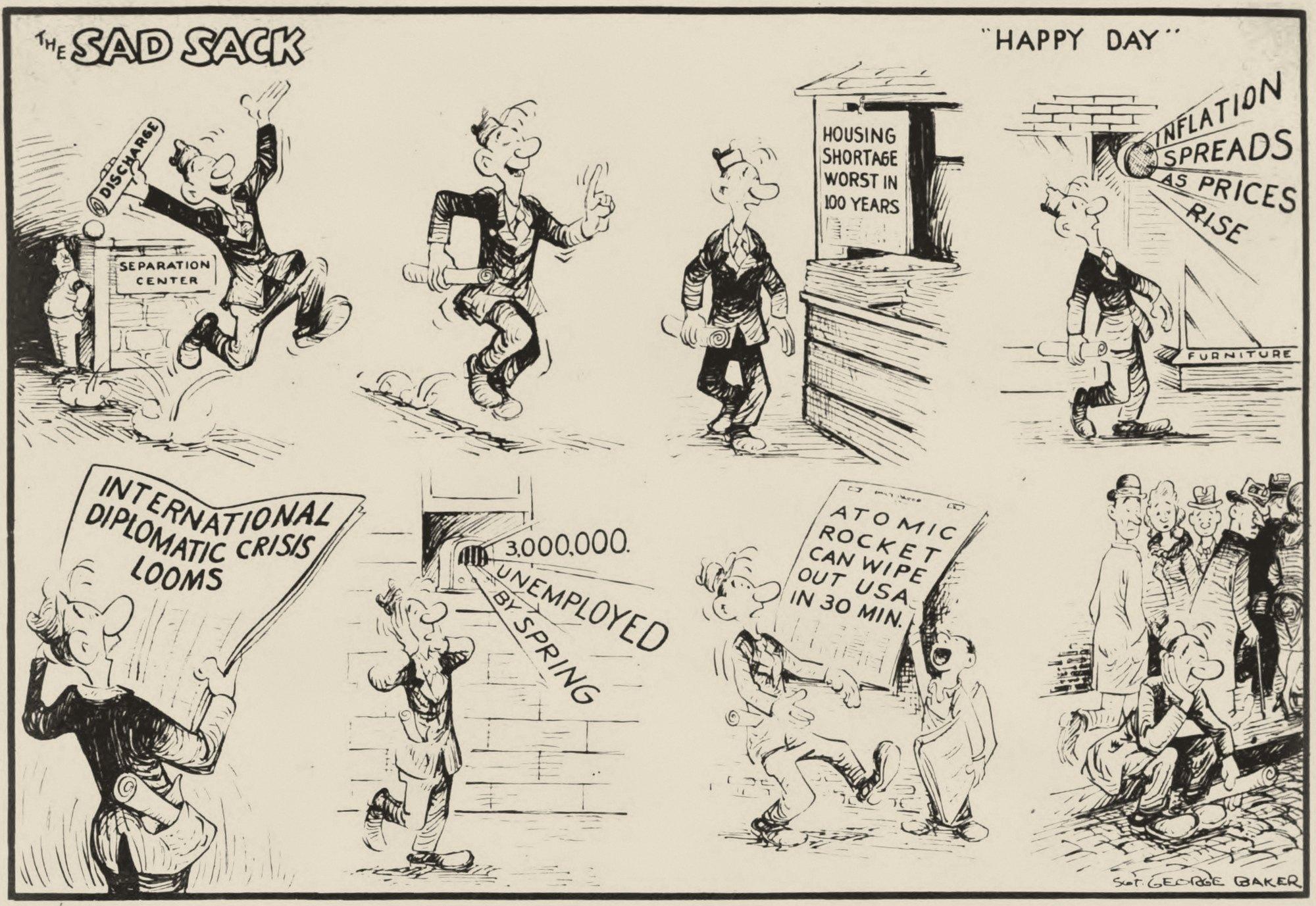
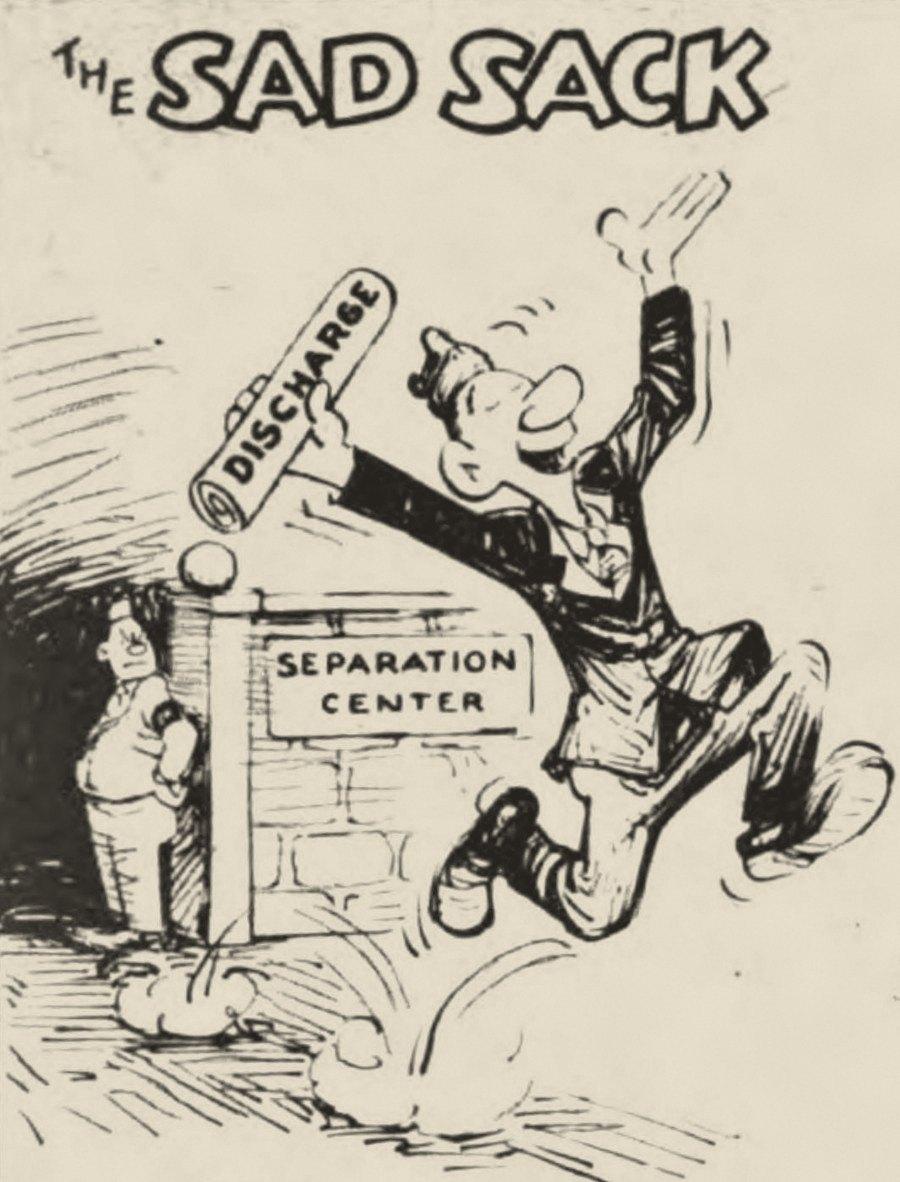
Comic strip in eight panels: the Sad Sack leaps out of a separation center waving his discharge, then meets signs reading Housing Shortage Worst in 100 Years and Inflation Spreads as Prices Rise, headlines about an international diplomatic crisis, 3,000,000 unemployed by spring and an atomic rocket that can wipe out the USA in 30 minutes, and ends sitting dazed on the curb in a crowd.
  1. Comic strip in eight panels: the Sad Sack leaps out of a separation center waving his discharge, then meets signs reading Housing Shortage Worst in 100 Years and Inflation Spreads as Prices Rise, headlines about an international diplomatic crisis, 3,000,000 unemployed by spring and an atomic rocket that can wipe out the USA in 30 minutes, and ends sitting dazed on the curb in a crowd.
Sgt. George Baker in Yank, Dec. 28, 1945
About this stripDischarge in hand, the Sad Sack skips out of the separation center into the housing shortage, rising prices, a diplomatic crisis, 3,000,000 jobless by spring and the atomic rocket.

The Sad Sack by Sgt. George Baker, from Yank, the Army Weekly. Scans: University of Michigan, on the Internet Archive.

The cartoons in the paper

Clifford Berryman and his son Jim drew for the front page of the Evening Star in Washington, and John Knott for the Dallas Morning News. Here is 1945 as they saw it. Each cartoon opens full size, with its words typed out.
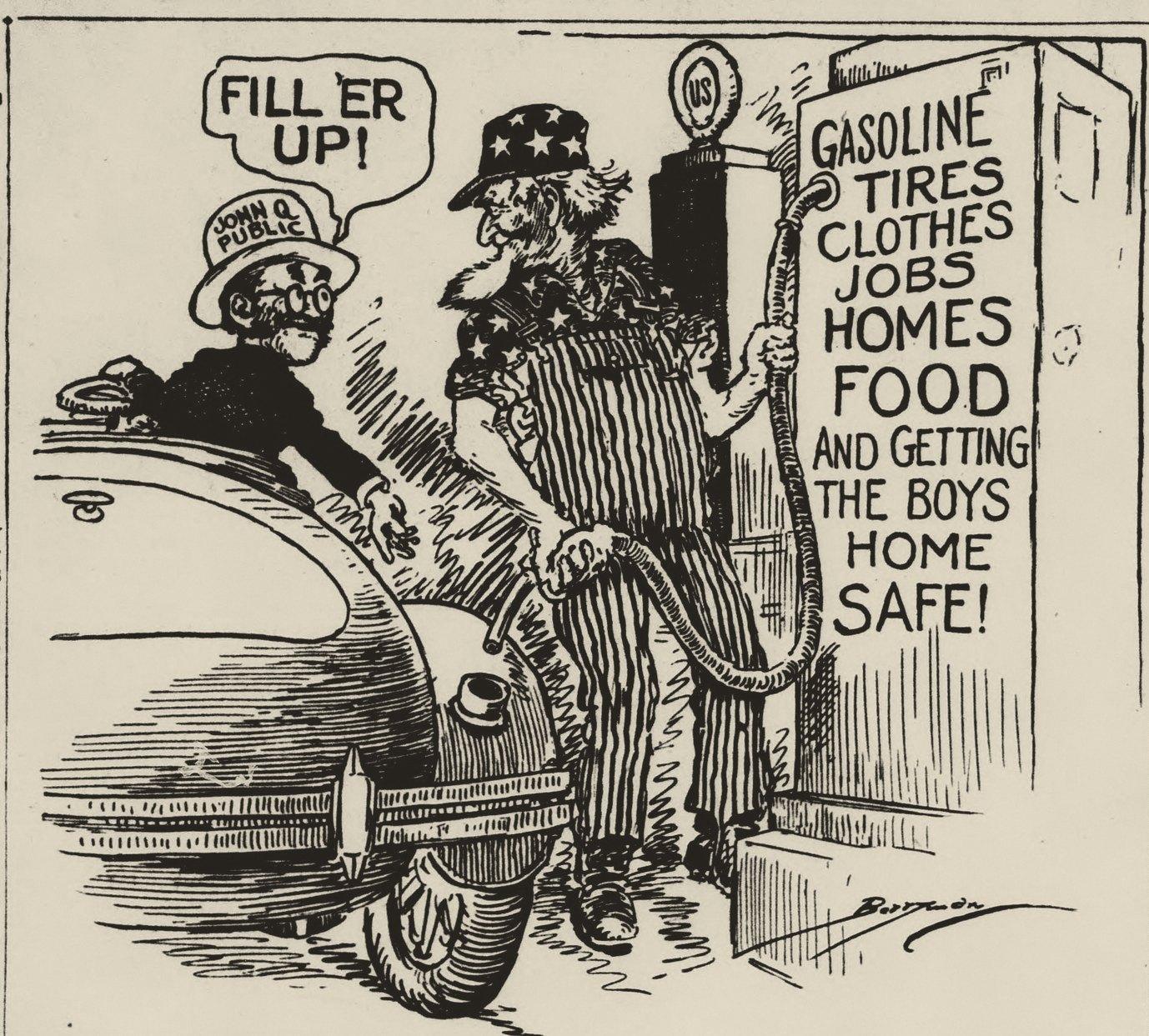
Cartoon: John Q. Public leans out of his car and says "Fill 'er up!" as Uncle Sam works a pump marked gasoline, tires, clothes, jobs, homes, food and getting the boys home safe.
Berryman in the Evening Star, Aug. 17, 1945Two days after gas rationing ended, Berryman draws a country that has waited four years and will not wait a day more.
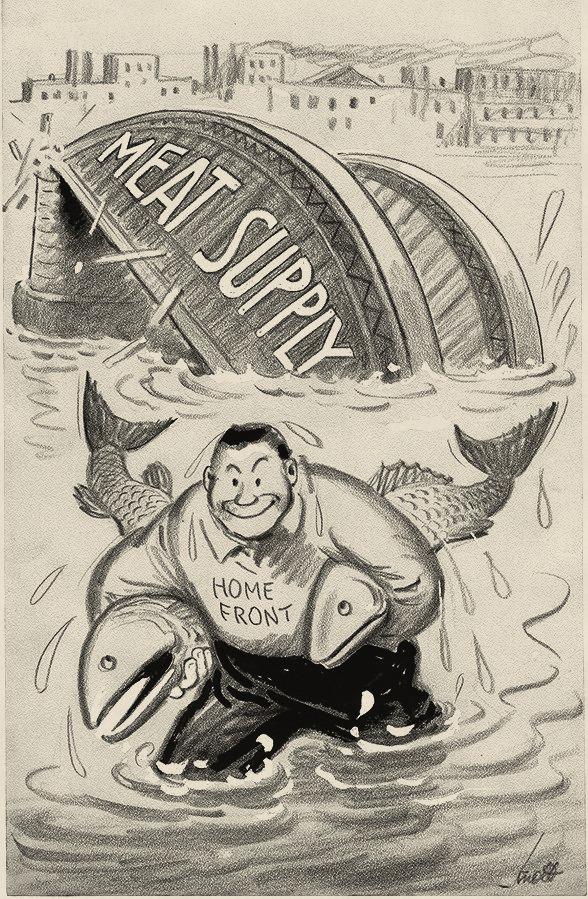
Cartoon: a capsized ship marked Meat Supply lies in a harbor while a grinning man marked Home Front wades out of the water holding big fish.
“Making the Best of It,” Knott in the Dallas Morning News, Mar. 20, 1945Meat was short that spring, and Knott’s home front makes do with fish, grinning all the way.
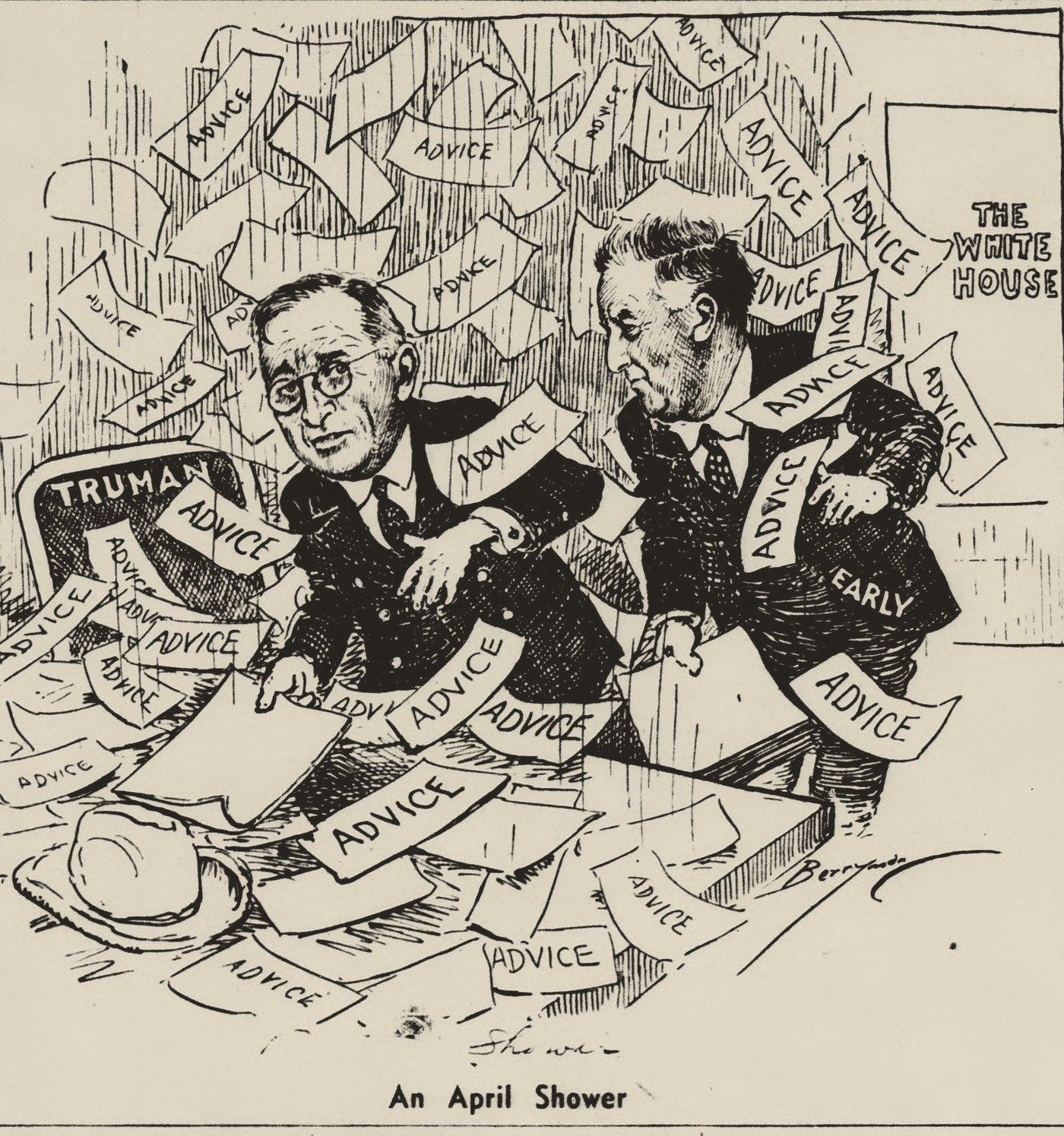
Cartoon: President Truman at a desk marked Truman, with an aide beside him, as sheets marked advice rain down on the White House.
Berryman in the Evening Star, Apr. 19, 1945A week into the job, the new President gets advice from everyone in Washington, whether he wants it or not.
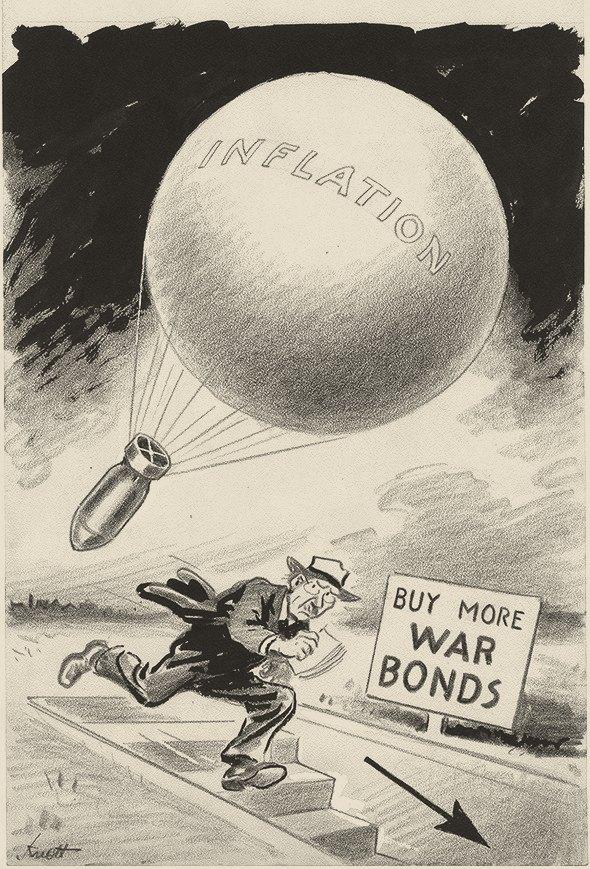
Cartoon: a balloon marked Inflation carries a bomb down out of a black sky as a man runs toward a sign reading Buy More War Bonds.
“A Real Threat,” Knott in the Dallas Morning News, May 24, 1945Two weeks after V-E Day, Knott turns from the war abroad to the one the home front still has to win.
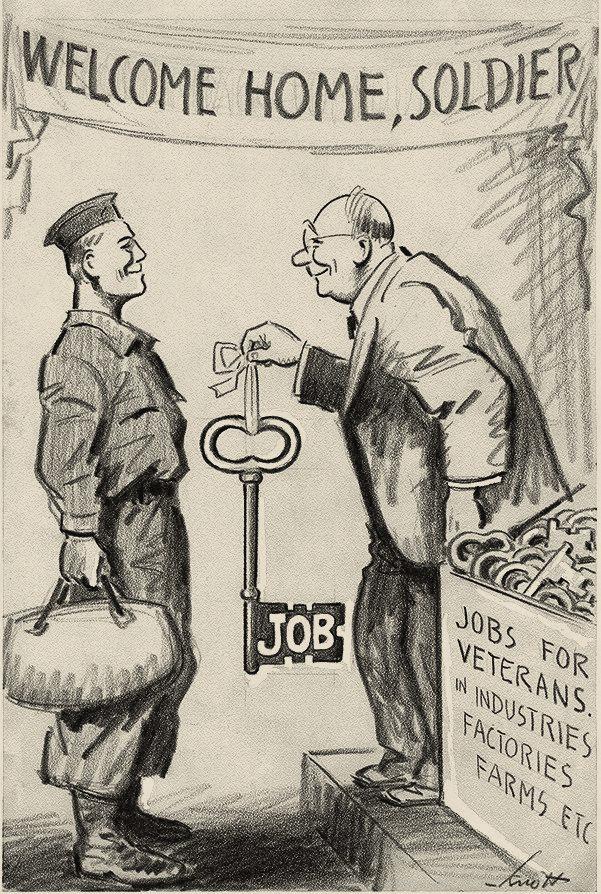
Cartoon: under a banner reading Welcome Home, Soldier, a businessman hands a soldier with a kit bag a big key marked Job, beside a crate of keys marked Jobs for Veterans in industries, factories, farms.
“The Key to His Future,” Knott in the Dallas Morning News, June 23, 1945Drawn as the first men let out of the Army on points were reaching home, wondering what work was waiting.
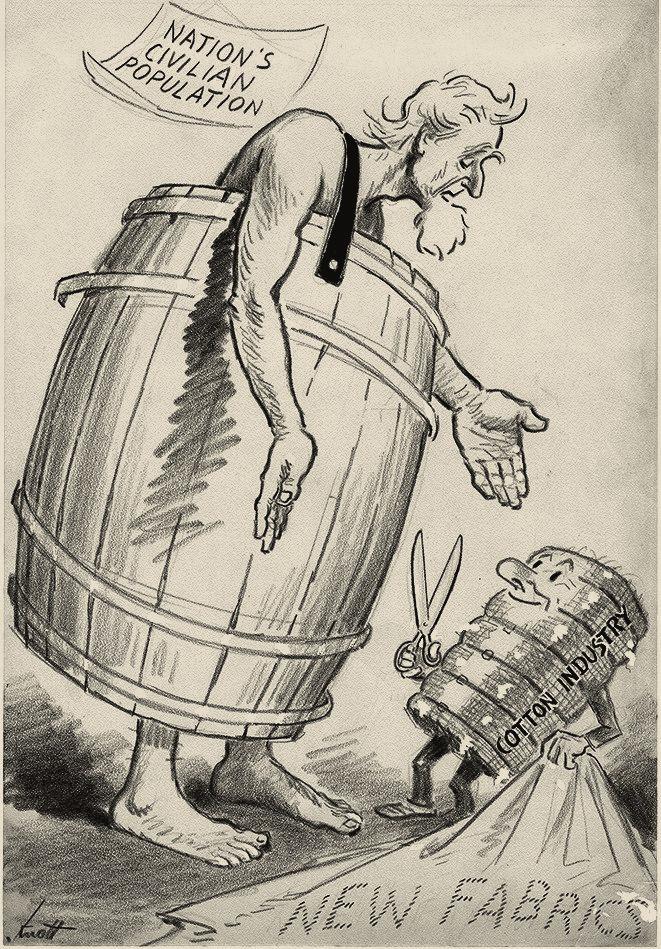
Cartoon: a bearded man marked Nation's Civilian Population stands barefoot in a barrel and holds out his hand to a small cotton bale with scissors cutting cloth marked New Fabrics.
“Won’t Have a Thing to Wear After the War,” Knott in the Dallas Morning News, July 13, 1945Cloth is so short that Knott jokes the country will be down to a barrel, unless the cotton mills turn out new fabrics fast.
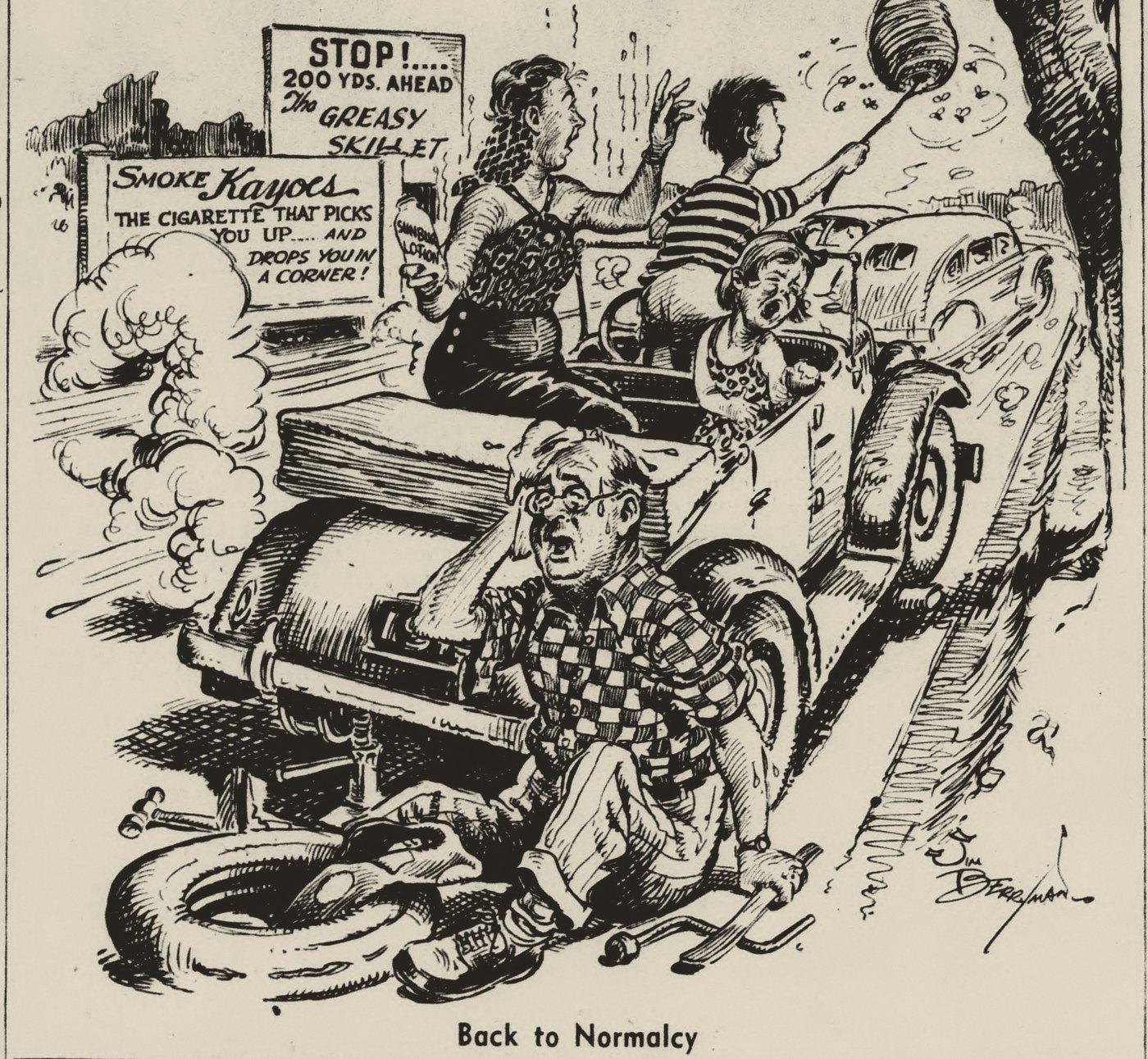
Cartoon: a father fixes a flat tire beside a crowded family car, under roadside signs for "The Greasy Skillet" and "Smoke Kayoes, the cigarette that picks you up and drops you in a corner."
Jim Berryman in the Evening Star, Sept. 3, 1945Labor Day, the day after Japan signed: peace brings back the ordinary troubles of a family drive, flat tire, crying baby and all.
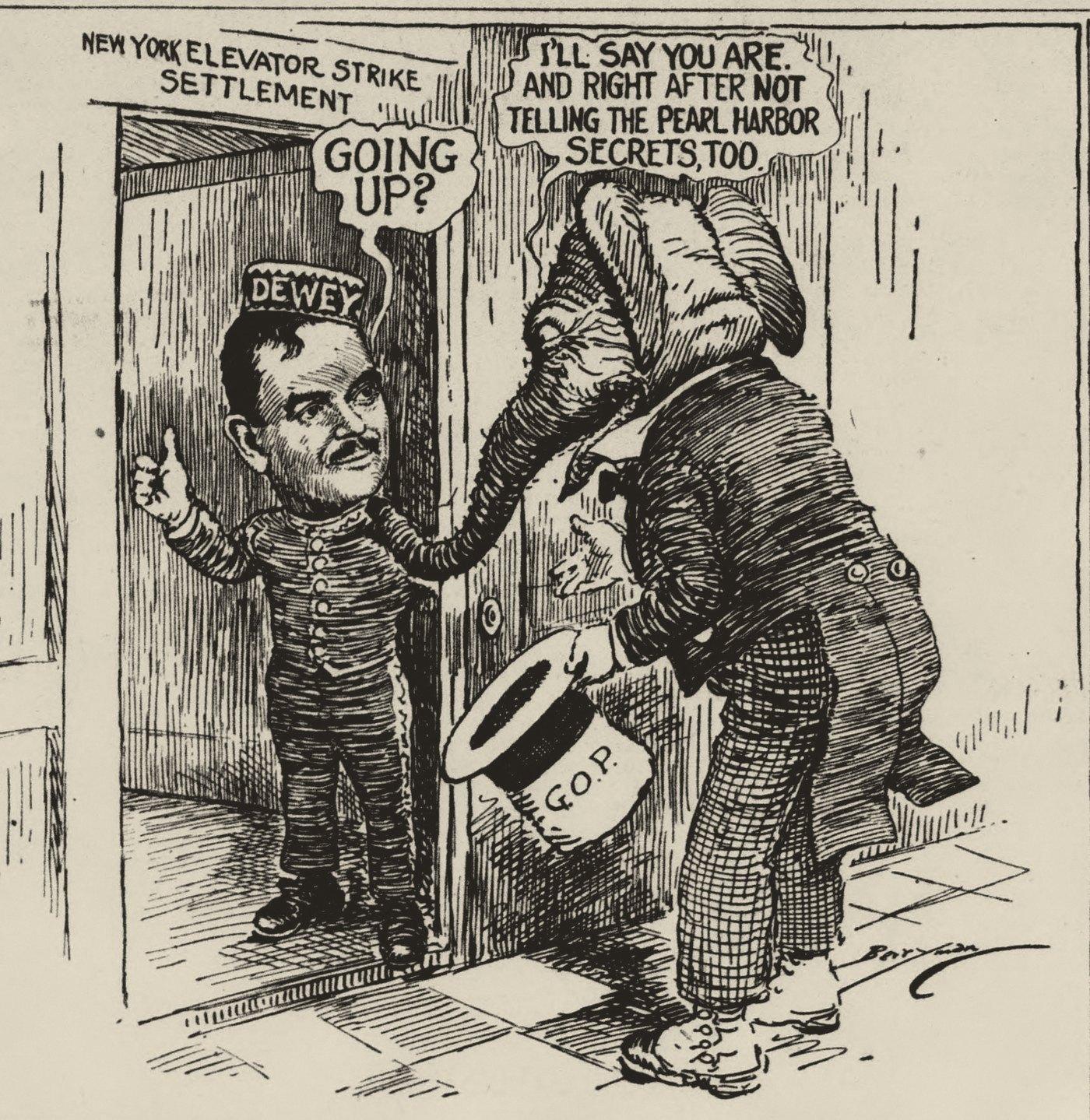
Cartoon: Governor Dewey as an elevator operator asks "Going up?" and the G.O.P. elephant, holding its hat, answers "I'll say you are, and right after not telling the Pearl Harbor secrets, too."
Berryman in the Evening Star, Oct. 2, 1945Governor Dewey’s stock is rising, says Berryman: he has settled New York’s elevator strike, and word is just out that he kept the Pearl Harbor secrets quiet in 1944. “Going up?” “I’ll say you are.”
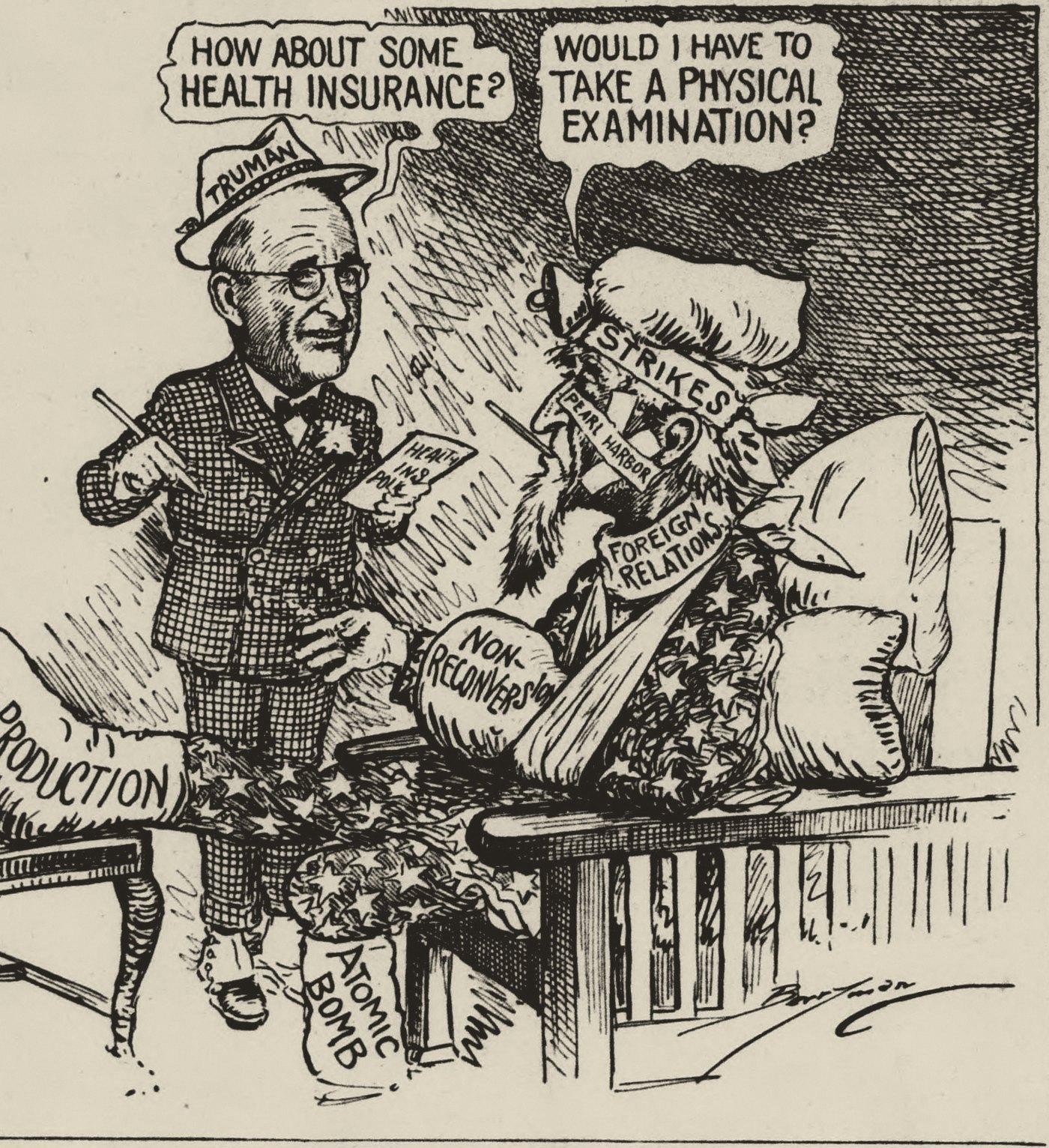
Cartoon: President Truman offers health insurance to Uncle Sam, who sits bandaged with labels reading strikes, foreign relations, non-reconversion and atomic bomb.
Berryman in the Evening Star, Nov. 21, 1945Two days after Truman sent Congress his health plan, Berryman wonders whether a country laid up with strikes, foreign troubles and the atomic bomb could pass the physical.

Cartoons by Clifford K. Berryman and Jim Berryman, the Evening Star, Washington (Library of Congress), and John Knott, the Dallas Morning News (DeGolyer Library, Southern Methodist University).

The ads people saw

What things cost, what people wanted and where they went at night: the ads of 1945, as the paper’s readers saw them. Each ad opens full size, with its small print typed out.
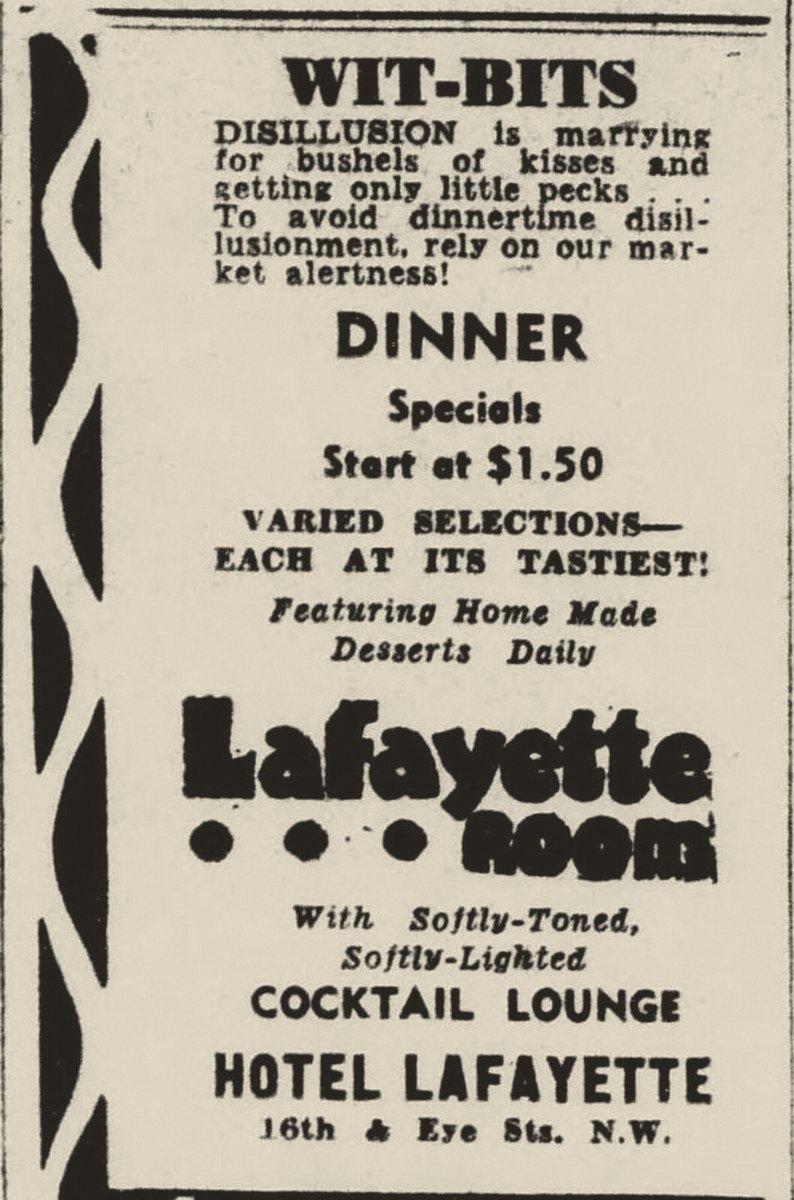
Ad: Hotel Lafayette, dinner specials start at $1.50, with a cocktail lounge.
Hotel LafayetteMay 16, 1945Dinner in the Lafayette Room, specials from $1.50, with home-made desserts daily.
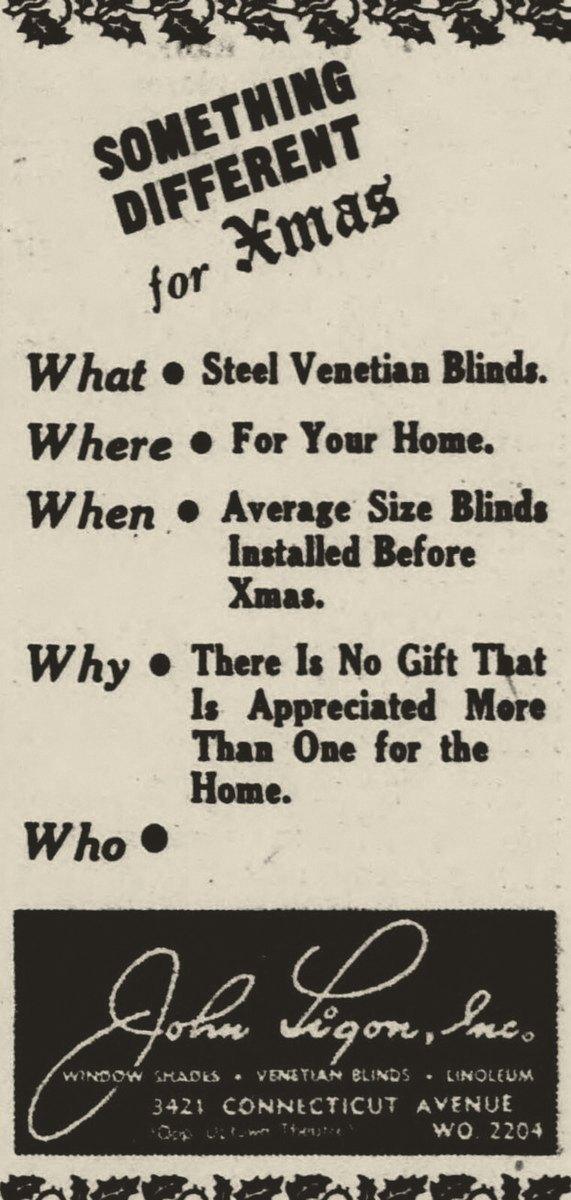
Ad: John Ligon, Inc., steel Venetian blinds as a Christmas gift.
John Ligon, Inc.Dec. 1, 1945A Washington firm’s gift idea for the first Christmas of the peace.
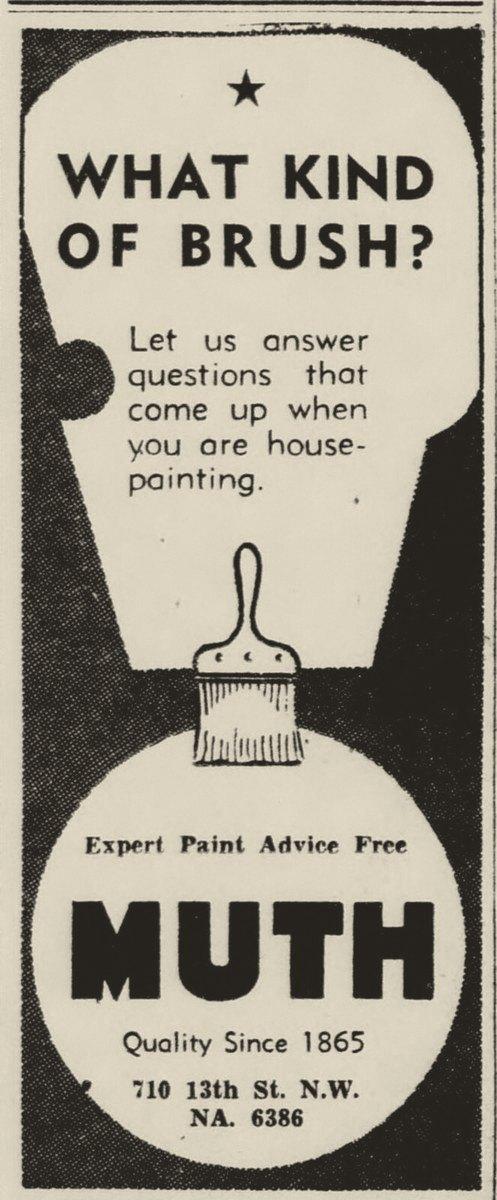
Ad: Muth paint store, "What kind of brush?", with a drawing of a paintbrush.
MuthMay 16, 1945House paint and brushes, with expert paint advice free.
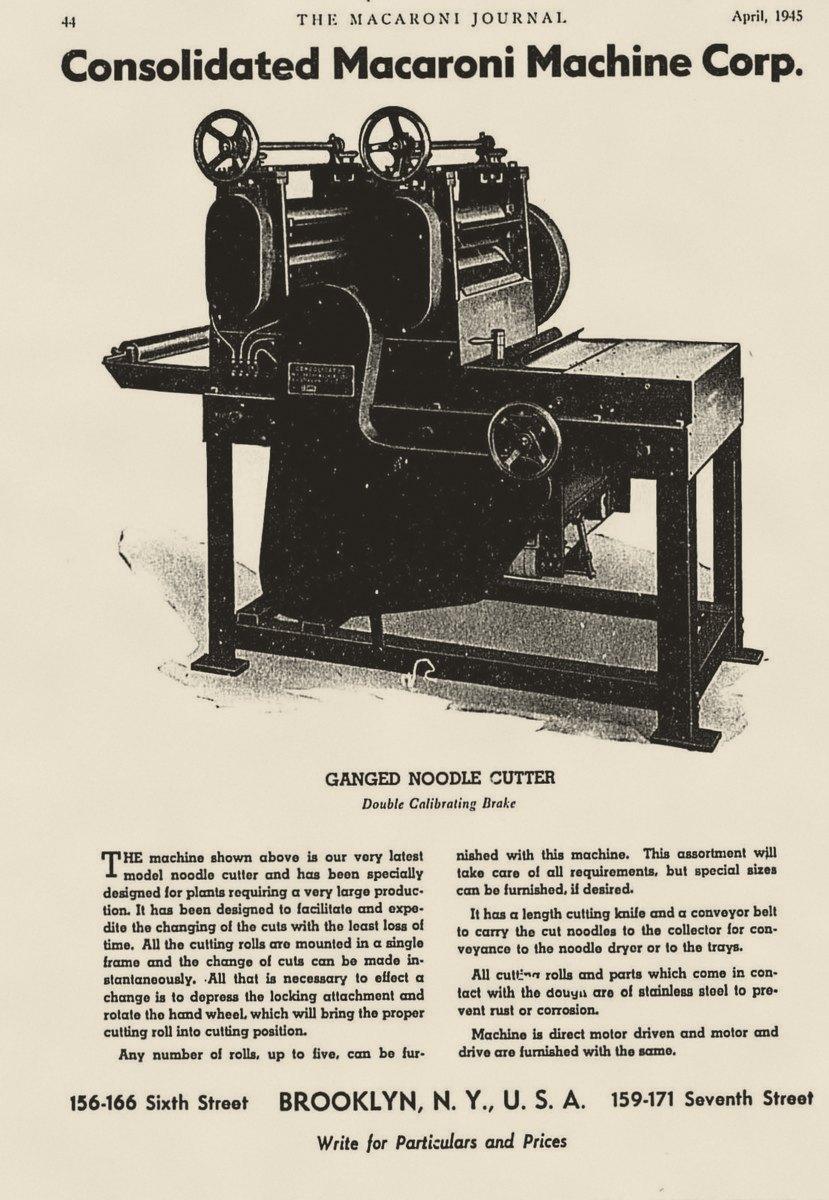
Ad: Consolidated Macaroni Machine Corp., a drawing of the ganged noodle cutter.
Consolidated Macaroni Machine Corp.April 1945From the pasta makers’ own trade magazine: the ganged noodle cutter for the big macaroni plants, made in Brooklyn.
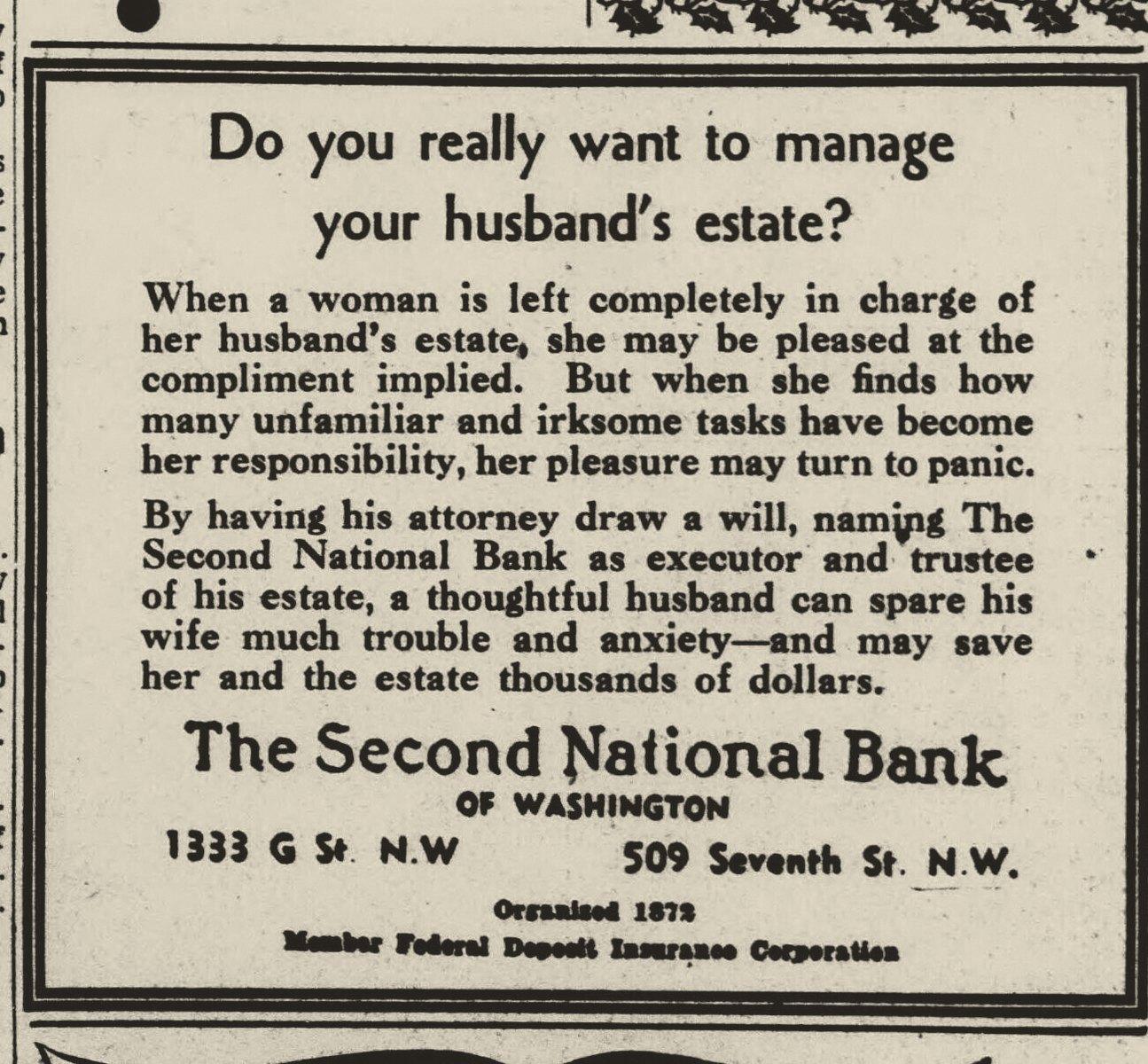
Ad: The Second National Bank of Washington asks, "Do you really want to manage your husband's estate?"
The Second National BankDec. 1, 1945A Washington bank offers to serve as executor, so that a widow need not settle her husband’s affairs alone.
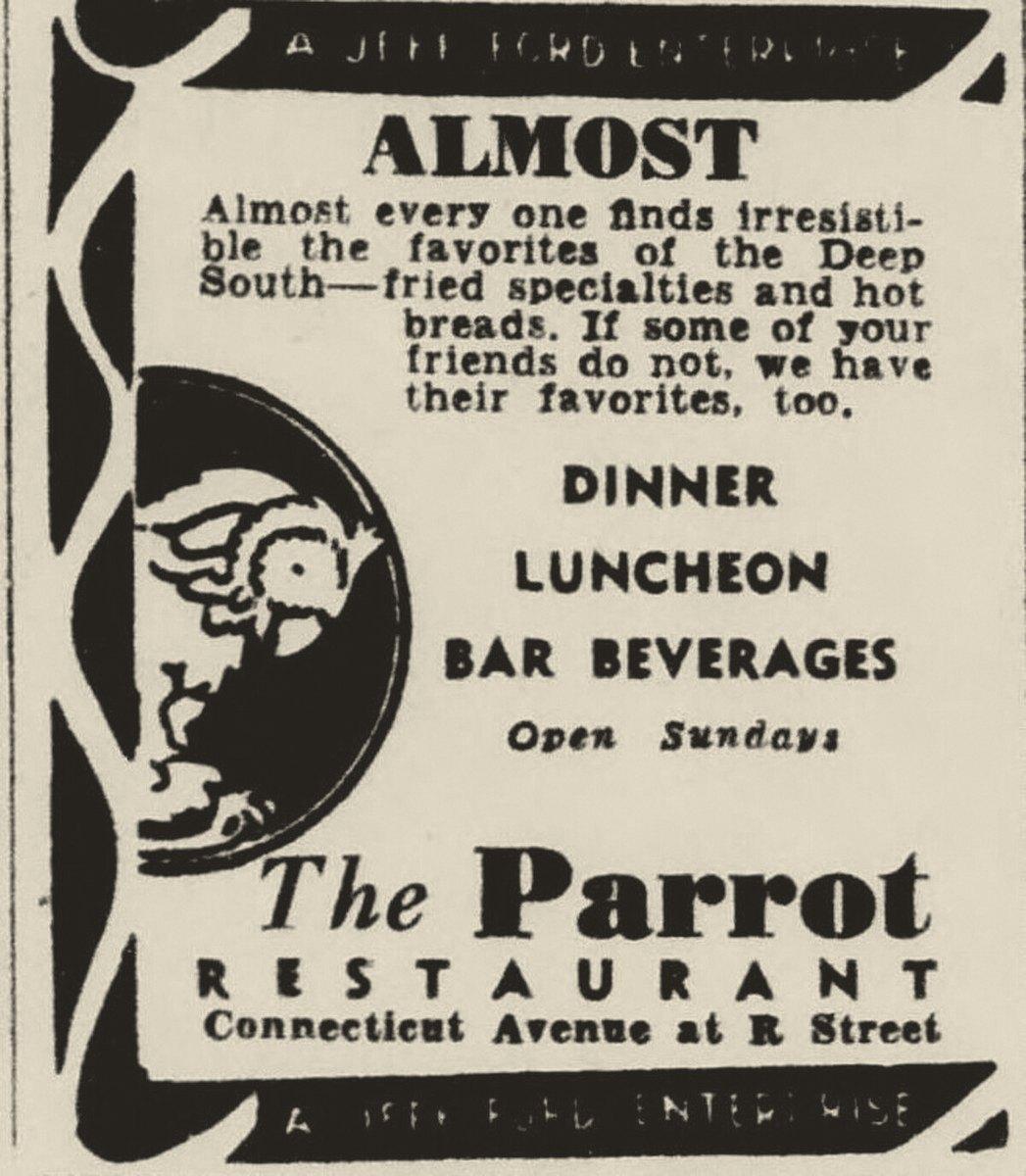
Ad: The Parrot Restaurant, Deep South fried specialties and hot breads.
The Parrot RestaurantMay 16, 1945Fried Deep South specialties and hot breads, at dinner or lunch, open Sundays.
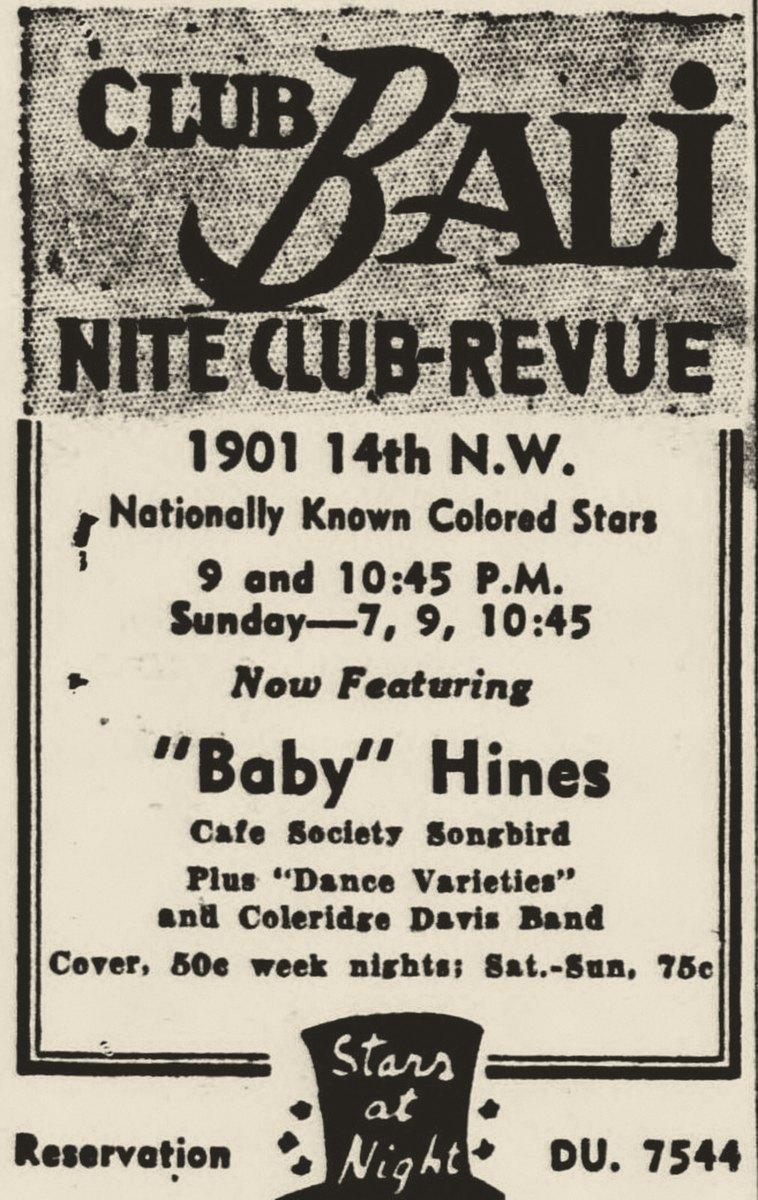
Ad: Club Bali nightclub revue on 14th Street, featuring "Baby" Hines.
Club BaliMay 4, 1945A nightclub revue with “Baby” Hines, the café society songbird. Cover 50¢ weeknights, 75¢ on weekends.
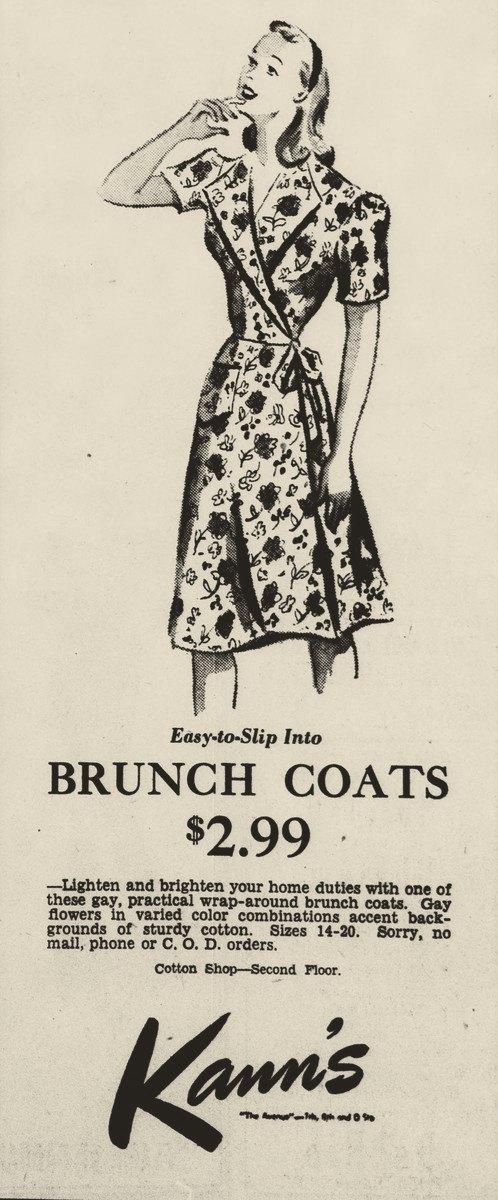
Ad: Kann’s, a drawing of a woman in a flowered wrap-around brunch coat, $2.99.
Kann’sMay 17, 1945Washington’s department store dresses the woman at home for $2.99.
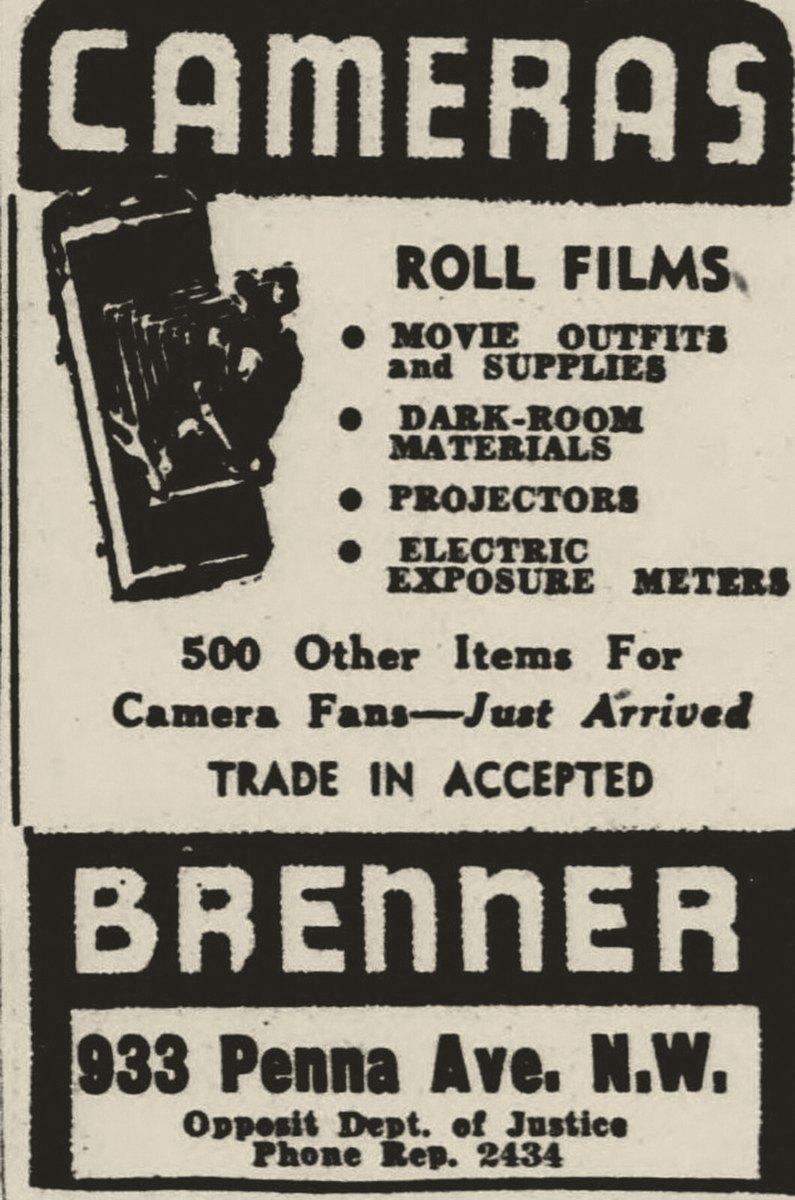
Ad: Brenner camera store, roll film and 500 other items for camera fans.
BrennerDec. 1, 1945The camera shop for the amateur, a month before the first Christmas of the peace.
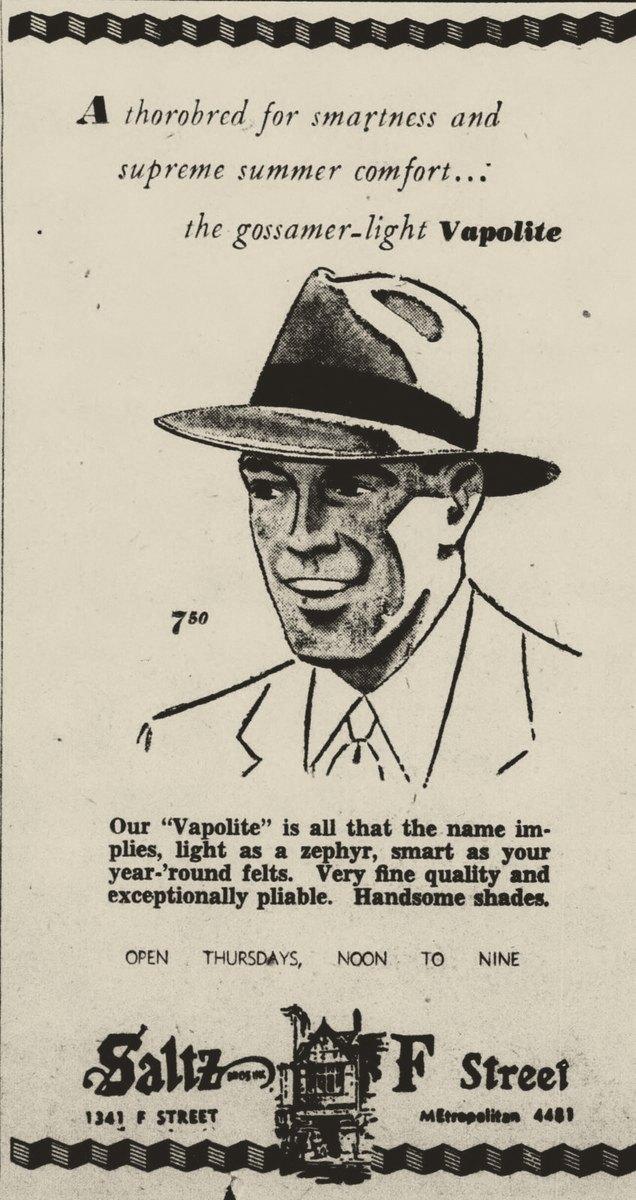
Ad: Saltz, a drawing of a man in a light summer felt hat.
SaltzMay 16, 1945The gossamer-light Vapolite, a summer felt hat, $7.50.

Library of Congress, Chronicling America; The Macaroni Journal, National Pasta Association archive. Read about the year’s advertisers

The songs on the radio

Eight records from the jukeboxes of 1945, ready to play right here. How long each one stayed at the top: the year’s chart

  1. Doris Day smiling, with Les Brown behind her, New York, 1946.Sentimental JourneyLes Brown and his orchestra, with Doris Day singingThe slow dance of the year, easy and swaying. Les Brown wrote the tune with Ben Homer.
  2. Perry Como singing at a microphone, his music in his hand, New York, 1946.Till the End of TimePerry ComoChopin’s “Heroic” Polonaise, slowed down into a love song for Perry Como, the singing barber from Canonsburg, Pa.
  3. A Santa Fe diesel passenger train, “Santa Fe” across its nose, on the line near Sibley, Missouri, March 1943.On the Atchison, Topeka and the Santa FeJohnny Mercer and the Pied PipersThe train song from “The Harvey Girls,” Judy Garland’s coming M-G-M musical about the Harvey House waitresses out West. The song reached the jukeboxes long before the picture reached the theaters.
  4. Johnny Mercer at the piano with a sheet of music, about 1947.Ac-Cent-Tchu-Ate the PositiveJohnny Mercer and the Pied PipersMercer took the words from a sermon by Father Divine, and a weary country took them as a motto: look on the bright side.
  5. The Andrews Sisters, LaVerne, Patty and Maxene, smiling one above another, 1952.Rum and Coca-ColaThe Andrews SistersThe radio networks kept it off the air for naming a drink, and it sold anyway.
  6. Harry James with his trumpet and a sheet of music, about 1947.It’s Been a Long, Long TimeHarry James and his orchestra, with Kitty Kallen singingJule Styne wrote the tune and Sammy Cahn the words. The singer keeps it soft and close, and the trumpet answers her.
  7. Sammy Kaye smiling, in a bow tie, 1952.Chickery ChickSammy Kaye and his orchestraPure nonsense, and a relief after the war years: children and grandparents sang it together.
  8. Tony Pastor singing at a microphone, about 1947.Bell Bottom TrousersTony Pastor and his orchestraAn old sailors’ song, cleaned up for the radio, and a hit while the Navy fought on in the Pacific.

Photographs: William P. Gottlieb and Jack Delano, Library of Congress; the Andrews Sisters and Sammy Kaye, Wikimedia Commons.

The news on the radio

Three stories this paper gives only a few lines, told the way a 1945 radio bulletin would have told them, each in under a minute. They are new readings, made for the Courier.

  • The last Liberty ship is handed overThe last of the wartime cargo ships goes to sea from Maine; in 1942 a California yard launched one four days and fifteen hours after laying her keel. A 47-second bulletinRead the Liberty ship story
  • Kaiser and Frazer take over the bomber plantWillow Run, where Ford built Liberator bombers nearly one an hour, is to build motorcars for Henry J. Kaiser and Joseph W. Frazer. A 50-second bulletinRead it in “Business in brief”
  • Willie Pep keeps his crownThe featherweight champion the fight writers call the Will o’ the Wisp took his title at 20, and the division still cannot hit him. A 40-second bulletinRead it in “Notes of the ring”