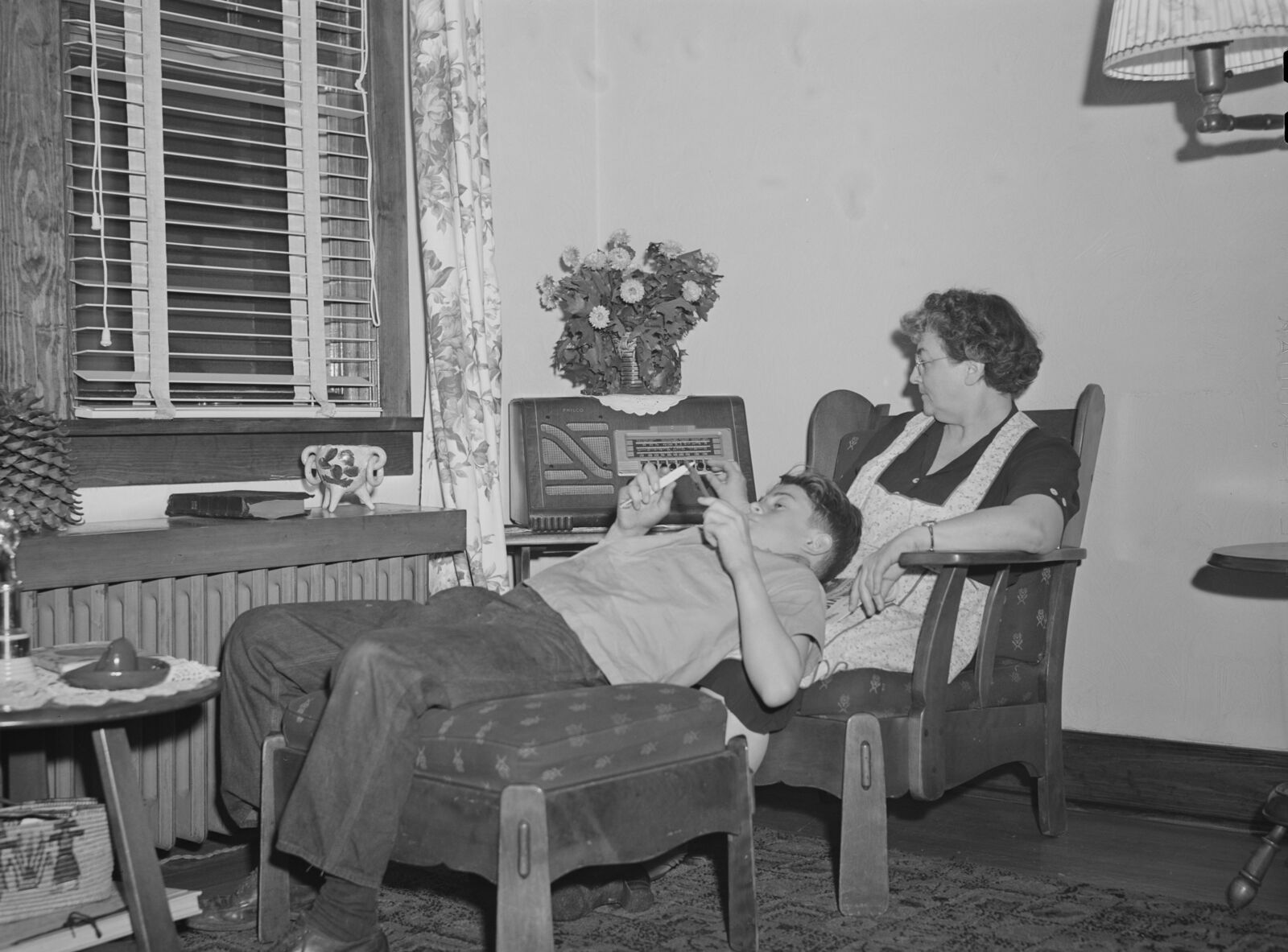
WASHINGTON, Dec. 27.—Radio factories were returning to the household trade after the wartime stoppage of civilian production in 1942, but a new receiver was still no easy purchase.
Under War Production Board orders, the industry turned toward military work. Families had to keep their old sets going, and the repairman’s difficulty was often finding a tube rather than finding the trouble. In June, the board reported on the homes which had radios at the start of the war. About nine per cent could no longer use them, because replacement tubes were lacking.
“It will be a slow beginning,” Hugo Gernsback wrote of renewed production in September’s Radio-Craft.
Before Japan’s surrender, the first permissions were narrow. Under the board’s spot-authorization plan, a manufacturer could use idle and excess inventory for civilian sets. This was not permission to draw freely upon supplies needed for war orders. Gernsback warned that a start in production would not at once put quantities of receivers in the shops.
Repair work had first claim on scarce tubes. The board announced in June that replacements for existing radios would take precedence over tubes for new ones. Industry figures put the first year’s replacement requirement at 60,000,000, including a reasonable stock for distributors.
Behind the shortage lay the armed services’ growing demands. According to the board’s report late last year, military uses took 86 per cent of receiving-tube production in 1944, compared with 16 per cent in 1941.
Peace brought orders for sets faster than parts could be obtained. In August, Philco expected dealers to have receivers in November, but reported difficulty securing components and cabinets. Detrola likewise reported more orders than it could fill.
By December there was argument over the delay. The Radio Manufacturers Association blamed price approvals and the time required to obtain parts. For families nursing old sets through one more winter, peace had reopened the factory door, but not yet the dealer’s case.