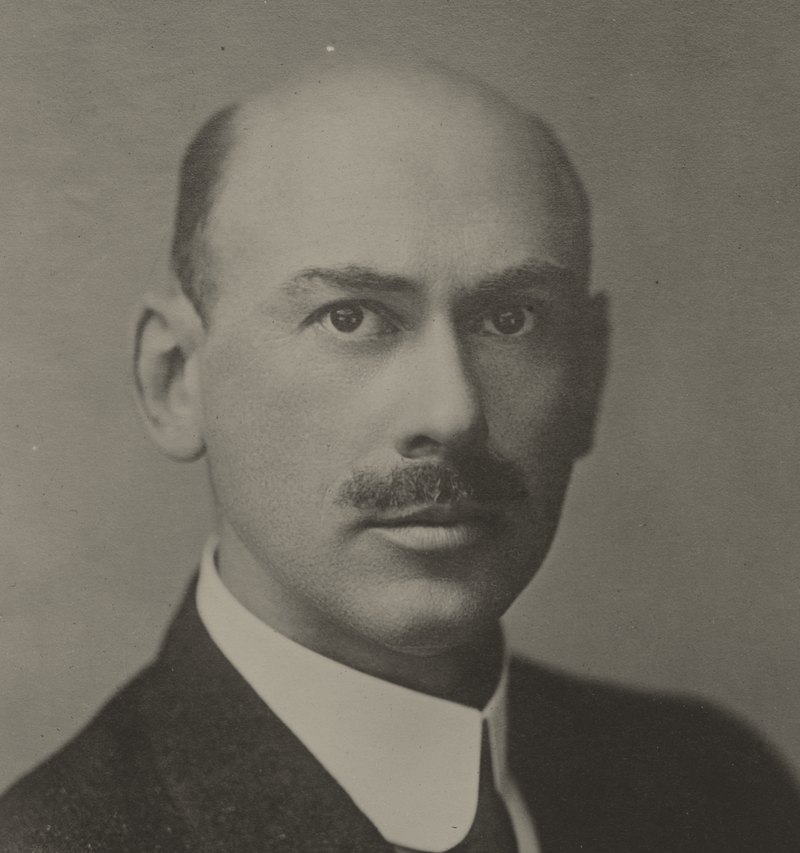
BALTIMORE, Aug. 10.—Dr. Robert H. Goddard, 62, the physicist who gave his life to the rocket, died here today of cancer of the throat.
He was born at Worcester, Mass., on October 5, 1882.
On March 16, 1926, at Auburn, Mass., Dr. Goddard launched the first rocket driven by liquid propellants, gasoline and liquid oxygen. It rose 41 feet and came down 184 feet away, about two and a half seconds after it left the frame. It was a short flight for years of work, and it was the first. Twelve years before, in July, 1914, he had been granted two patents, one for a rocket fed with liquid fuel and one for a rocket of several stages.
The V-2 rockets the Germans fired on London last winter were driven by liquid fuel, as his first one was.
An editorial in The New York Times on January 13, 1920, dismissed his proposal that a rocket might reach the moon as a strain on belief.
In 1930 he went to Roswell, N.M., on leave from Clark University, to work on rockets full time. Mr. Daniel Guggenheim paid for the first two years. The Daniel and Florence Guggenheim Foundation carried the work on.
Since 1942 he had been director of research for the Bureau of Aeronautics of the Navy Department. His work took him to Roswell and to the Navy’s Engineering Experiment Station at Annapolis, Md. There he worked on rockets to help heavy aircraft take off. He also worked on liquid-fuel rocket motors whose thrust could be varied.
He lived to see the rocket he had once proposed for the moon fall on London, and four days before his death the atomic bomb fell on Hiroshima.