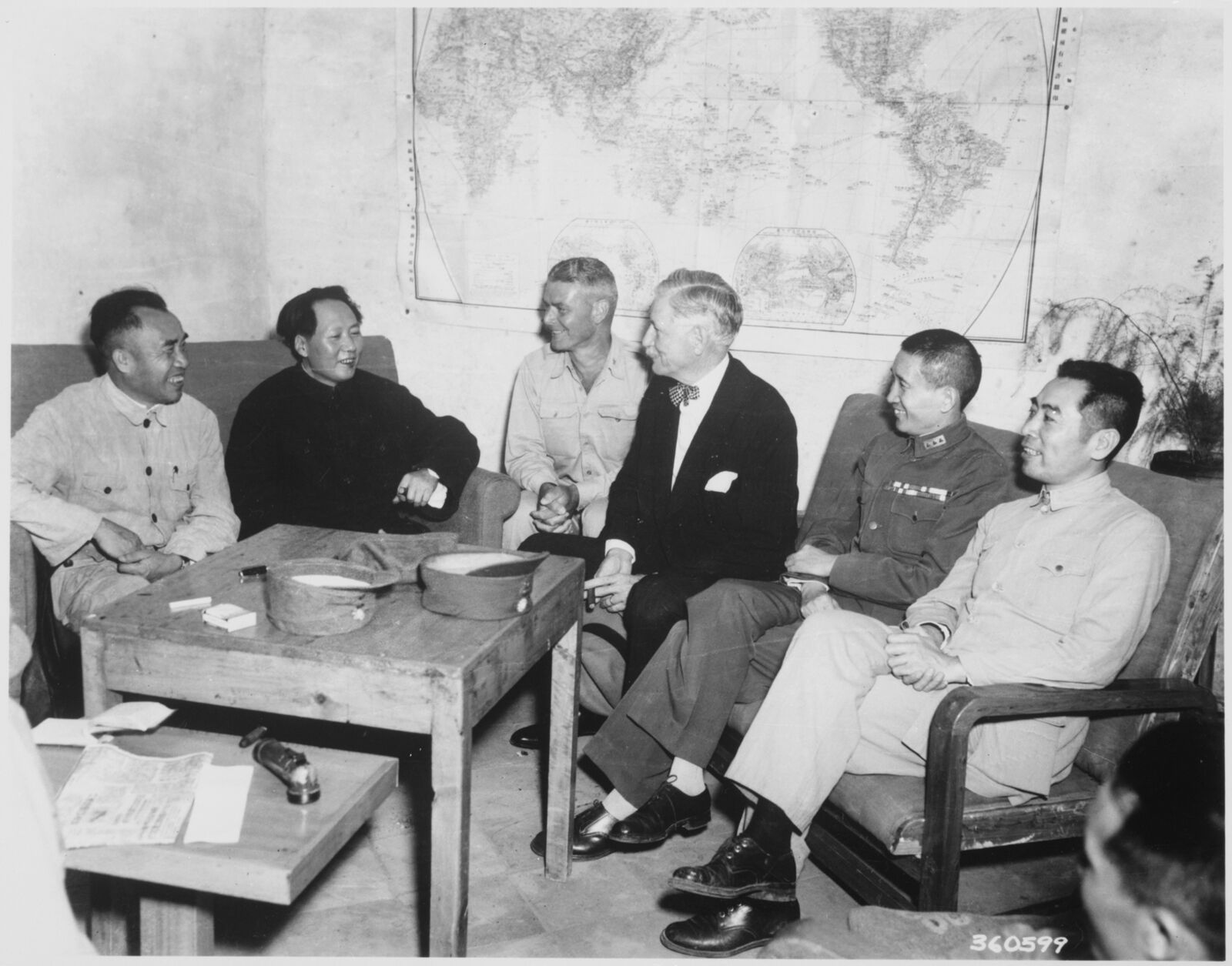
CHUNGKING, Oct. 11.—Chiang Kai-shek and Mao Tse-tung, who had not met in 20 years, have put their names to a plan for a democratic China. Chiang is head of China’s National Government. Mao is chairman of the Chinese Communist party. The guns have not yet gone quiet. The National Government and the Chinese Communist party signed the joint statement here yesterday after six weeks of talks between Chiang Kai-shek and Mao Tse-tung. It is dated October 10, the “Double Tenth,” anniversary of the Chinese Republic.
Mao, chairman of the Communist party, flew home to Yenan today.
On the aim of political democracy the two sides agreed. They agreed in principle on making the armed forces national. But what becomes of the Communist armies remains open. The talks have dealt with an army of about 20 divisions for the Communists. The Communists support Chiang Kai-shek’s leadership, and all parties are to have equal legal standing.
A political consultative conference, with every party represented, is to meet to plan the building of the state, and a national assembly is to be called.
After the Japanese surrender Chiang invited the Communists to Chungking. Mao flew in from Yenan on August 28 with the American Ambassador, Patrick J. Hurley, and the conversations began after his arrival.
Little trust exists between the parties. North and south of the Yangtze, Communist and Government troops clashed while the leaders sat in conference. Russia, which has recognized the National Government by treaty, occupies Manchuria. American planes have carried tens of thousands of Government troops into the Japanese-held regions to take the surrender.