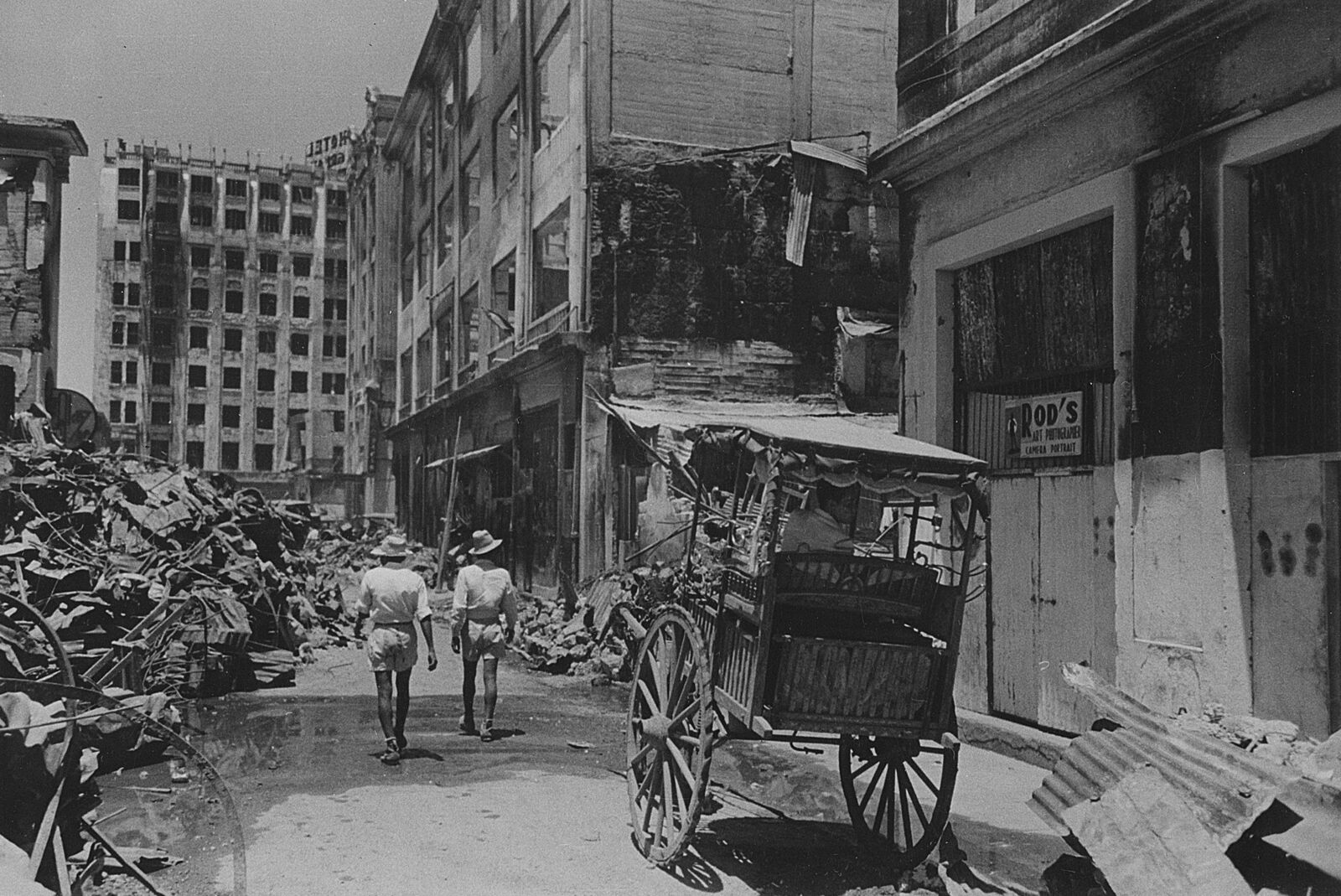
MANILA, March 4.—Manila is free, but victory has come to a capital shattered by a month of street fighting and the slaughter of its people. American and Filipino forces hold the city; organized Japanese resistance has ended.
The Finance Building, last of the government buildings still defended by the enemy, was taken yesterday.
On the evening of February 3, American cavalry rolled up to the gates of Santo Tomas to cheers from internees who had endured long years of captivity. The newcomers brought food and medical care to people weakened by hunger.
Under Maj. Gen. Verne D. Mudge, the 1st Cavalry Division had driven into northern Manila with orders to reach Santo Tomas. Tanks entered the compound that night.
On the following day, the 37th Infantry Division opened Bilibid Prison. It freed about 800 military prisoners and hundreds of civilian internees. Most of the military prisoners were survivors of Bataan and Corregidor. From the south, the 11th Airborne Division advanced toward the city.
Gen. Tomoyuki Yamashita had shifted his headquarters to Baguio, but Rear Adm. Sanji Iwabuchi remained in Manila with 12,500 sailors and 4,500 soldiers. His forces blocked intersections, mined roads and prepared buildings for a fight from room to room.
American troops consequently fought their way forward by streets and blocks. After an artillery bombardment on February 23, men of the 37th Infantry Division entered Intramuros through openings smashed in its old walls. Japanese forces released about 3,000 civilian hostages that day.
Manila’s civilians suffered terribly. Japanese troops murdered inhabitants as the battle continued, while the fighting wrecked the Walled City and much of the capital.
Even before the last resistance was crushed, Gen. Douglas MacArthur assembled Filipino leaders at Malacañang Palace and proclaimed the Commonwealth government restored. “My country has kept the faith,” he told them.