NEW YORK, Oct. 1
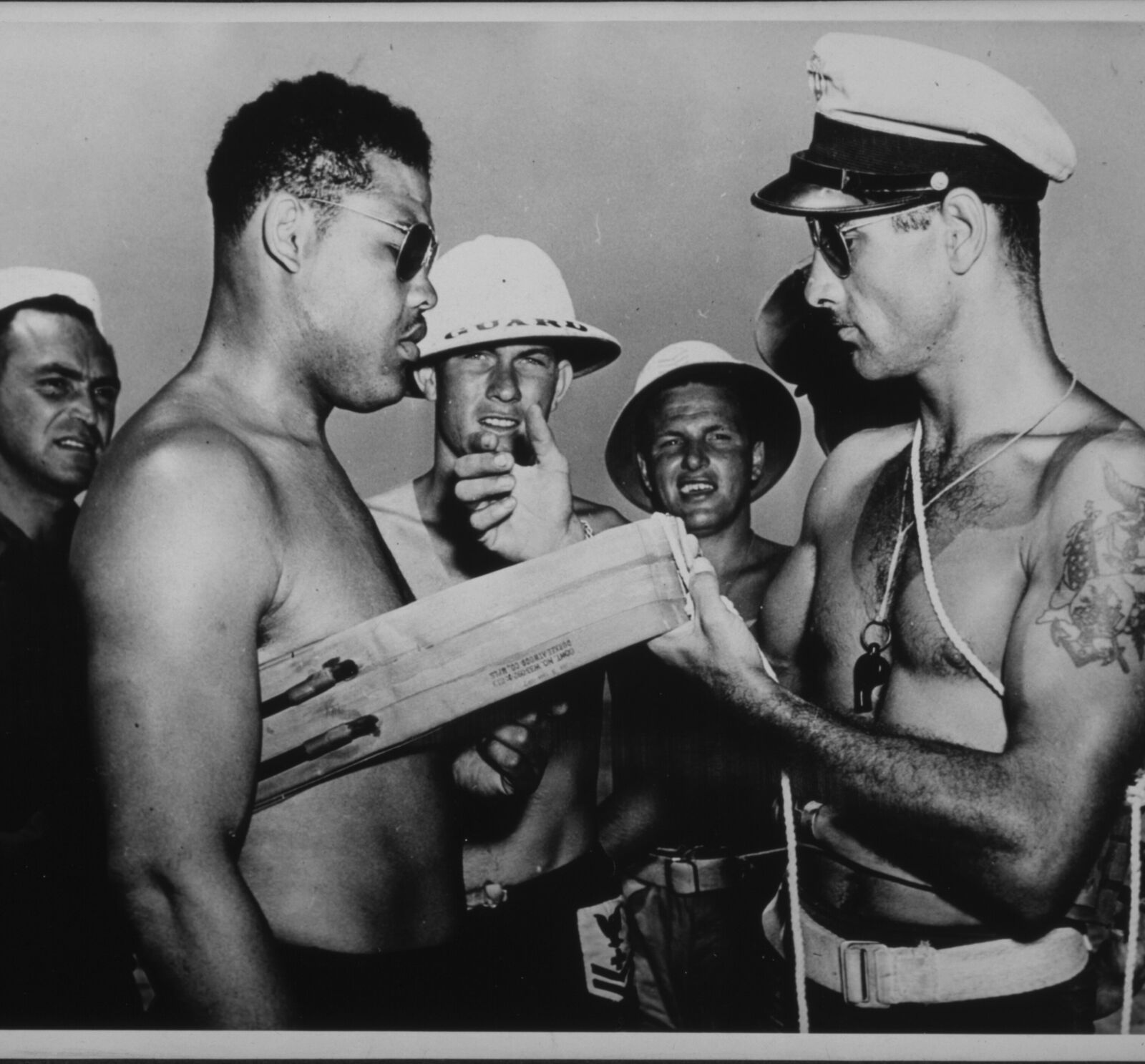
Joe Louis leaves Army with medal for lifting soldiers’ spirits
He went into the Army a private in 1942, after a fight for Navy Relief, and comes out a sergeant who has been heavyweight champion since 1937.
Detroit scores five runs before the Cubs come to bat, and Hal Newhouser, the Tigers’ left-handed ace, goes all nine innings.
Robinson says he knows what the signing means to his race, and Black neighborhoods from New York to Chicago pass the news along.
He lost his right arm at the age of six, and he catches the ball and throws it with the same hand.
Rockford’s Peaches ride Carolyn Morris’s pitching to the top, and a Racine girl steals more than a hundred bases.
Cleveland takes the Negro World Series in four straight from the Homestead Grays of the catcher Josh Gibson and the first baseman Buck Leonard.
MacPhail, Topping and Webb buy the club from the brewer Jacob Ruppert’s estate, and Snuffy Stirnweiss, their second baseman, wins the batting title.
The Boston Braves’ right fielder passes the modern National League mark the batting champion Rogers Hornsby set in 1922.
Kentucky’s Senator takes Judge Landis’s chair at $50,000 a year, and the owners make it unanimous.
Lionel delivers sets for Christmas.
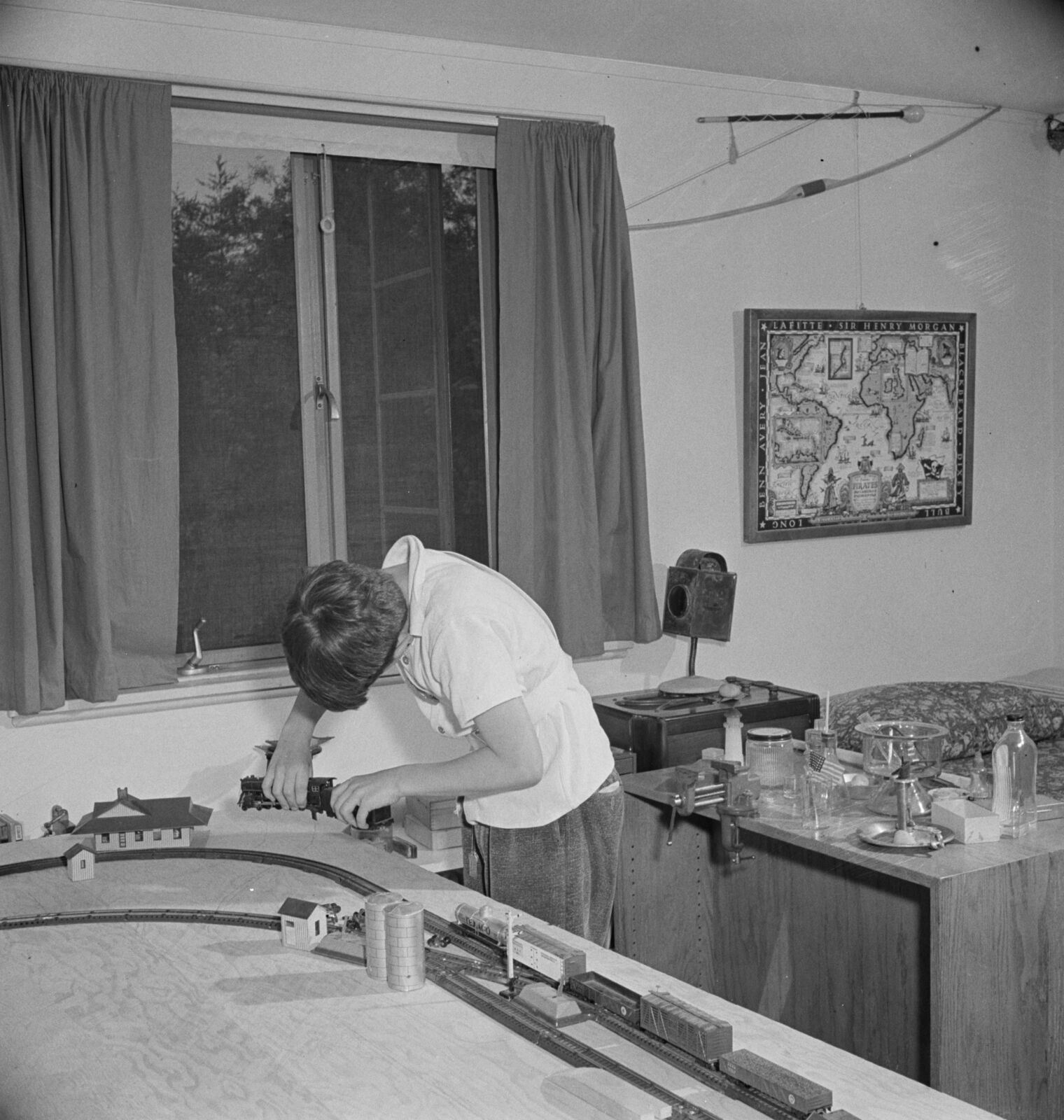
A thirteen-year-old’s bedroom in Greenbelt, Maryland, 1942
Fibber McGee and Molly run second and the Lux Radio Theater third in the Hooper ratings of radio listening.
The Yankee center fielder is out of uniform, and the Red Sox slugger is home but still a Marine.
A paid crowd of 47,729 cheers the Tigers’ slugger, and Detroit beats the Philadelphia Athletics, 9 to 5.
Eleven victories in a row carried the man the papers call “Lord Byron” from Miami to Montreal.
His best was the Portland Open, won by fourteen strokes with 261, 27 under par.
The 1932 Olympic track champion also played the men in the Los Angeles Open and made the 36-hole cut.
Before 102,000, the Cadets beat No. 2 Navy and finish 9–0.
Army’s fullback draws more votes than his backfield mate Glenn Davis.
Unbeaten Alabama and Harry Gilmer, its triple-threat back, meet Southern California on New Year’s day.
Duke beats Alabama, 29 to 26, as Gordon Carver, Duke’s safety man, saves the game at the Duke 24.
Bob Kurland, the Aggies’ tall center, is the tournament’s outstanding player, and their coach, Henry Iba, has his first national title.
Detroit came back from three games down and lost it on a third-period goal.
Racing returns from its wartime halt and uniformed crowds pack Churchill Downs.
The Swede takes back his record from his countryman Arne Andersson before 14,000 at Malmo.
The Indians’ ace, back from forty-four months of war, beats Hal Newhouser and the Tigers, 4 to 2.
Rocky Graziano, a middleweight behind on points, knocks out Harold Green in the third round at Madison Square Garden.
Harlem welterweight takes a split decision over twelve rounds at Comiskey Park.
Louis B. Mayer, the Hollywood producer, bought her in March, and she has won the Cleopatra, the Arlington and the Washington Park handicaps.
An Air Forces sergeant keeps his title after outlasting William Talbert in the final.
A ninth-inning home run by Hank Greenberg, with the bases full, beats the St. Louis Browns, 6 to 3, and sends Detroit to the World Series.
Mikhail Botvinnik, the Soviet champion, beats the American champion, Arnold Denker, twice, and only Herman Steiner wins his pairing for America.
They win it with a wartime club of men too old, too young or turned down by the draft boards.