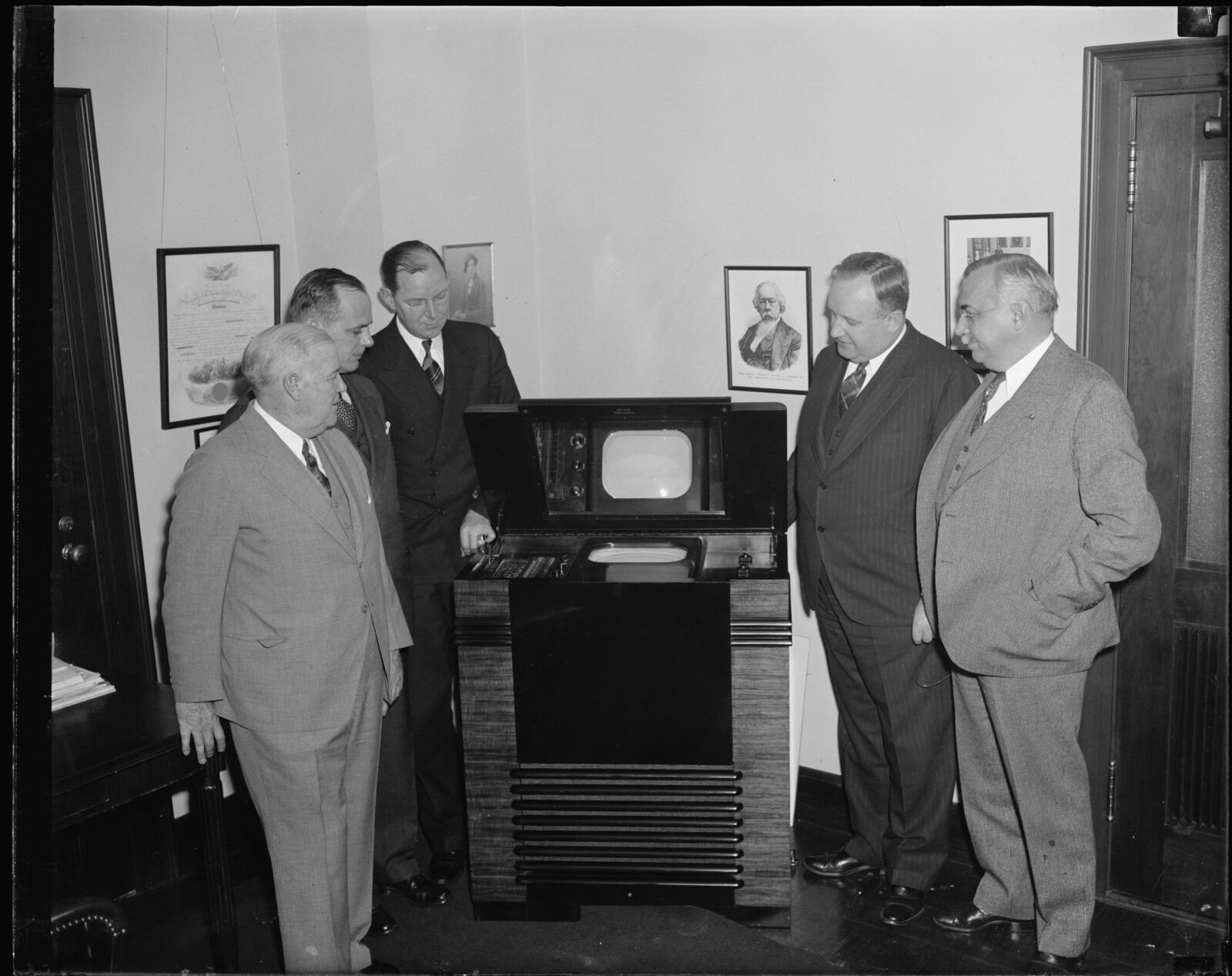
PRINCETON, N.J., Dec. 13.—Pictures that move and talk, sent through the air from a studio miles away into the family living room, came a step nearer today. RCA expects to begin turning out television receivers in the late spring or early summer, Frank M. Folsom announced. He is executive vice president in charge of the Victor Division. For families within reach of a station, the new receivers will be a fresh chance to bring a set home. None could be made in the war years.
Few Americans have yet seen a television screen. NBC began regular broadcasts in New York on April 30, 1939, with the opening of the World’s Fair. That Aug. 26 its cameras carried the first televised major-league games, a Dodgers-Reds double-header at Ebbets Field. About 7,000 to 8,000 sets were made before the War Production Board halted civilian manufacture in April, 1942. Of the ten stations then on the air, only six carried on through the war. The board lifted its ban this August.
The company’s plans called for home sets costing from less than $200 to $300, with more elaborate consoles to follow. RCA was also taking orders for station transmitters, promised for the autumn of 1946.
“No broadcaster will get rich on television in the next five years,” Gen. David Sarnoff, president of RCA, warned the gathering at the company’s laboratories.
Much depended on where the buyer lived. A receiver required a station within reach; a new dial could not supply a program which was not being broadcast. The Federal Communications Commission’s June 27 allocation decision gave television thirteen channels, and stations and manufacturers had to fit their equipment to that arrangement.
RCA’s proposed consoles were to combine ordinary broadcasting, FM, short waves and television. Mr. Folsom said the later RCA consoles would cost about $500 and carry a picture screen 16 by 22 inches.