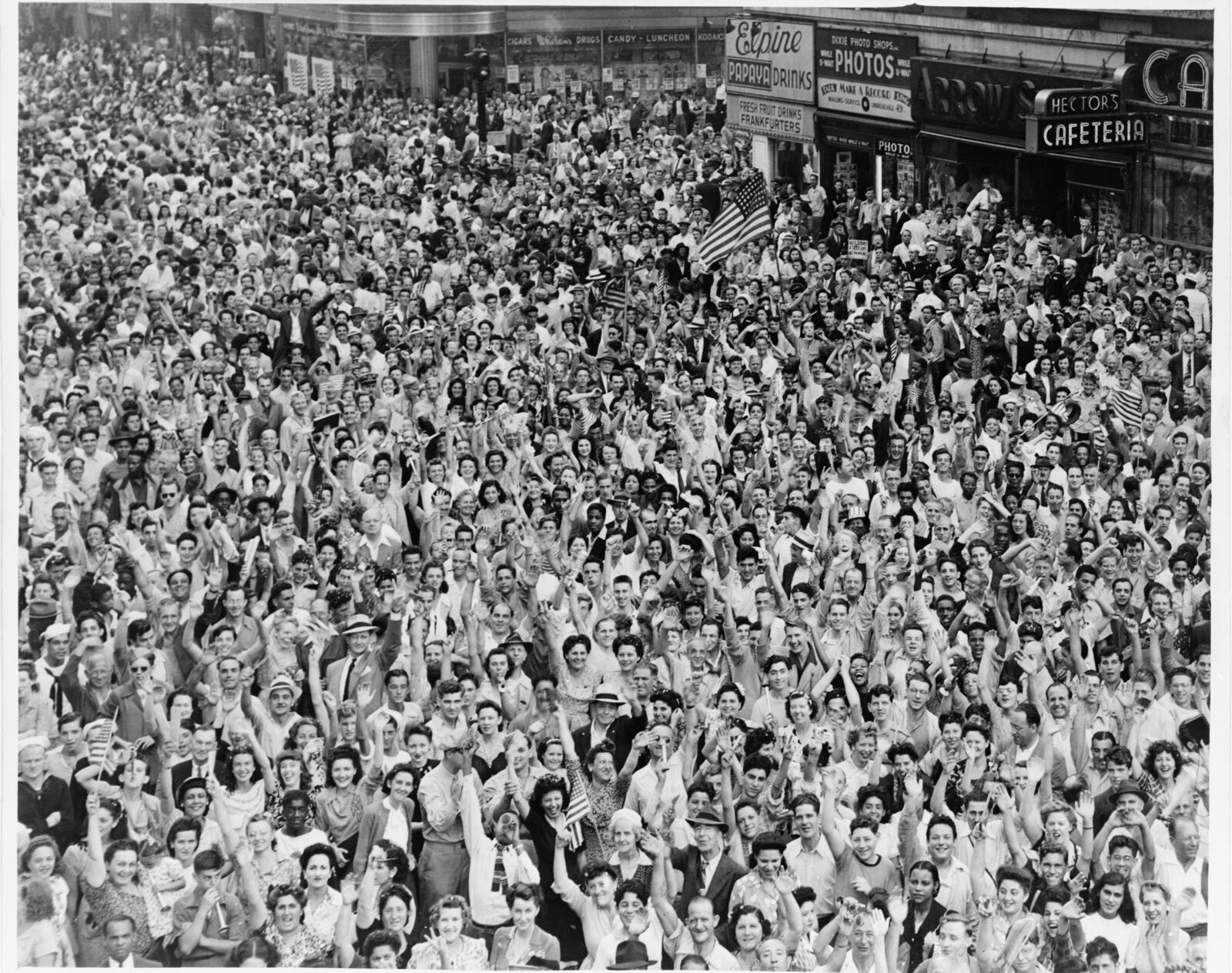
WASHINGTON, Aug. 15.—A country that waited through nearly four years of war broke into cheers on hearing that Japan had accepted unconditional surrender. Then it began looking toward the return of its men overseas.
Crowds gathered opposite the White House, calling, “We want Harry.” President Truman and Mrs. Truman crossed the lawn to greet them. The President came out three times. “This is a great day,” President Truman said.
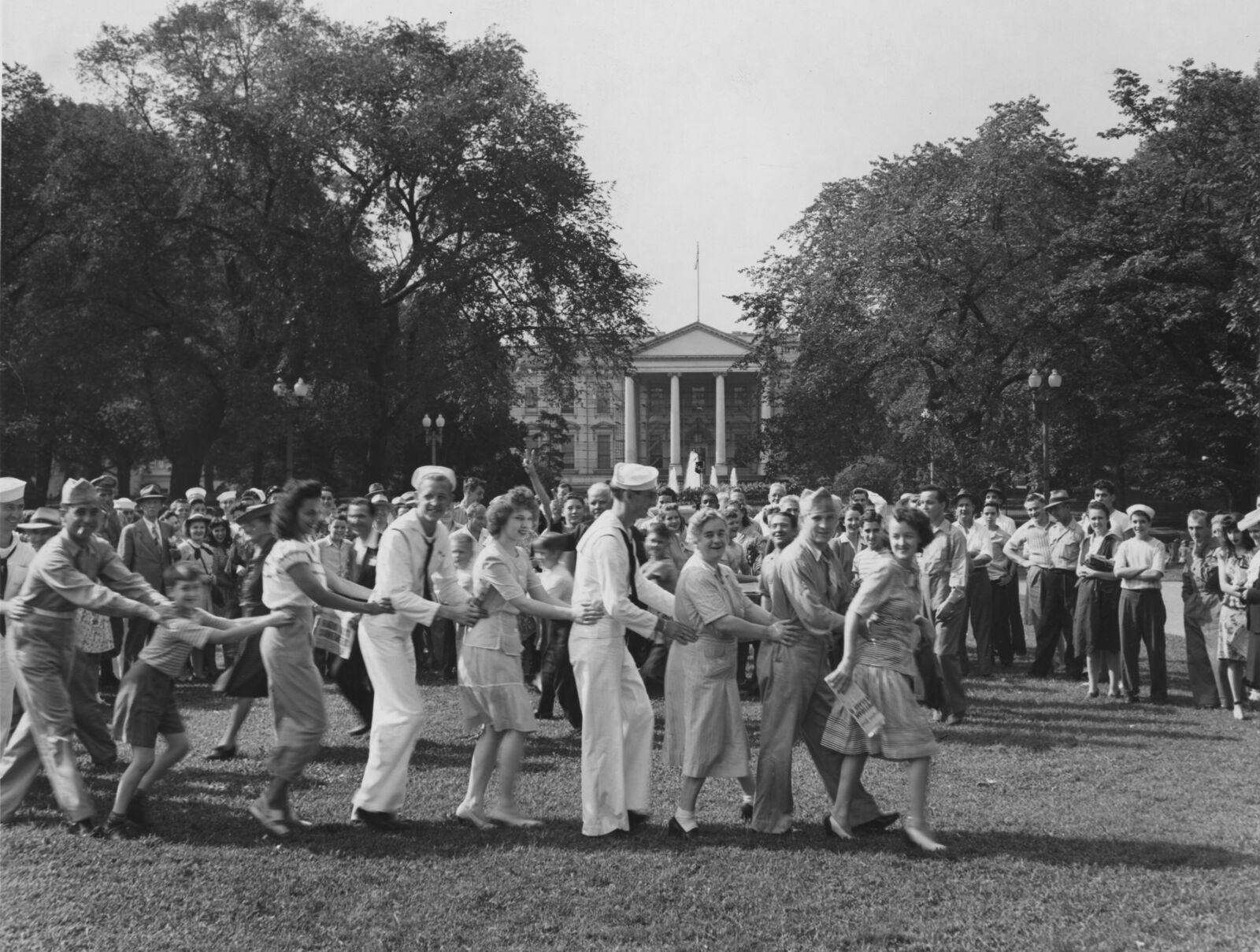
Federal workers were excused today and tomorrow by the President. White House press secretary Charles G. Ross said the order did not make legal holidays or by itself require premium pay. Congress has been called back for Sept. 5, a month before its planned return.
By mid-August the armed services had counted more than 1,000,000 casualties, the killed, wounded, missing and captured together, with about 250,000 dead. Behind each of those names is a house where nobody cheered today. In windows across the country, mothers looked at the blue star and began to wait for a letter with a sailing date in it.
THE EMPEROR. Japan’s Emperor told his people today why their war must end: the enemy, he said, had begun to use “a new and most cruel weapon.” War Minister Anami is reported to have killed himself, and Premier Kantaro Suzuki and his Cabinet have submitted their resignations. A Japanese delegation is to fly to Manila for the Allied surrender instructions. Its unarmed plane will be painted white, marked with green crosses and identified by the call sign “Bataan.” The order to stop had not reached every gun. Third Fleet planes shot down at least five Japanese aircraft after the cease-fire. On Luzon, Japanese troops who had not received the news killed a soldier of the 32d Division.