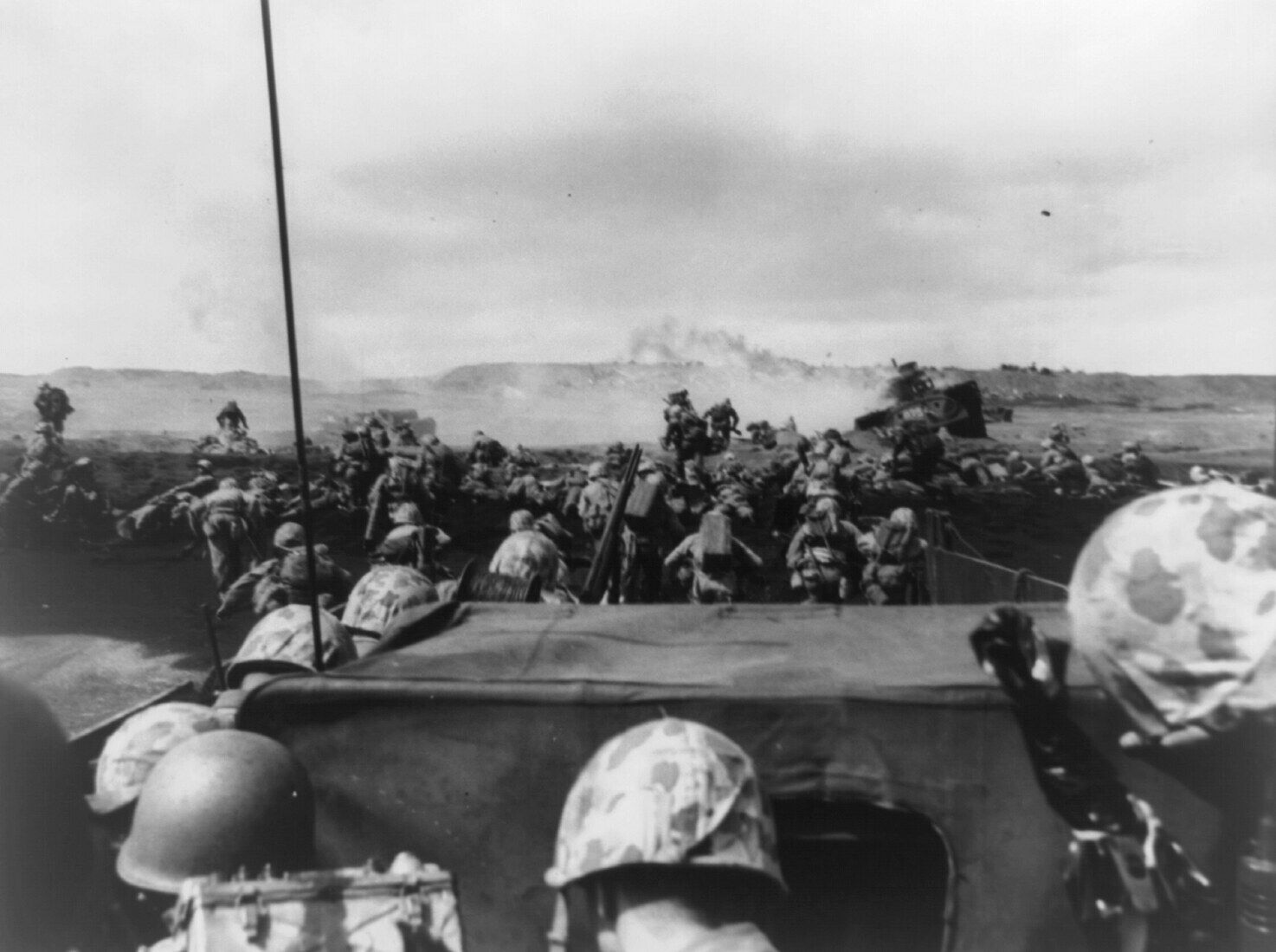
GUAM, March 27.—Iwo Jima, the fortified island the Marines stormed on Feb. 19, is in American hands. The victory cost more than 4,000 American lives and left more than 15,000 wounded. About 750 miles south of Tokyo, the island fortress gives American airmen a field near Japan, although scattered resistance remains in its caves and battered ridges.
At 8 yesterday morning the operation was declared completed, five weeks after the first Marines went ashore. The landing began Feb. 19, when the first wave touched at about 9 o’clock. The 5th Marine Division took the southern beaches and the 4th the northern, while the 3rd waited offshore.
Overall command rested with Adm. Raymond A. Spruance. Lieutenant General Holland M. Smith led the expeditionary troops. Major General Harry Schmidt led the V Amphibious Corps. Vice Admiral Richmond Kelly Turner led the landing from the Eldorado. The Japanese were commanded by Lieut. Gen. Tadamichi Kuribayashi.
More than 20,000 Japanese defended Iwo, and few were taken prisoner. Mopping up continues beyond the formal declaration of victory.
The flag raised over Mount Suribachi on Feb. 23—the second placed there that day—has become the battle’s image. Crippled Superfortresses have already come down on Iwo’s airfields.